The essentials
- A 2 hour Tokyo sumo show with a chicken hot pot dinner and geisha entertainment, from US$102, rated 4.79 from 8,004 reviews.[1]
- Chanko nabe, the sumo stable hot pot, cooked at the table in a savoury broth with chicken, vegetables and tofu, then noodles or rice at the end.
- The performance lasts 2 hours.[1] Check availability to see the starting times offered when you book.[1]
- Reserve now and pay later, and cancel up to 24 hours in advance for a full refund.[1]
- Wheelchair accessible, and a small group option is available when you book.[1]
- Top choice Hot pot & geisha sumo show from US$102 Duration2 hours[1]Rating4.79 from 8,004 reviews[1]What it isChicken hot pot and geisha entertainment[1]CancellationFree cancellation up to 24 hours[1] Check availability
- Sumo show & dining house from US$89 Duration1.5 - 2 hours[2]Rating4.80 from 3,454 reviews[2]What it isSumo show with a dining experience[2]CancellationFree cancellation up to 24 hours[2] See this tour
- Shinjuku sumo show & photo from US$65 Duration1.5 hours[3]Rating4.84 from 7,180 reviews[3]What it isSumo show with a photo experience[3]CancellationFree cancellation up to 24 hours[3] See this tour
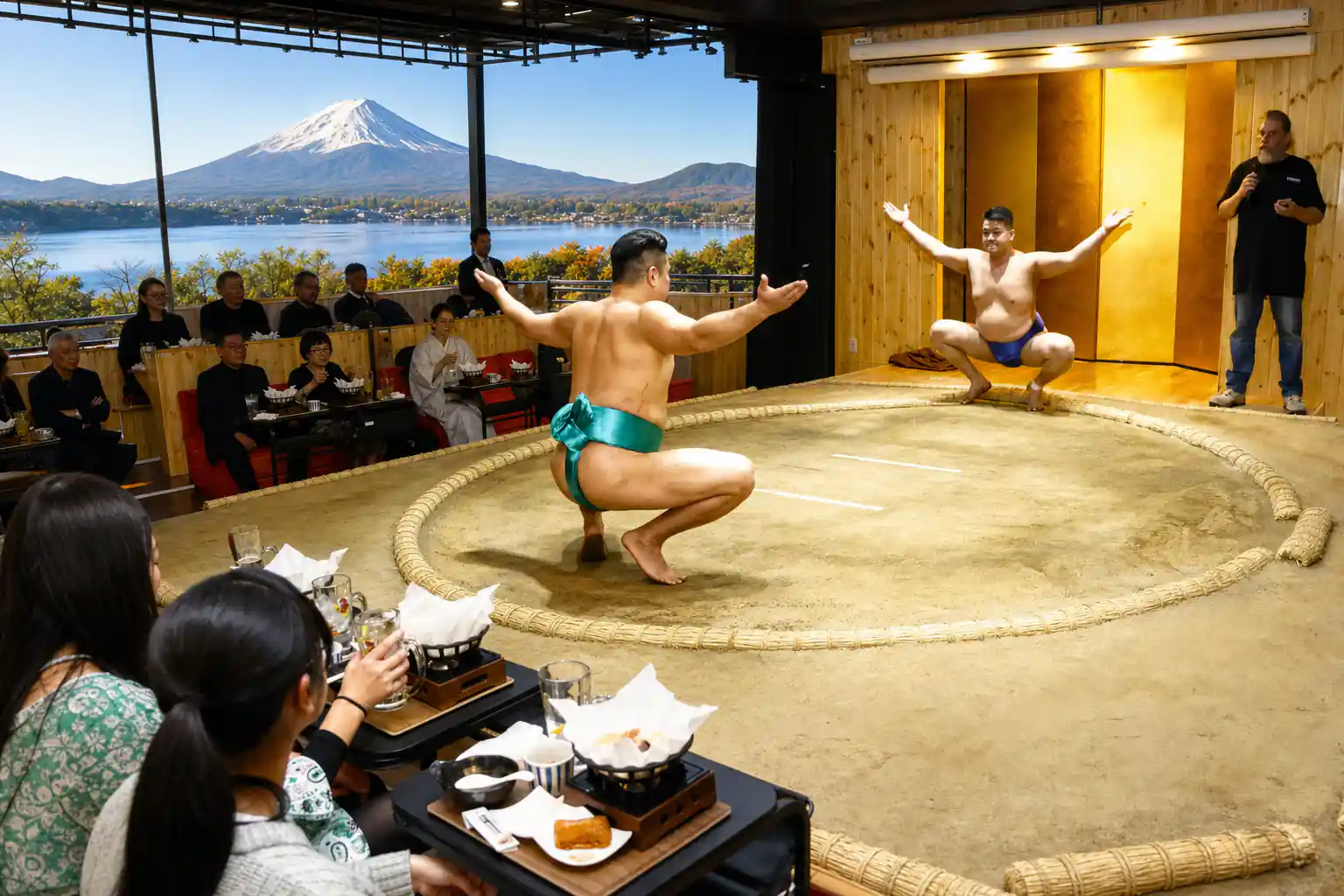
He then performs chiri-chozu : squatting low, extending both arms to the sides with palms turned upward, demonstrating to the gods and his opponent alike that his hands hold no weapons. He throws salt.
Is the Tokyo sumo and chanko nabe show worth it?
Booking notes
At the table
- The pot stays on a burner in the middle of the table, so serve young children yourself.
- Chanko nabe is a shared meal: bowls go round and everyone adds to the same pot.
- Take a little cash for souvenirs and anything you want to buy on the way home.
- Tell the staff about allergies when you arrive, not halfway through the meal.
What Is Chanko Nabe?
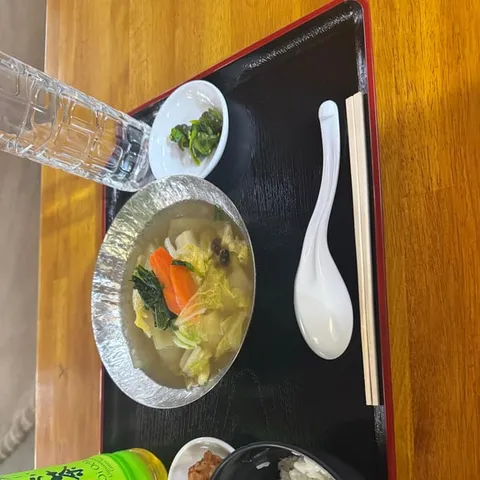
Chanko nabe is the hot pot that sumo stables cook in enormous pots and eat together after training. A savoury broth sits in the middle of the table, and chicken, vegetables, tofu, mushrooms and greens go in a few handfuls at a time. When the pot is almost empty, noodles or rice go in to catch what is left. The Tokyo sumo entertainment show with chicken hot pot and geisha names the dish in its own title.[1]
Wrestlers eat this way to build and hold weight, and the numbers are startling. A rikishi's daily intake is reported at roughly 5,000 to 8,000 kcal, and it can sometimes go past 10,000.[4] Nobody expects you to keep up. A pot shared among several people works out as a normal dinner, and the pleasure of chanko nabe is the slow rhythm of adding food, talking, and going back for more.
Expect a gentle, savoury broth rather than a fiery one, usually built on soy, sake or mirin, and stock. Chicken meatballs, cabbage, leek, mushrooms and tofu are the usual company, and many cooks finish with udon or a rice porridge that soaks up the last of the liquid. Nothing arrives at once. The pot keeps working while the show runs, and you eat in rounds as bowls are passed along the table.
Timing the Meal Around the Bouts
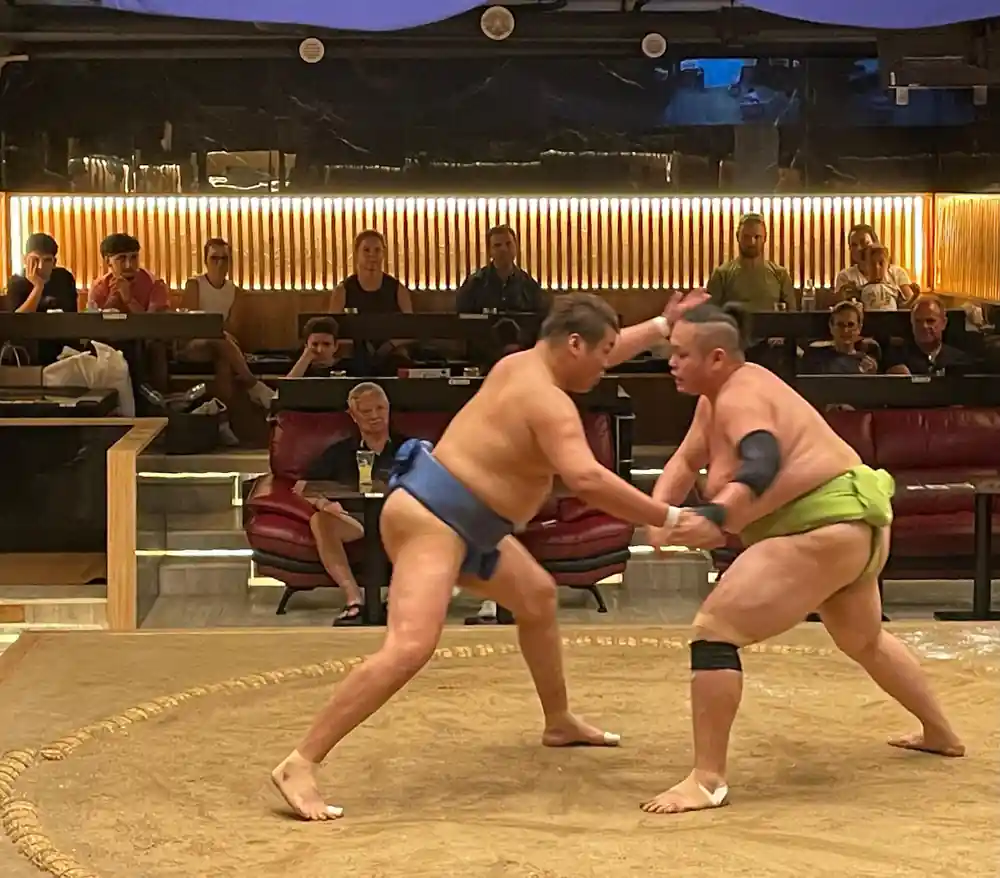
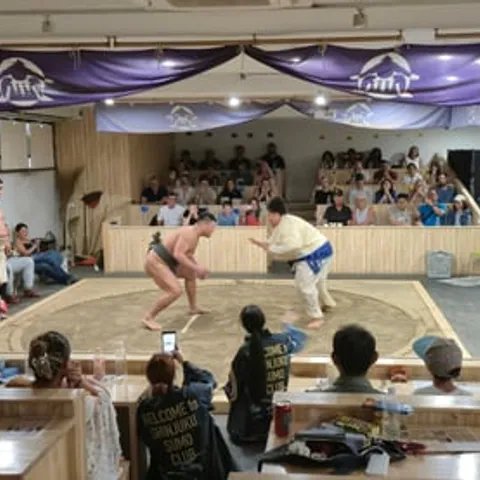
A sumo contest is over almost before you notice it. Bouts usually last only a few seconds, and only rarely do they stretch to a minute or more.[5] That shape suits a dinner show well. You eat between bouts, put your chopsticks down when two wrestlers step into the ring, and pick them up again once the ring clears. Nothing is rushed and nothing drags.
The show runs 2 hours, and starting times shift with the date, so check availability to see the sittings offered on the day you want.[1] Two hours is short enough to slot into an evening after a long day of sightseeing, and long enough for a full meal, several demonstrations, and time with the performers once the wrestling is done.
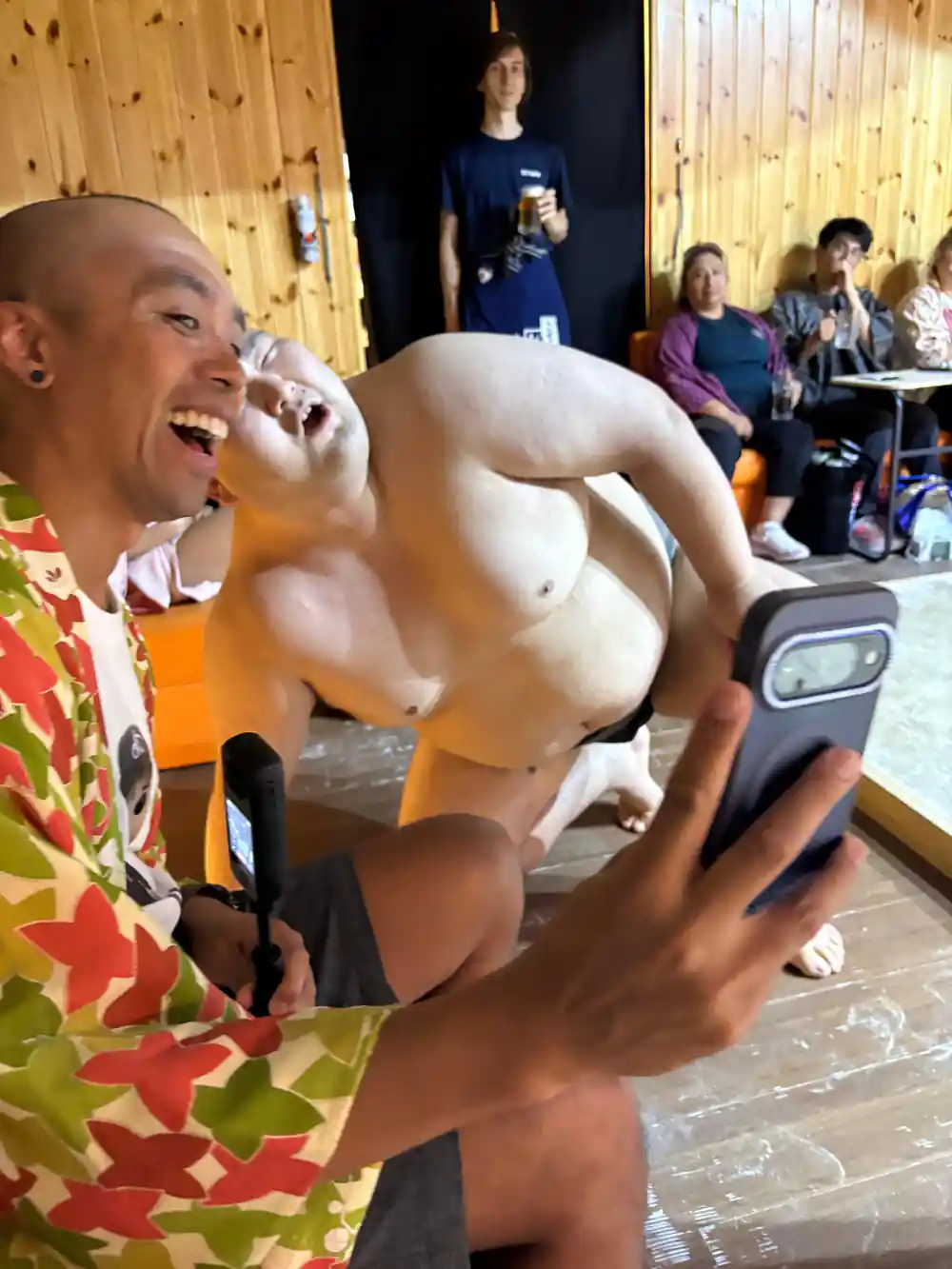
In practice, eat early. Bowls fill quickly in the first half, while people are settling in and deciding what they like, and the second half tends to be louder, with phones out and audience members being called up to try the ring. If you leave your meal until the closing stages, you will be eating while everyone else is watching. Take a little at a time, and keep an eye on the pot rather than on your plate.
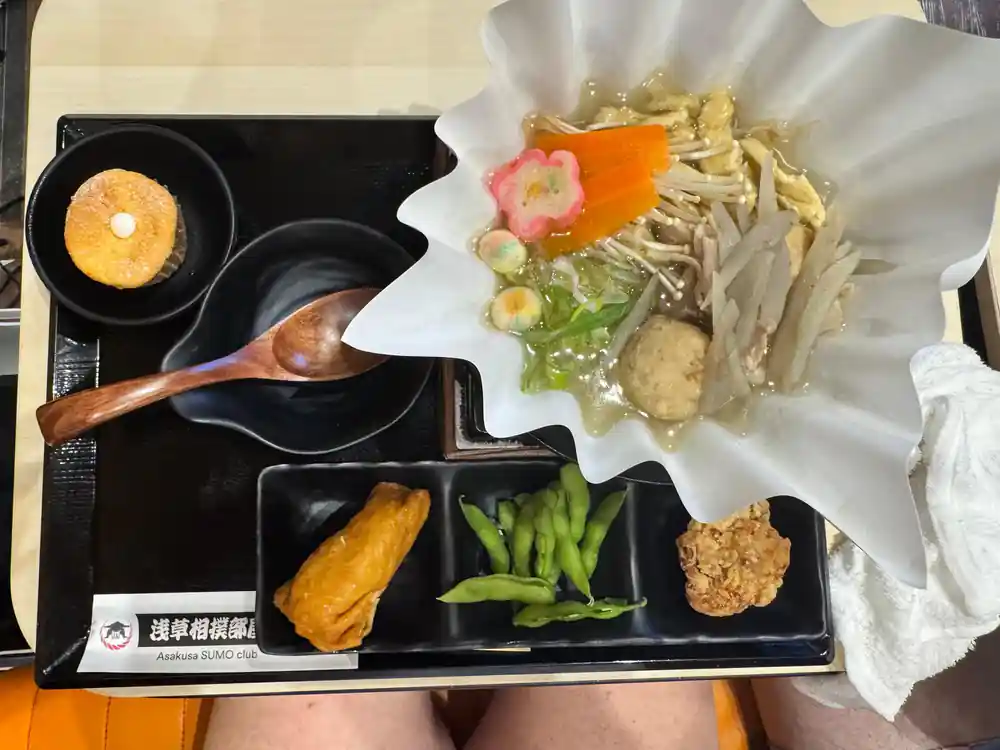
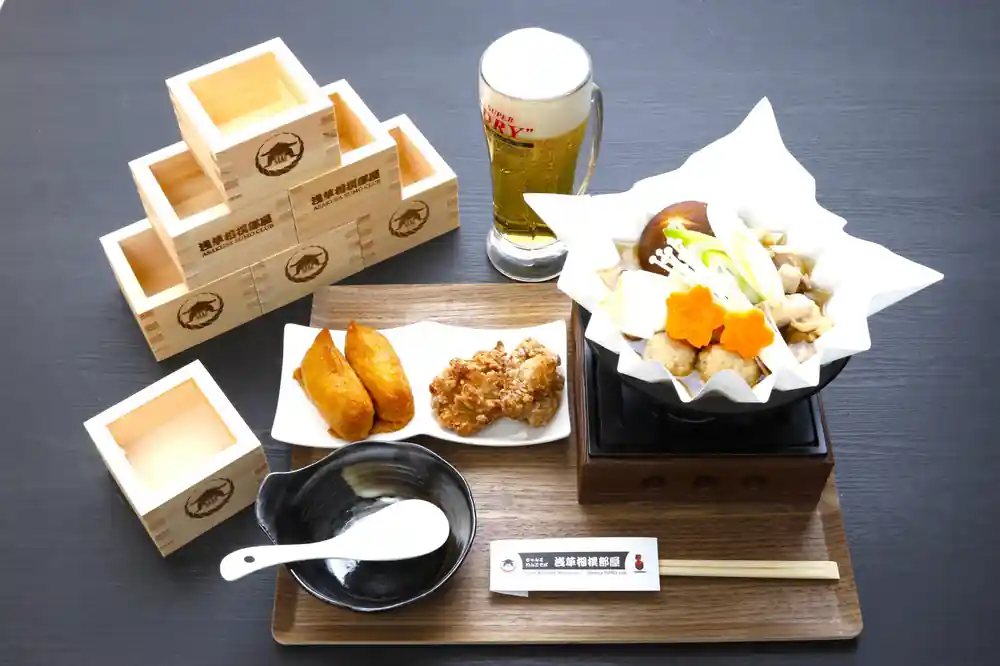
Hot pot, rice and cold drinks set out on a table at a Tokyo sumo show.
Drinks to Order With Your Hot Pot
Chanko nabe is salty, warm and rich, and it makes you thirsty in the best way. A cold lager is the classic partner, and in Tokyo it often arrives in a wooden box with the glass set inside. Sake works too, chilled or gently warmed, and hot green tea or roasted barley tea keeps the table calm if you would rather not drink alcohol at all.
Ask what is already on the table when you sit down, and order anything else before the first bout, while staff are still moving around the room. Soft drinks, iced oolong tea and water are easy to find in Tokyo dining rooms, and asking for more between courses is never a problem. Sort out how you will pay early, so you are not waving at staff while the ring is busy.
Pace matters more than choice. The evening runs 2 hours and the room warms up once the pots are on their burners.[1] Alternate a beer with tea or water, especially if you have a train ride back to your hotel, and remember that the loudest part of the night comes at the end, when you will want a clear head for photographs and for finding the right exit.
Vegetarian, Vegan and No-Pork Requests
The Tokyo show listed here names a chicken hot pot, so the standard pot is not vegetarian.[1] That is normal for the dish rather than a shortcoming of one tour: chanko nabe is built on chicken stock and chicken meatballs, and some stables add pork as well. If you eat fish but not meat, or you are vegan, write to the operator before you pay and ask what can be done for your date.
The questions worth asking are simple. Is the broth made with chicken or pork stock, or with kombu and shiitake? Is there dashi, and if so is it made with bonito flakes? Can the kitchen set aside a portion of vegetables and tofu before the chicken goes in? Japanese hot pot adapts easily, so a separate pot in a clear stock is the kind of thing worth requesting in advance rather than on the night.
If the answer is no, you can still have a good evening. Eat something before you arrive, enjoy the rice, pickles and simple sides that come with the meal, and treat the show as the main event. It also helps to say what you need in writing when you book, because it is easier for a kitchen to plan a week ahead than to improvise while the first bout is starting.
from US$102
Tokyo sumo entertainment show with chicken hot pot and geisha, rated 4.79 from 8,004 reviews, running 2 hours.[1]
Allergies, Outside Food and Special Diets
Say something at the time of booking rather than on the night. You can reserve now and pay later, and free cancellation runs up to 24 hours in advance for a full refund.[1] A short message with your booking is usually enough to start the conversation, and it gives the kitchen time to answer properly.
The usual allergens in a Japanese hot pot are soy, wheat, egg, sesame and fish, and dashi often brings in bonito or mackerel. Sesame oil, ponzu and miso appear on the table too. If your allergy is serious, carry a card in Japanese that lists exactly what you must avoid, show it to staff as you sit down rather than halfway through the meal, and ask whether your portion can be prepared separately in a clean pot.
Ask about outside food before you arrive, especially where a child or a medical need is involved, since most venues prefer guests to eat from their own kitchen. Keep medication with you rather than in a bag left at the door, and mention anything that affects what you can eat when you confirm the booking, not when the plates land.
Children at the Table and Family Dining
Chanko nabe is a friendly meal for children: mild broth, plenty of rice, and small bowls that can be filled as they like. The one thing to watch is heat. The pot sits on a burner in the middle of the table, so seat younger children on the far side and serve them yourself. The show is wheelchair accessible and a small group option is available, which helps if you are booking for a family.[1]
If your children would rather wrestle than watch, look at the family sumo workshop and live wrestling show with lunch in Tokyo, from US$62, which runs 2 hours and lets everyone try the ring.[6] It is rated 4.90 from 430 reviews.[6] You could pair a workshop with a dinner show on different evenings, so the trip does not hinge on one long night out.
Portions are easy to manage because you build the meal yourself. Start children with rice and a little broth, add chicken and tofu as they get comfortable, and save the noodles for the end, when appetites have settled. The show runs 2 hours, so there is no rush.[1] Sharing one pot between a family also keeps the bill sensible, and a slow eater is not a problem when the evening is built around small rounds of food.
From Arrival to the Last Bite
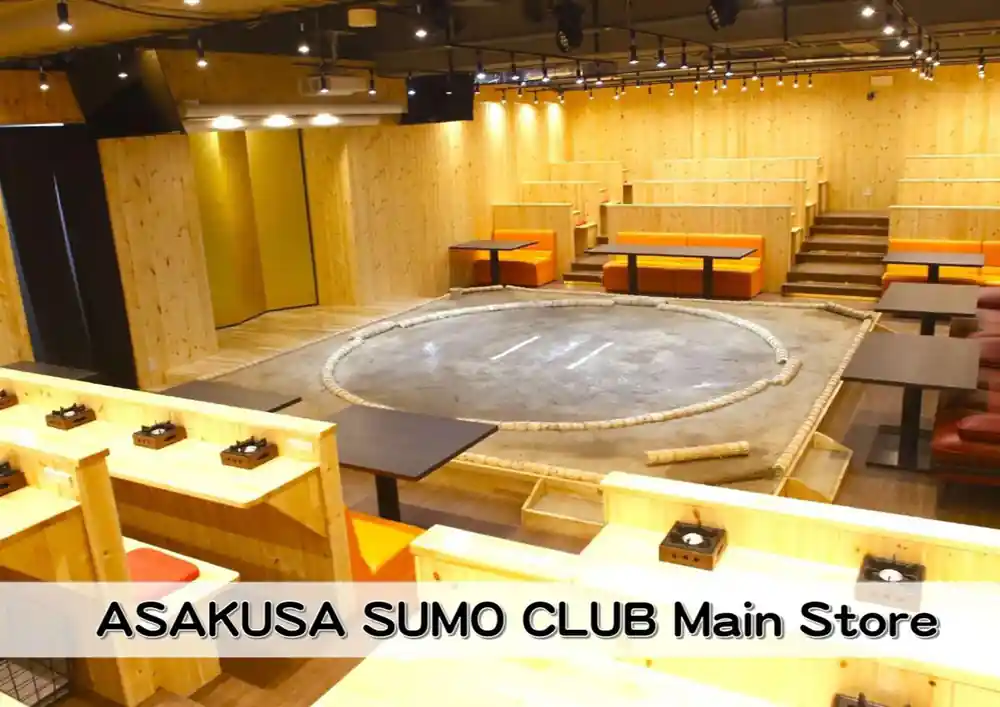
You arrive, leave your shoes and bags if you are asked to, and take a seat around the ring. Staff bring the pot, light the burner, and drinks come out while the room fills up and people work out which wrestler is which. This is the moment to check your seat, settle the children, and remind staff about anything you flagged when you booked.
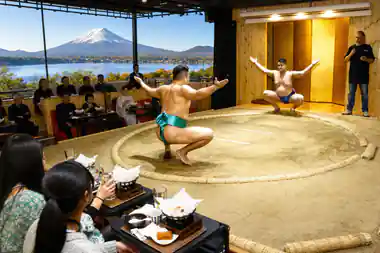
The performance starts with ritual. Before a bout, a wrestler performs chiri-chozu, squatting low with both arms extended to the sides and palms turned upward to show the gods and his opponent that his hands hold no weapons, and then throws salt.[7] The bouts are short, often a few seconds.[5] The evening settles into a pattern: food, ritual, a spark of action, and food again.
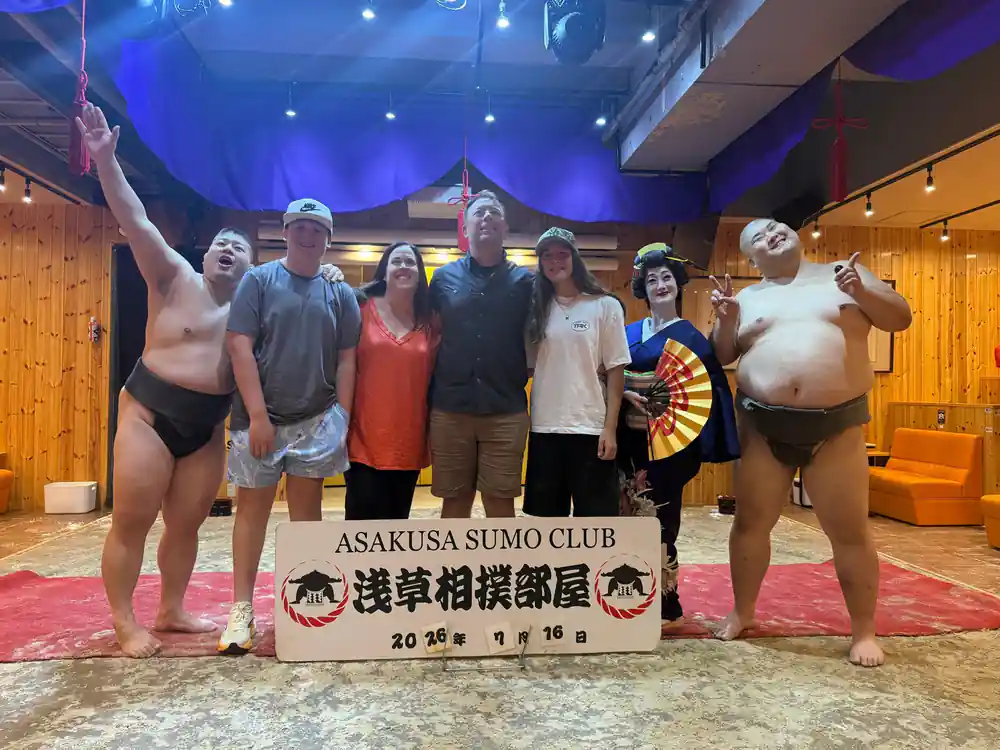
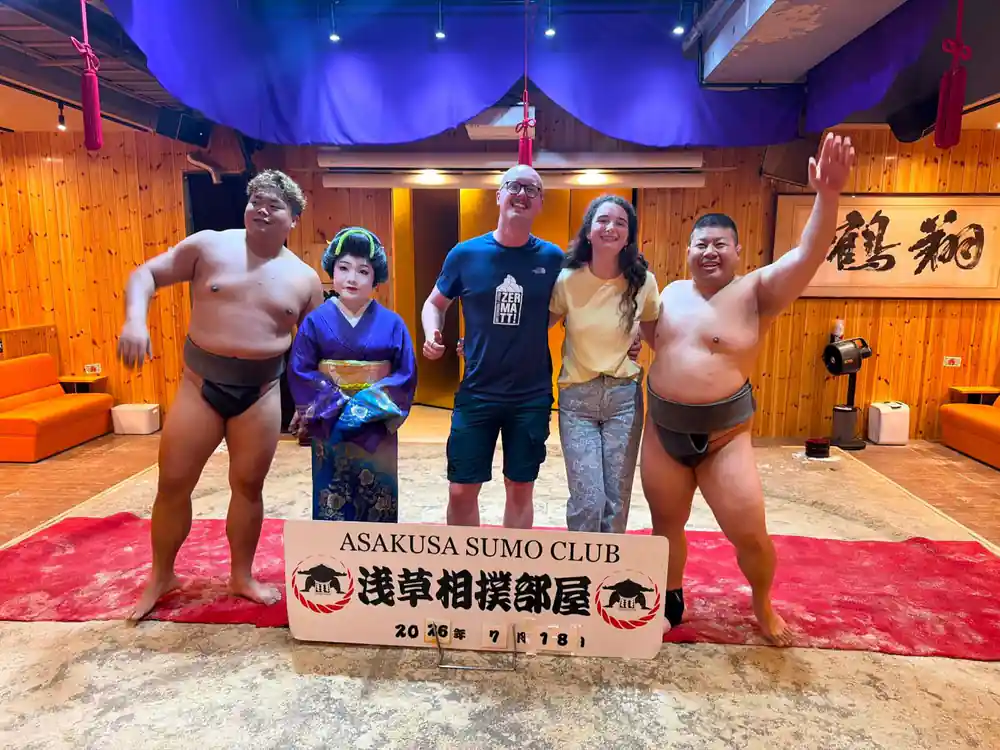
At the end there is often a chance for photographs with the performers before you head back out into the city. The whole thing runs 2 hours and is rated 4.79 from 8,004 reviews.[1] Wheelchair access is available and small group seating is an option, so it works for a couple, a family, or a group of friends who want dinner and a show in a single booking.[1]
Tokyo sumo and hot pot shows, from prices
From prices for Tokyo sumo dinner shows
From prices per adult in US dollars:[1][2][3][9]
When to book your sumo dinner show
Getting ready for the meal
Pick your date
Starting times vary, so check availability for the day you want and pick a sitting that leaves you time to arrive calmly.[1]
Settle in
Arrive a little early, take your seat around the ring, and tell the staff about any allergies before the food arrives.
Eat as it cooks
The hot pot is built in stages, so take a little at a time and go back as new food goes in.
Watch the ritual
Before each bout a wrestler shows empty hands and throws salt, then the action is over in seconds.[5][7]
Stay to the end
The evening runs 2 hours in total, so you are back out on the street while the city is still busy.[1]
Plan the trip home
Check the last train times from your station before you go in, and keep some cash or a charged card for the ride back.
Chicken hot pot, sumo and geisha in one Tokyo evening
from US$102Reserve now & pay later