The essentials
- Professional sumo began in the Edo period, when matches raised money for shrines, temples and bridges.[1] The Tokyo arena in Ryogoku has a capacity of up to 10,000.[2]
- A contest usually lasts only a few seconds, and in rare cases a minute or more, while every bout opens with the chiri-chozu gesture and a salt throw.[3][4]
- Asakusa and Ryogoku face each other across the Sumida, which makes it easy to pair a temple visit with a show or a stable visit on the same day.
- The Tokyo: Sumo Entertainment Show with Chicken Hot Pot & Geisha is from US$102 and rated 4.79 from 8,004 reviews.[5]
- Morning practice typically begins between 5:00 and 7:30 AM and continues for 2 to 4 hours, and the exact start time varies by stable and season.[6]
- Top choice Sumo Show with Hot Pot from US$102 Duration2 hours[5]Reviews4.79 from 8,004 reviews[5]CancellationCancel up to 24 hours in advance[5]PaymentReserve now & pay later[5] Check availability
- Morning Practice Viewing from US$102 Duration1.5 - 2 hours[7]Reviews4.78 from 720 reviews[7]CancellationCancel up to 24 hours in advance[7]PaymentReserve now & pay later[7] See this tour
- Sumo Show & Dining from US$89 Duration1.5 - 2 hours[8]Reviews4.80 from 3,454 reviews[8]CancellationCancel up to 24 hours in advance[8]PaymentReserve now & pay later[8] See this tour
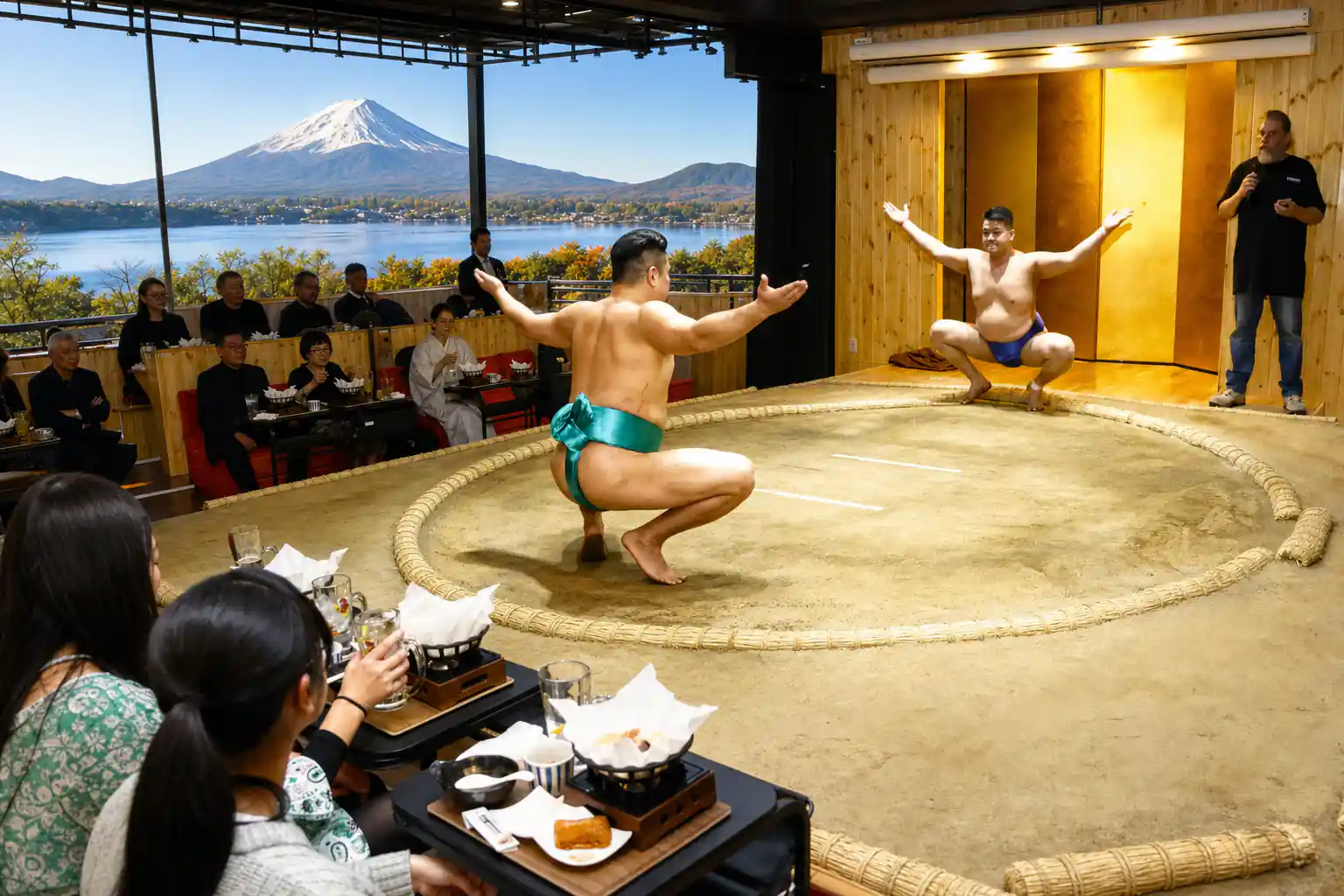
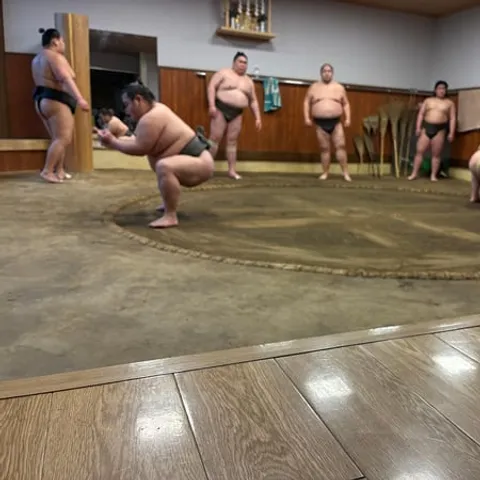
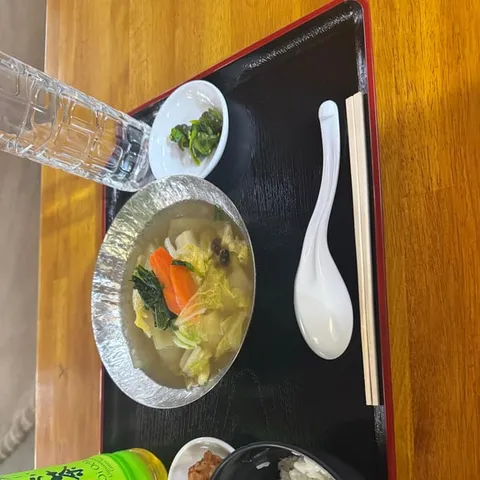
Matches were held to raise money to construct shrines and temples or to replace bridges, and thus the professional sumo wrestlers were born.
Is the Ryogoku and Asakusa sumo story worth your time?
Booking and access
On the day
- Arrive a little early so you can settle in before the first bout
- Wear light layers, since the hall warms up once the room fills
- Keep some yen handy for the small shops and vending machines near the venue
- Save your booking confirmation on your phone before you set out
Sumo's Origins in Written History
Professional sumo has a starting point you can put your finger on. It took shape in the Edo period, when matches were held to raise money to construct shrines and temples or to replace bridges, and that fundraising circuit is what brought the professional sumo wrestler into being.[1] The rules that grew up beside it are counted rather than argued about: the Japan Sumo Association defines 82 kimarite, or match-winning techniques, and 5 non-techniques, or ways to lose.[9]
Everything about the sport is graded. Wrestlers are sorted into one of six divisions covering ten ranks in total, and only the top division, Makuuchi, is subdivided further, into five separate ranks.[10] Above all of that sits the yokozuna, and the rank stays rare: as of November 2025, exactly 75 wrestlers have attained yokozuna status in sumo history.[11]
The vocabulary repays a little study before you go. A bout can end in a throw, a push or a trip, and the winning technique is named once the dust settles. Knowing that the techniques are counted and named changes the way a highlight reel reads, and it gives you something to watch for beyond the result. Once you know what you are looking at, the two seconds of contact carry far more detail than they first appear to.
Kanjin Charity Bouts on Sacred Ground
The bouts that built professional sumo were fundraisers first. Matches were held to raise money to construct shrines and temples or to replace bridges, and it was this circuit that produced the professional sumo wrestler.[1] The takings went into temple halls, shrine buildings and river crossings, and the sport has carried a strong ceremonial streak ever since. It has always been a paying spectacle as much as a sacred one.
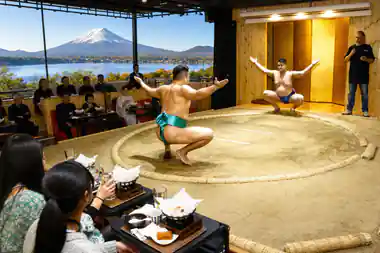
That ceremony is on show at the start of every bout. Before the wrestling, the wrestler performs chiri-chozu, squatting low with both arms extended to the sides and palms turned upward, showing the gods and his opponent that his hands hold no weapons, and then he throws salt.[4] It is a slow, deliberate opening, and it is worth watching closely the first time you see it.
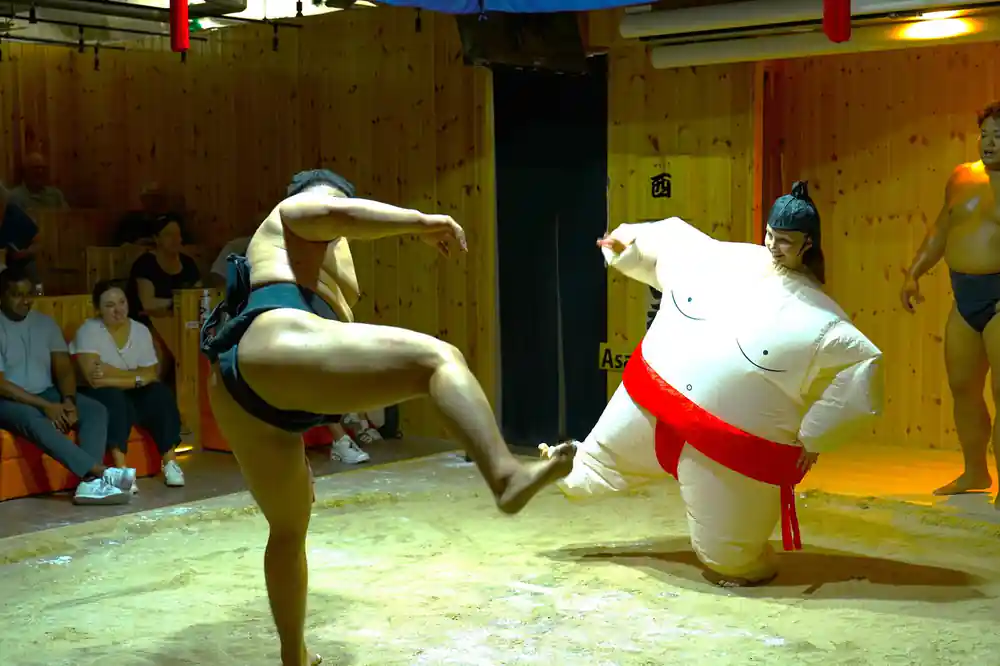
The contest that follows is brief. A contest usually lasts only a few seconds, but in rare cases it can take a minute or more.[3] The shape of the occasion is what makes it readable from the stands: the entrance, the salt, the crouch, the silence, and then the collision. The build-up is long, the action is not, and that contrast is the whole appeal.
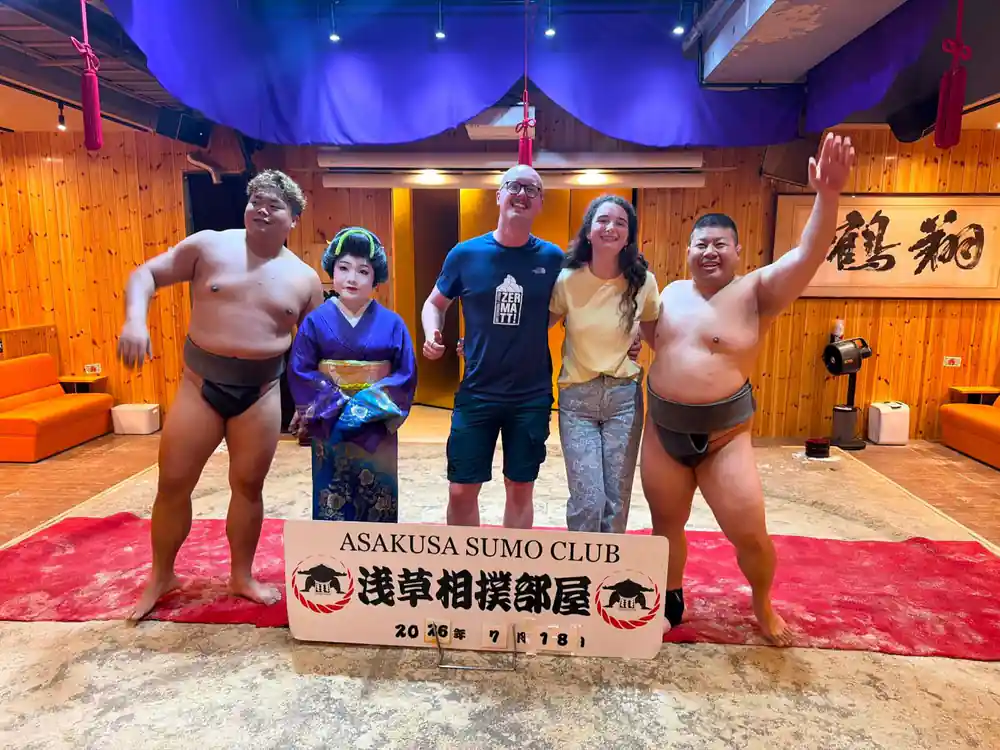
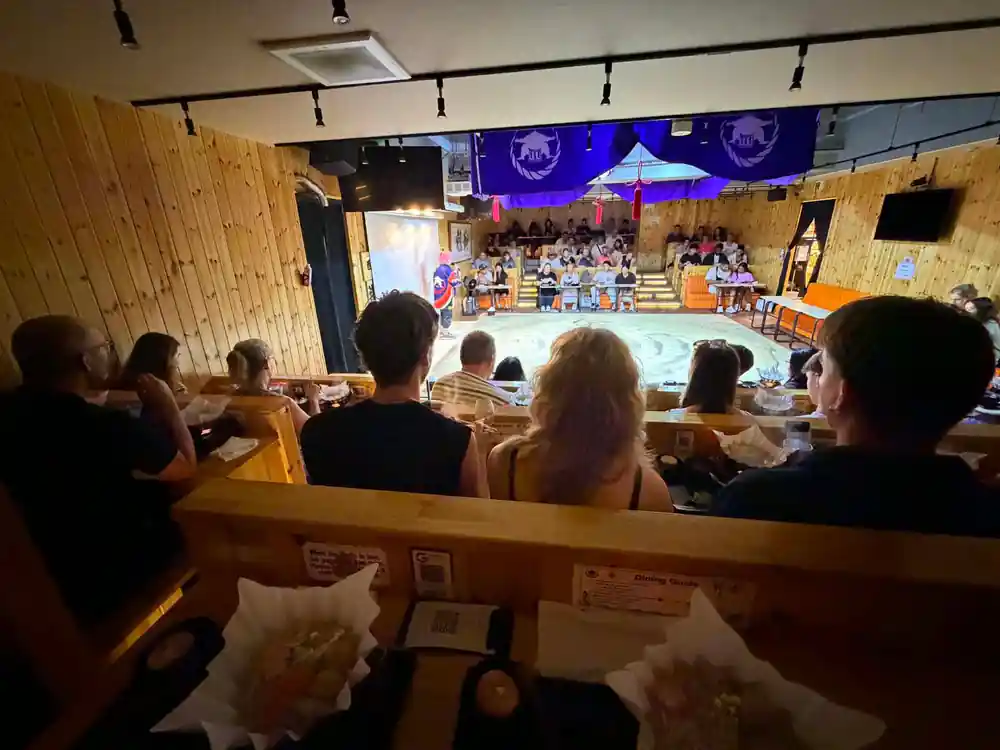
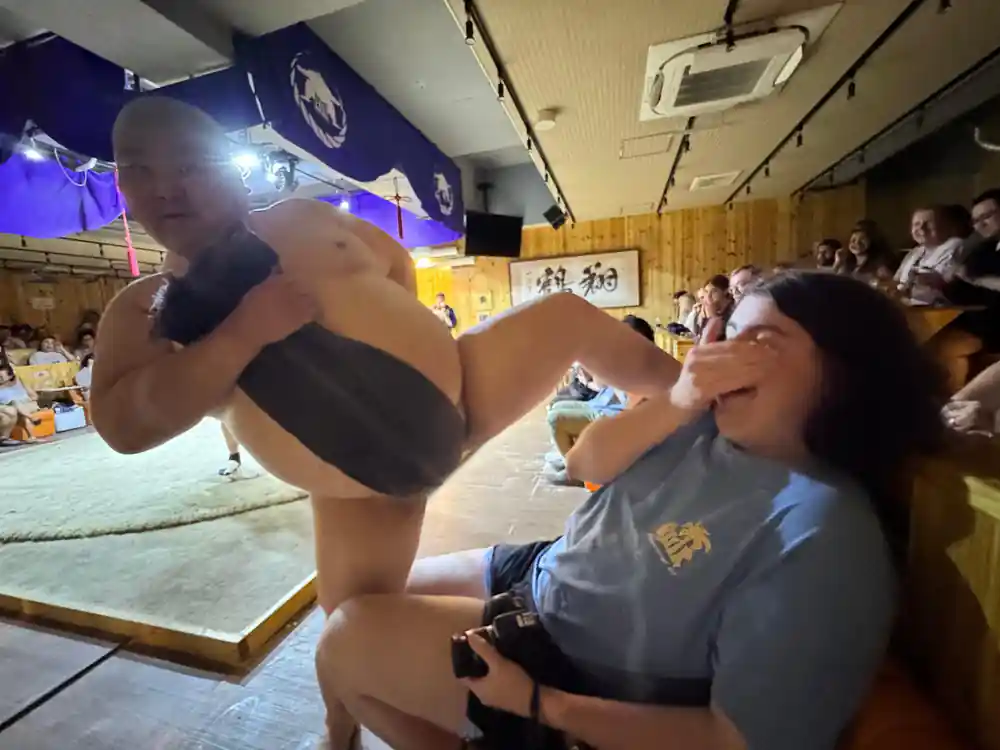
A bout in the sand ring, with the crowd close enough to hear every breath.
Asakusa as the Entertainment Capital
Asakusa has been the city's stage for a very long time. The district grew up around its temple, and the lanes around it filled with teahouses, small stages, food stalls and performers, so a paying audience was nothing new here. Whatever the fashion in entertainment, the district has always had room for a crowd, a roof and a performance, and the mix still works today.
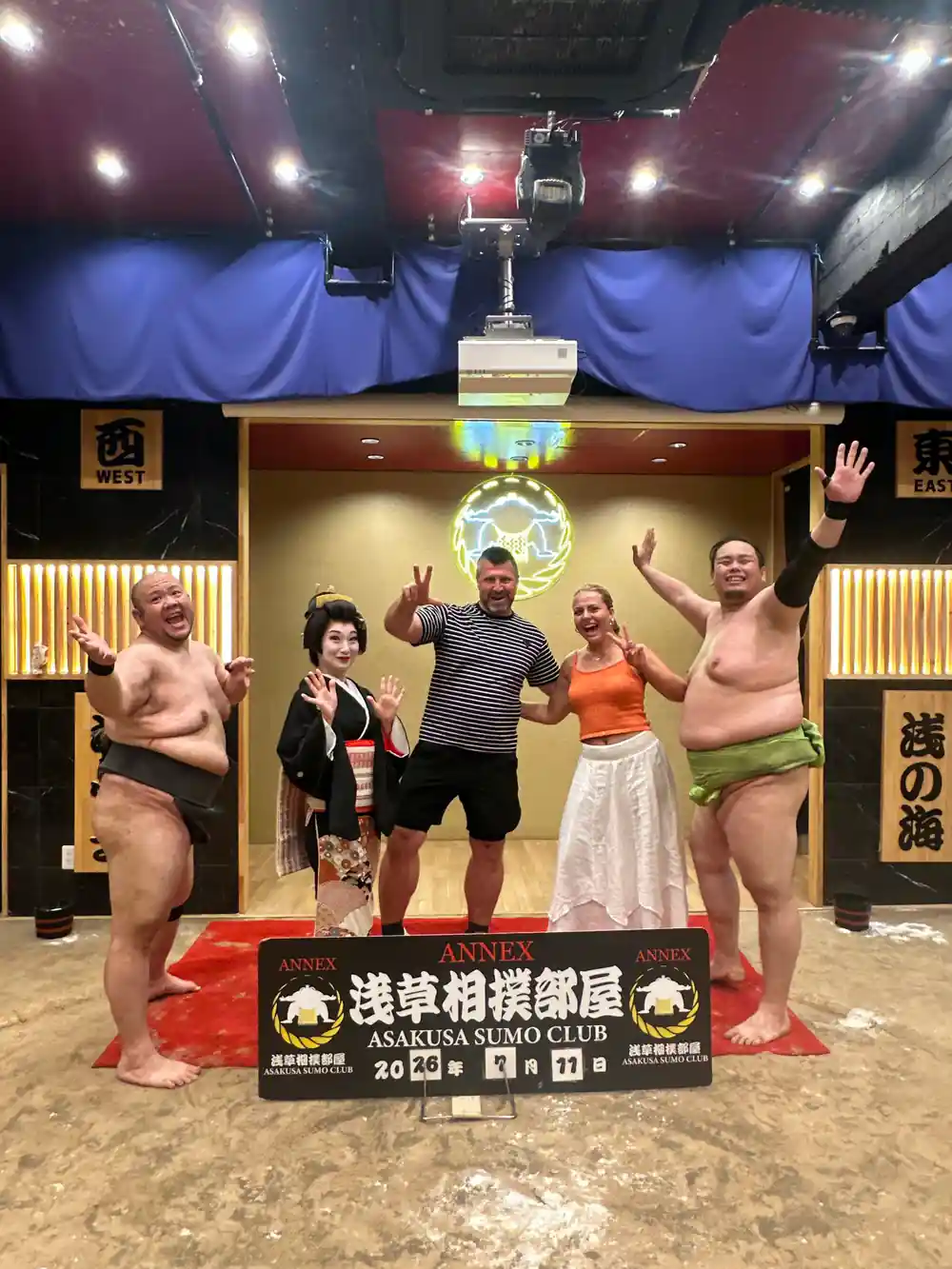
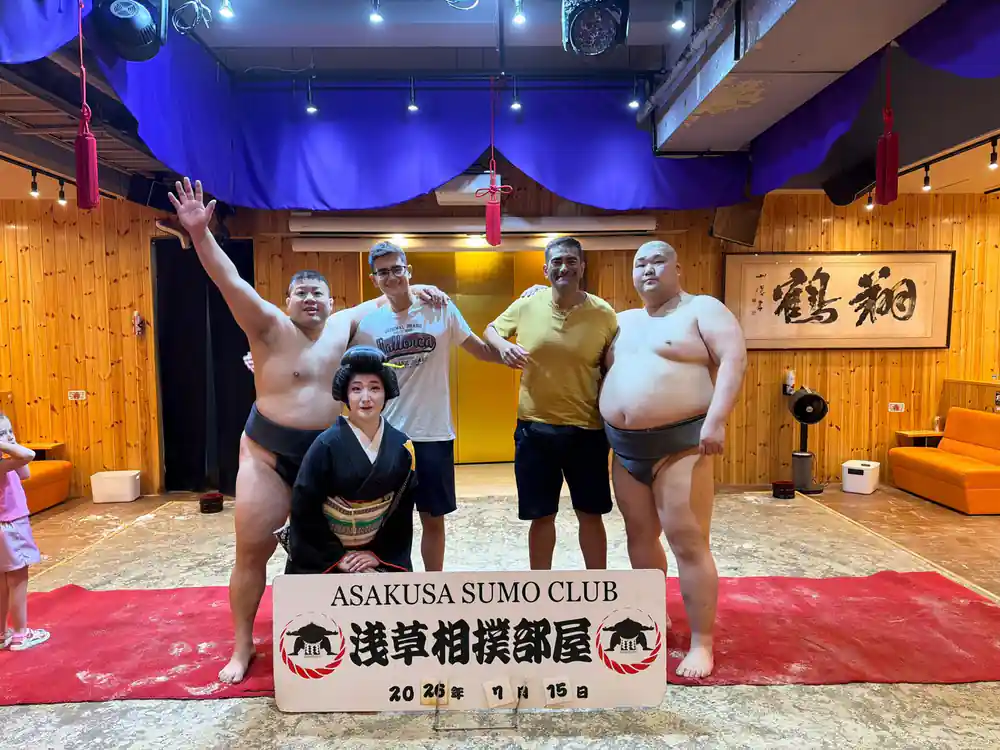
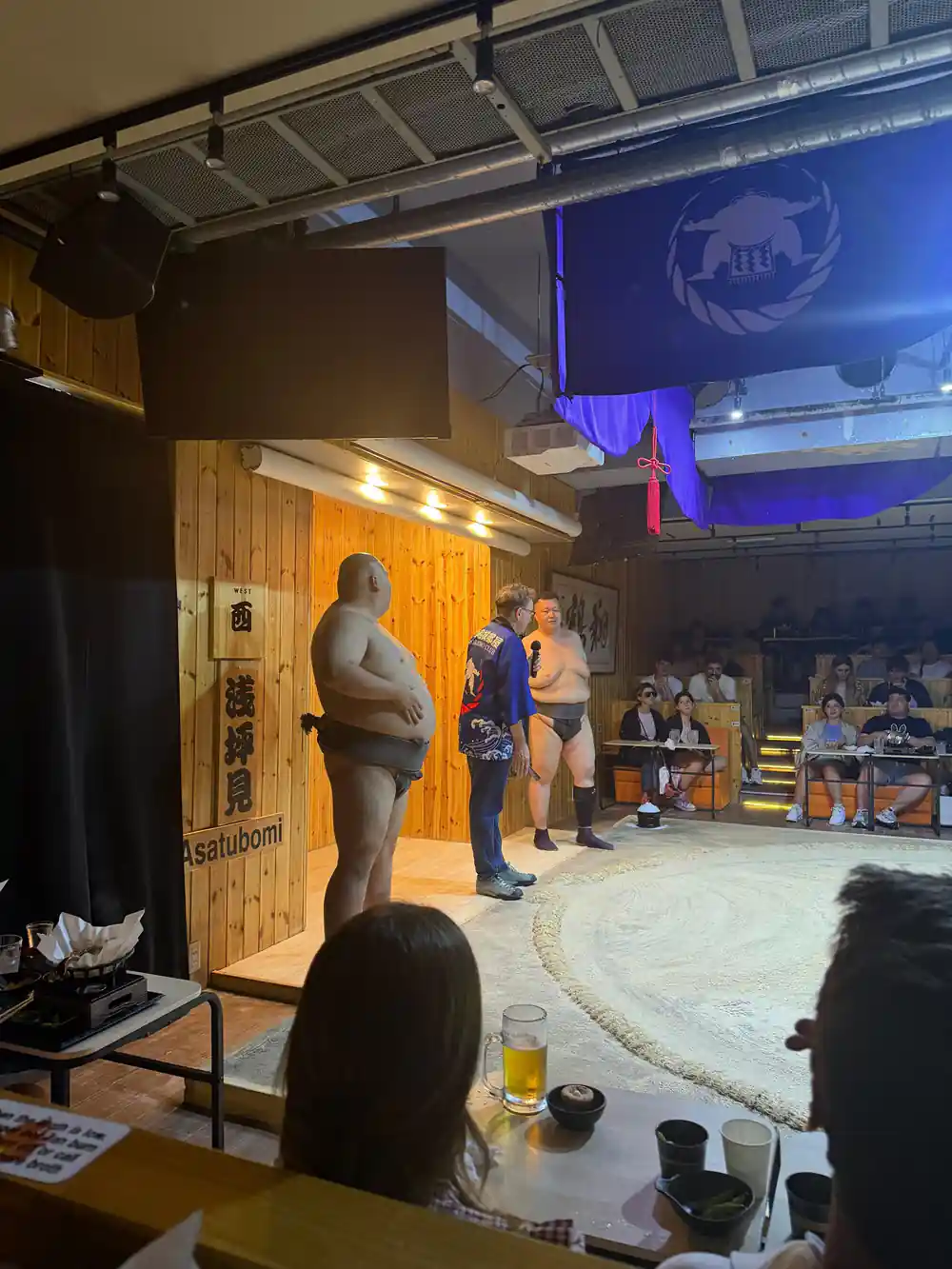
Today Asakusa is a comfortable base for a sumo show, and the shows are built for people who are new to the sport. The Tokyo: Sumo Entertainment Show with Chicken Hot Pot & Geisha is from US$102 and rated 4.79 from 8,004 reviews, with the listing noting small group availability and wheelchair access.[5]
The geography is part of the pleasure. From the temple lanes you can walk down to the Sumida, cross a bridge or two, and reach the arena district without getting on a train. Souvenir shops, snack counters and small workshops line the route, and the riverbank gives you a natural pause between the two halves of the day. Do it once in daylight and once after dark and the district feels completely different.
The Shift to Professional Ticketed Sport
Professional sumo gave the sport a calendar. Japan holds six Grand Sumo Tournaments each year, and the January tournament is the first of them.[12] Between those dates the stables keep working every morning, and entertainment shows give visitors another way in.
Tickets come in tiers. Second-floor B or C arena seats cost between 3,500 and 5,500 yen.[13] The room around them is large: the Kokugikan National Sumo Arena in Ryogoku, Sumida City, Tokyo, has a capacity of up to 10,000.[2]
A tournament day is less about a single match than about the rhythm of the hall. The wrestlers enter, salt is thrown, the crouch is held, the crowd goes quiet, and then the bout is over almost before it began. Sit close enough to the ring and you can hear the impact; sit high and you can see the geometry of every move. It is a tense, photogenic way to spend an afternoon, and much of the drama happens before anyone moves.
from US$102
Listed from US$102, it runs 2 hours, is wheelchair accessible and can be cancelled free up to 24 hours in advance.[5]
Earthquakes, War, and the Journey Across the River
The ground east of the Sumida is low and flat, the kind of riverside district that has been rebuilt more than once. Canals, embankments and bridges still organise the streets, and the grid you walk today is doing the same work it always did: keeping water out, moving people through, and holding the city together across a wide river.
The sport's public face is on this side of the water. The Kokugikan National Sumo Arena sits in Ryogoku, Sumida City, Tokyo, with a capacity of up to 10,000.[2] Around it are the Sumo Museum, the Former Yasuda Garden and Yokoamicho Park, all within a short walk of one another.[14]
Crossing the river is a good way to join the two halves of a sumo day. The bridges give you the skyline on one side and the old downtown on the other, and the walk between the two neighbourhoods is short enough to do twice if you want a morning at the stables and an evening at a show.
Ryogoku: Tokyo's Sumo Town
Ryogoku is a small area with a large reputation. Its centrepiece is the arena: the Kokugikan National Sumo Arena in Ryogoku, Sumida City, Tokyo, has a capacity of up to 10,000.[2] The district around it is compact enough to cover on foot, with the station, the museum and the riverbank in the same few blocks. You can arrive by train, walk a few minutes and be at the arena gate.
The calendar shapes the year here. Japan holds six Grand Sumo Tournaments each year, and the January tournament is the first of them.[12] For arena seats, second-floor B or C places cost between 3,500 and 5,500 yen.[13]
If the tournament dates do not fit your trip, the district still rewards a visit. A Ryogoku walking tour with sumo museum entry is listed from US$38[14], a sumo town guided walk with lunch is listed from US$121[15], and a grand sumo tournament viewing tour is listed from US$111[16].
Why Wrestlers Still Live by the River
Stables give the district its daily rhythm. Wrestlers train, eat and sleep in the same building, and the working day starts early: morning practice typically begins between 5:00 and 7:30 AM and continues for 2 to 4 hours, with the exact start time varying by stable and season.[6]
Feeding that schedule takes volume. A rikishi's daily caloric intake ranges from approximately 5,000 to 8,000 kcal, and can sometimes exceed 10,000.[17] Chanko-nabe is the dish at the centre of that diet, and hot pot is also the meal that appears on the visitor side of the sport.
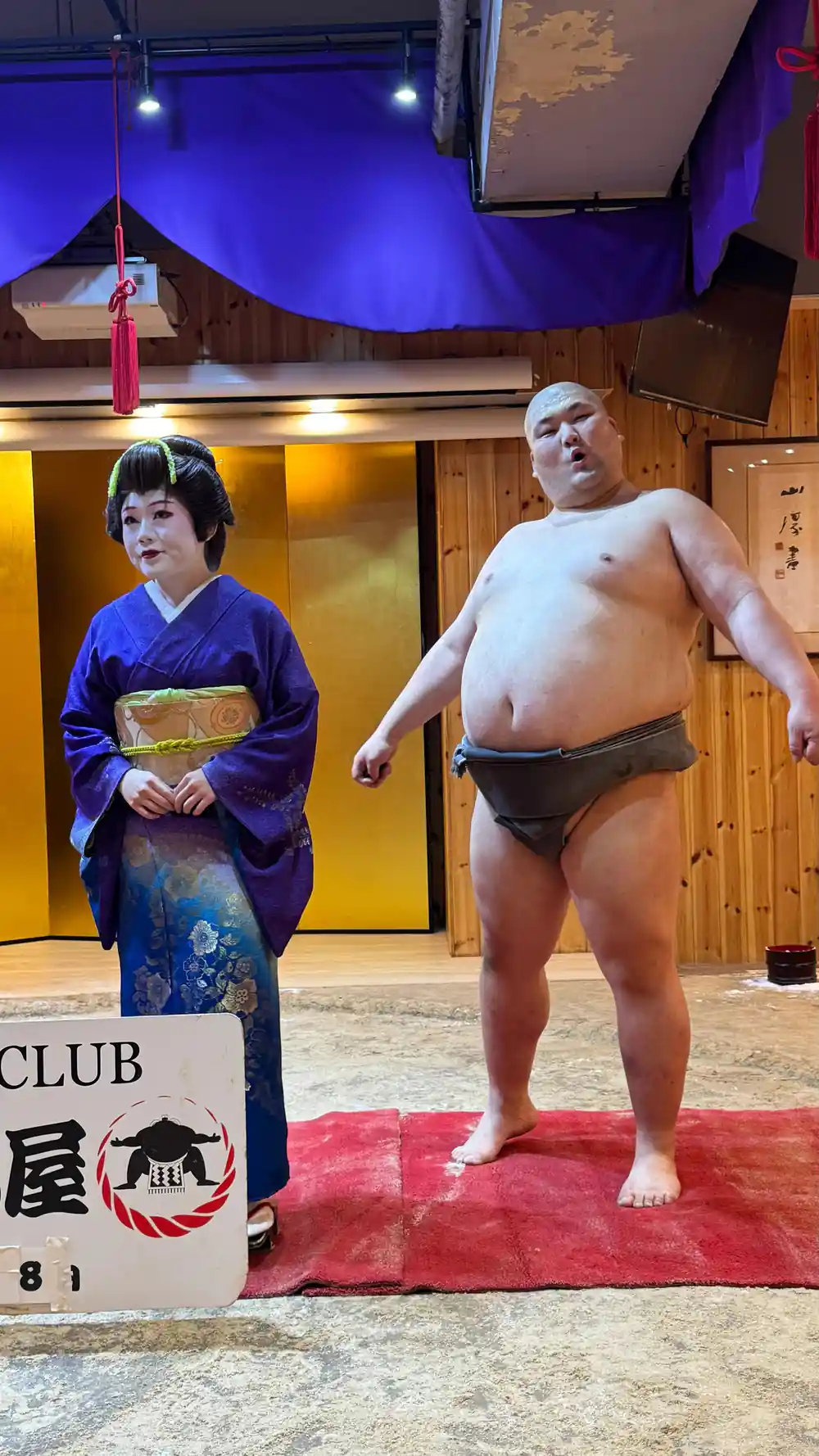
The Tokyo: Sumo Entertainment Show with Chicken Hot Pot & Geisha puts a chicken hot pot, wrestling and a geisha performance into the same evening, from US$102 and rated 4.79 from 8,004 reviews.[5] Small groups are available, the listing notes wheelchair access, and cancellation is free up to 24 hours in advance.[5] It is an easy introduction for anyone who wants the flavour of the sport without the early alarm.
Tokyo sumo shows: from-prices in US dollars
Each bar is a from-price for a Tokyo sumo listing on GetYourGuide: Shinjuku show[18], morning training[19], sumo dining[8], entertainment show[5], morning practice[7].
Cost per person, from-prices in US dollars
Each amount is a US dollar from-price taken from GetYourGuide listings: Entertainment Show[5], Show & Dining[8], Shinjuku Show[18], Morning Practice[7] and Ginza Show[20].
When to book and when to go
Plan your sumo history day
Pick a bank of the river
Asakusa and Ryogoku face each other across the Sumida, and both have shows, stables and walking routes in easy reach of a station.
Choose a show or a practice
The Tokyo show is listed at 2 hours[5], while morning practice typically begins between 5:00 and 7:30 AM and runs 2 to 4 hours.[6]
Book before you fly
The Tokyo show offers reserve now and pay later, and free cancellation up to 24 hours in advance for a full refund.[5]
Walk between the sights
A Ryogoku walking tour takes in the Sumo Museum, the Former Yasuda Garden and Yokoamicho Park on foot.[14]
Eat like a wrestler
A rikishi's daily caloric intake ranges from approximately 5,000 to 8,000 kcal, and can sometimes exceed 10,000.[17]
See the Tokyo sumo show in the heart of the old city
from US$102Reserve now & pay later