The essentials
- A sumo entertainment show with a live geisha dance, bouts in a sand ring and a shared chicken hot pot, all in one room in Tokyo.
- The listing gives a duration of 2 hours, and start times vary, so check availability when you choose your date.[1]
- Prices start from US$102 per person on this listing, and you can reserve now and pay later.[1]
- Free cancellation up to 24 hours in advance of the show gives you a full refund if your plans change.[1]
- Small group availability and a wheelchair accessible room make the evening easy for couples, friends and families.[1]
- Top choice Geisha & Hot Pot Sumo Show from US$102 Duration2 hours[1]Rating4.79 from 8,004 reviews[1]CancellationCancel up to 24 hours ahead[1]BookingReserve now & pay later[1]Good to knowSmall group available[1] Check availability
- Sumo House Dinner Show from US$89 Duration1.5 - 2 hours[2]Rating4.80 from 3,454 reviews[2]CancellationCancel up to 24 hours ahead[2]BookingReserve now & pay later[2]Good to knowWheelchair accessible[2] See this tour
- Sumo Morning Practice from US$102 Duration1.5 - 2 hours[3]Rating4.78 from 720 reviews[3]CancellationCancel up to 24 hours ahead[3]BookingReserve now & pay later[3]Good to knowOptional audio guide: English[3] See this tour
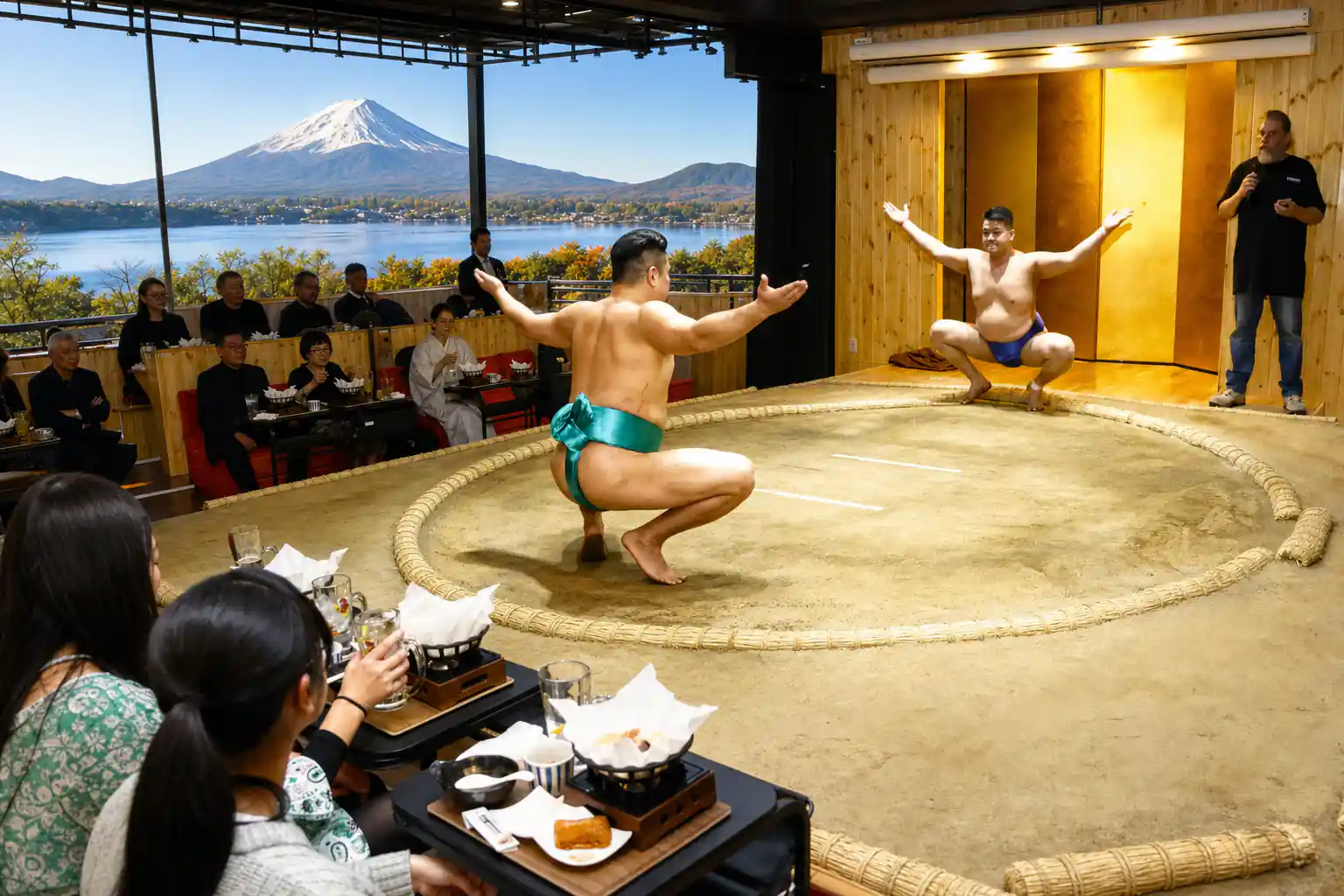
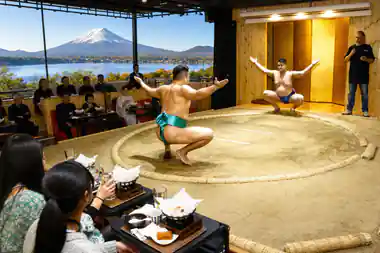
He then performs chiri-chozu : squatting low, extending both arms to the sides with palms turned upward, demonstrating to the gods and his opponent alike that his hands hold no weapons. He throws salt.
Asakusa Geisha Dance and Sumo: Worth an Evening
Booking notes
What the Asakusa Geisha Dance Looks Like on Stage
A geisha dance is not a big production number. It is a slow, deliberate piece of movement, often performed on a small stage or in a cleared space, with a fan, a folded cloth or a long sleeve used to draw lines in the air. In Asakusa the dancers belong to the district's own geisha community, and the room is usually close enough that you can hear the fabric move. On this show the dance sits inside a longer evening that also includes sumo, so you see two very different kinds of performance in one sitting.
Watch the feet first. The steps are small and controlled, the hips stay level, and turns happen on the balls of the feet so the hem of the kimono barely lifts. The face stays quiet. A great deal of the meaning sits in the angle of the head, the tilt of a wrist and the pause between two movements. Because the stage is close, you can see the concentration on the performer's face, which is something a large theatre takes away from you.
Japanese dance is not one style but a family of schools, each with its own way of holding a fan or stepping forward. You do not need to know which school you are watching to enjoy it. Follow the rhythm instead: the music will tell you where a phrase begins, and the dancer will show you where it ends.
Sumo and Geisha on the Same Bill
Sumo and geisha grew up in the same city across the same centuries. Professional sumo took its present form in the Edo period (1603-1867), when matches were held to raise money to construct shrines and temples or to replace bridges, and the professional sumo wrestlers were born from that circuit.[4] Asakusa was one of the districts where townspeople went for an evening out, and the geisha who danced there answered the same appetite for performance.
The two arts also share a taste for ceremony. A bout opens with a ritual: the wrestler performs chiri-chozu, squatting low and extending both arms to the sides with palms turned upward, showing the gods and his opponent that his hands hold no weapons, and then throws salt.[5] A geisha dance opens with its own small courtesies, a bow and a settling of the sleeves, before anything dramatic happens. Both are telling you that what follows is a formal thing, not a scrap.
Putting the two on one bill is a way to see both sides of old Tokyo in a single evening rather than choosing between them. This show runs 2 hours, and seats are available for small groups.[1]
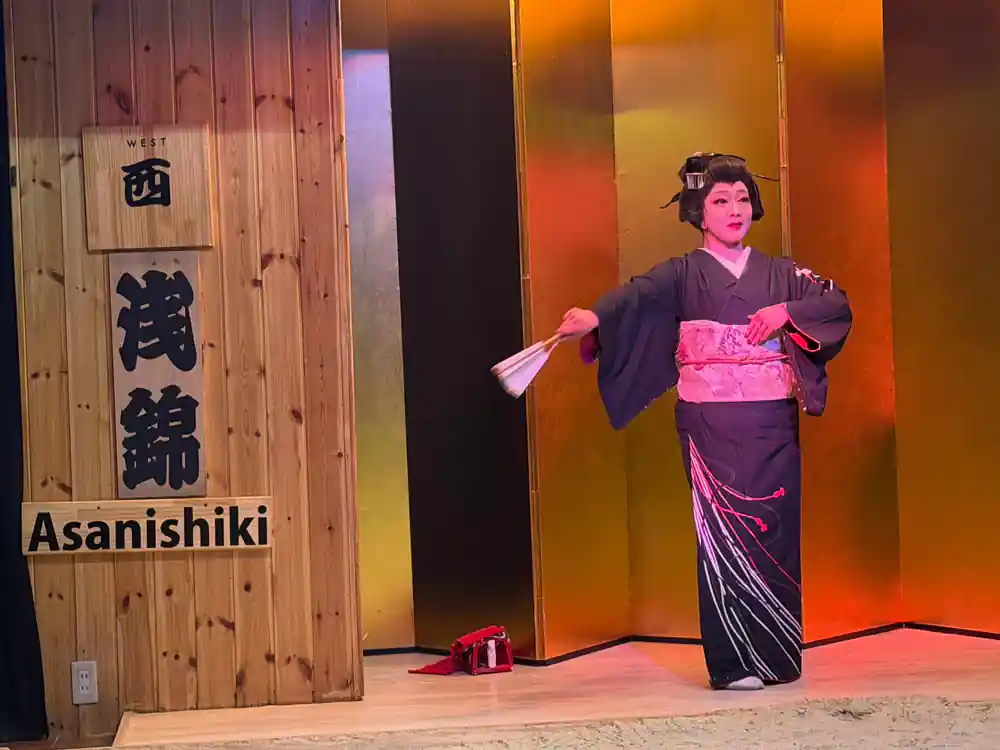
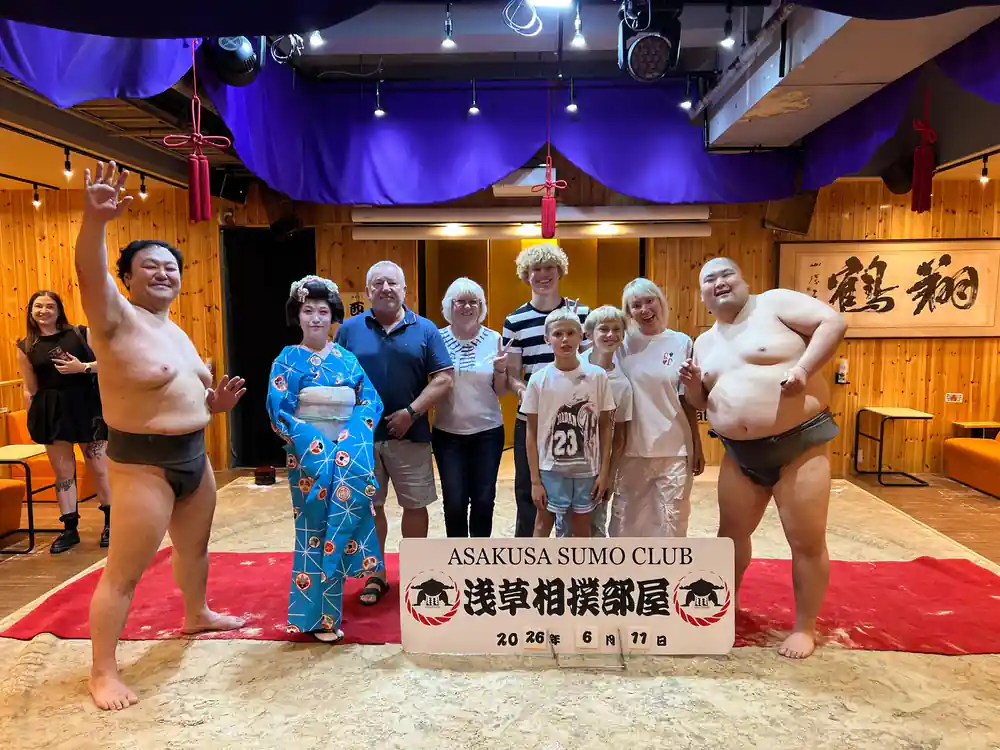
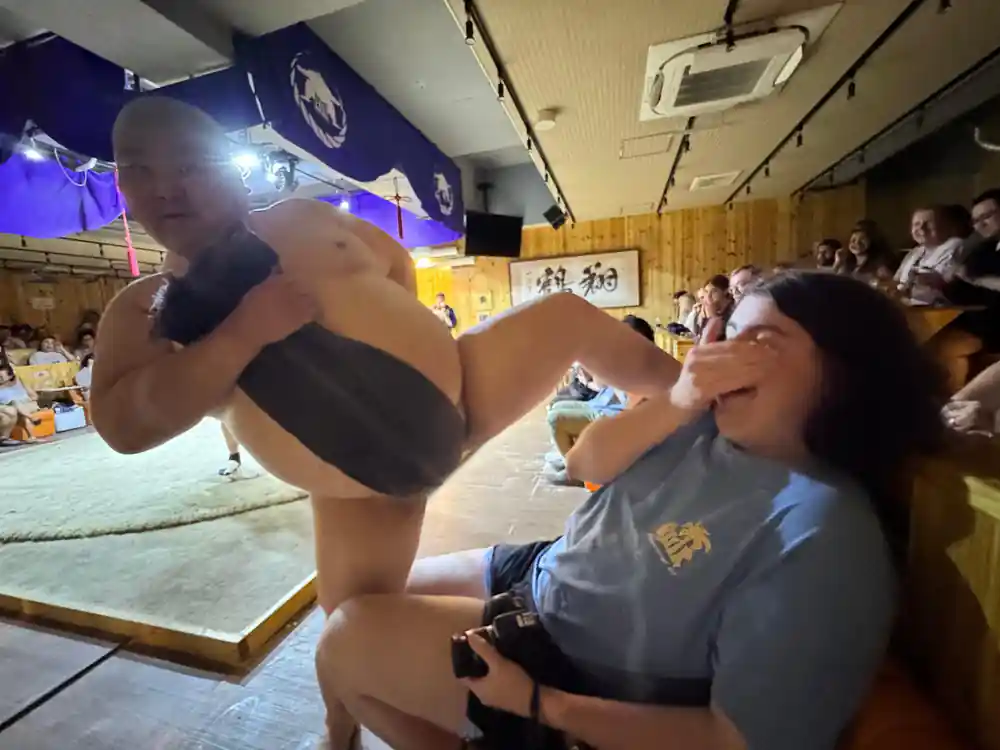
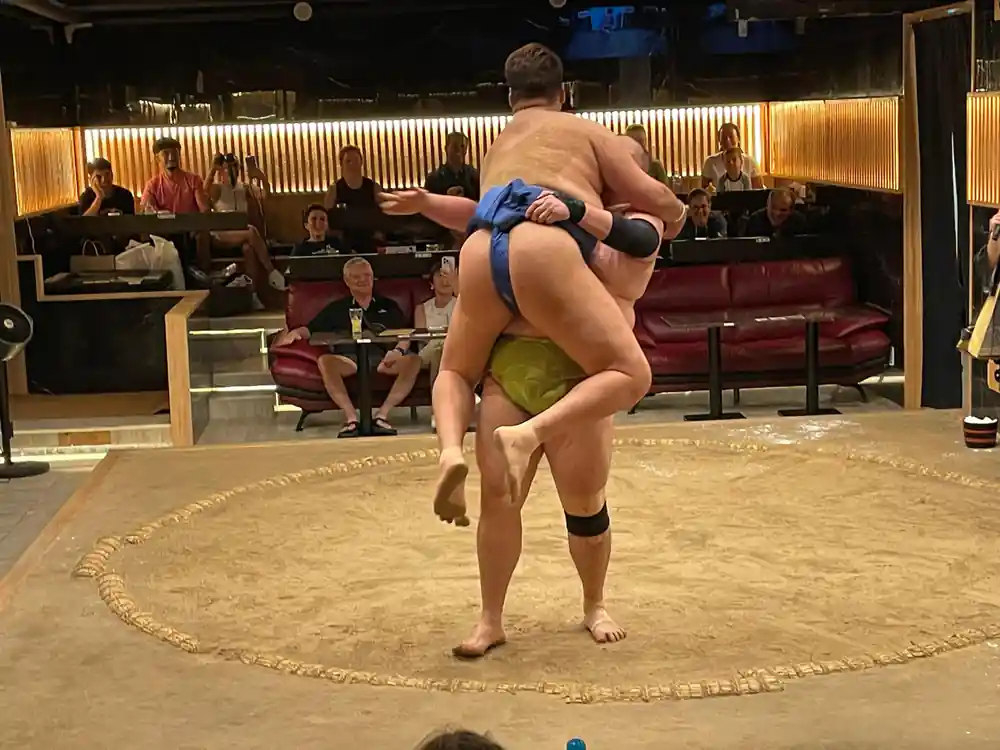
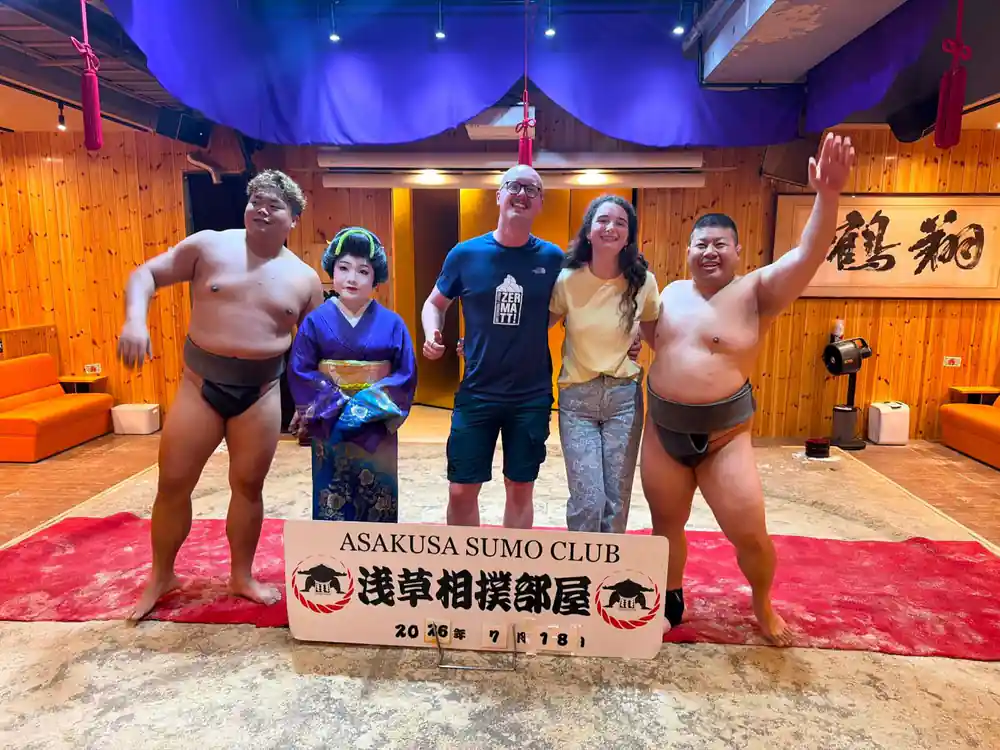
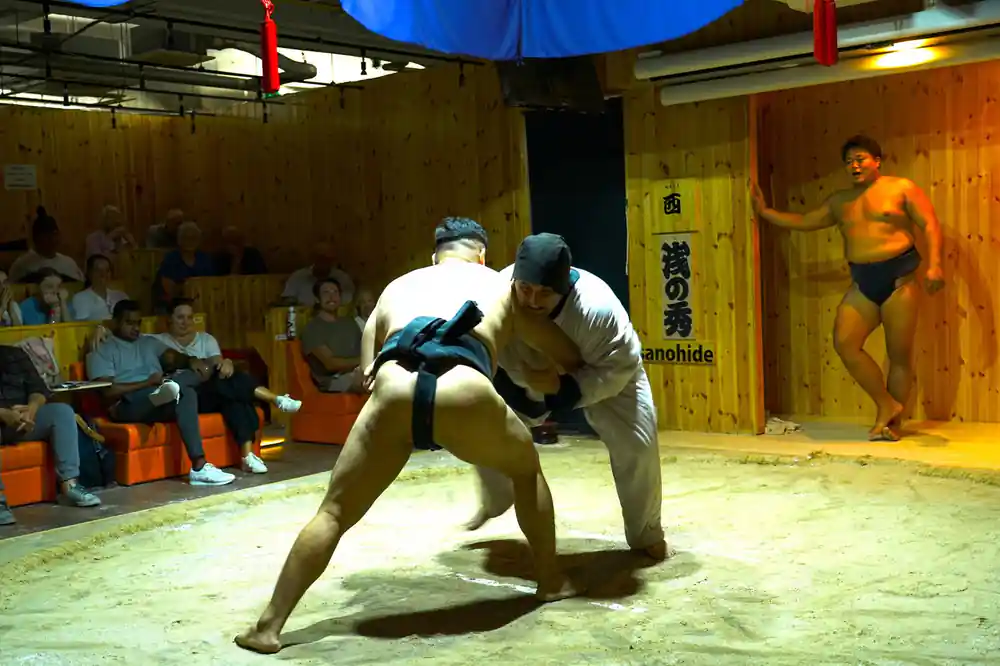
The performance moves from short, explosive bouts in the sand ring to a slow geisha dance in the same room.
The Training Behind the Performance
The dancers on stage are not hobbyists. A geisha serves a long apprenticeship, with lessons in dance, song, the three-stringed shamisen, tea ceremony, flower arranging and the fine etiquette of looking after guests. Much of it is learned by imitation: the pupil copies the teacher across a studio floor, again and again, until the shape of a phrase sits in her body rather than her notes.
Those lessons do not stop when the apprenticeship ends. Senior performers still take class, because the repertoire is long, the details are fussy, and a movement that looked effortless in the first year still needs work later on. The result is someone who can hold a still pose for a long beat without looking nervous and who reads a room well enough to adjust the pace of a piece.
What you are watching is partly the product of routine. The kimono, the hair, the way the fan is held and folded, and the small bow at the end have all been rehearsed until they look unremarkable. That, in fact, is the point of them.
Maiko, Geisha and the Kimono You Will See
A maiko is an apprentice and a geisha is a performer who has finished that apprenticeship. In Kyoto the two look visibly different: the apprentice wears a longer obi, brighter colours and a distinctive hairstyle, while the full geisha wears a more restrained kimono and a flatter, simpler arrangement of hair. Asakusa has its own conventions, and the dress on this stage follows the taste of the district rather than a Kyoto template.
Colour shifts with the season, as it does throughout Japanese dress: blossom pinks and fresh greens in spring, cool indigo and pale grey in summer, deeper reds and golds in autumn and winter. The obi is tied at the back with a wide knot, and the whole outfit is arranged to hold a straight line from shoulder to hem, which is why the dancers seem to glide rather than walk.
The hairstyle is part of that line. Traditional styles are built up with combs and pins, and the nape of the neck is left visible because the curve there is treated as part of the silhouette. On a small stage you can see how carefully the whole picture is balanced, and how little of it is accidental.
from US$102
An evening of sumo, a geisha dance and chicken hot pot in Asakusa, with small groups available and a wheelchair accessible room.
The Music, the Dance and the Beat of the Show
Japanese dance is usually danced to live music, and the shamisen is the backbone of it. A singer sets the line, the strings answer, and a drum or a flute adds colour. The rhythm often moves more slowly than a Western audience expects, so the first half minute can feel strange. Then your ear adjusts and the dancer's timing starts to make sense.
Listen for the spaces as much as the notes. The music breathes, the dancer waits, and a single pluck or a clap of wood can land like punctuation. There is a version of that pause in sumo too: a contest usually lasts only a few seconds, but in rare cases can take a minute or more,[6] and much of the drama happens in the crouch and the stare before anything moves at all.
Both arts reward patience. If you find yourself waiting for something to happen, you are probably watching it the right way.
Chicken Hot Pot, the Sand Ring and the Room
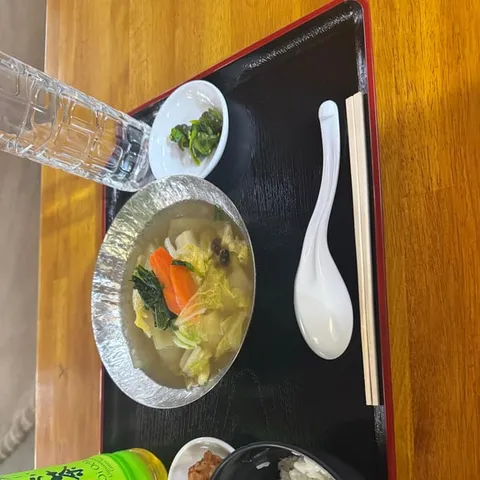
The meal is chanko nabe, the chicken hot pot that sumo stables cook for their wrestlers. It is a one-pot dish built on a light stock, with chicken, vegetables, tofu and often mushrooms, simmered at the table and eaten in rounds as each ingredient cooks. It is food designed to be topped up as people get hungry, which makes it a good fit for a shared table of strangers who are slowly becoming a room.
Wrestlers eat a great deal of it. A rikishi's daily intake ranges from approximately 5,000 to 8,000 kcal, and can sometimes exceed 10,000,[7] and in one study the average weight of 25 makuuchi wrestlers was 161.2 kg, at an average height of 186.3 cm.[8] Nobody expects you to match that. The pot is there to share, and the mood around it stays relaxed.
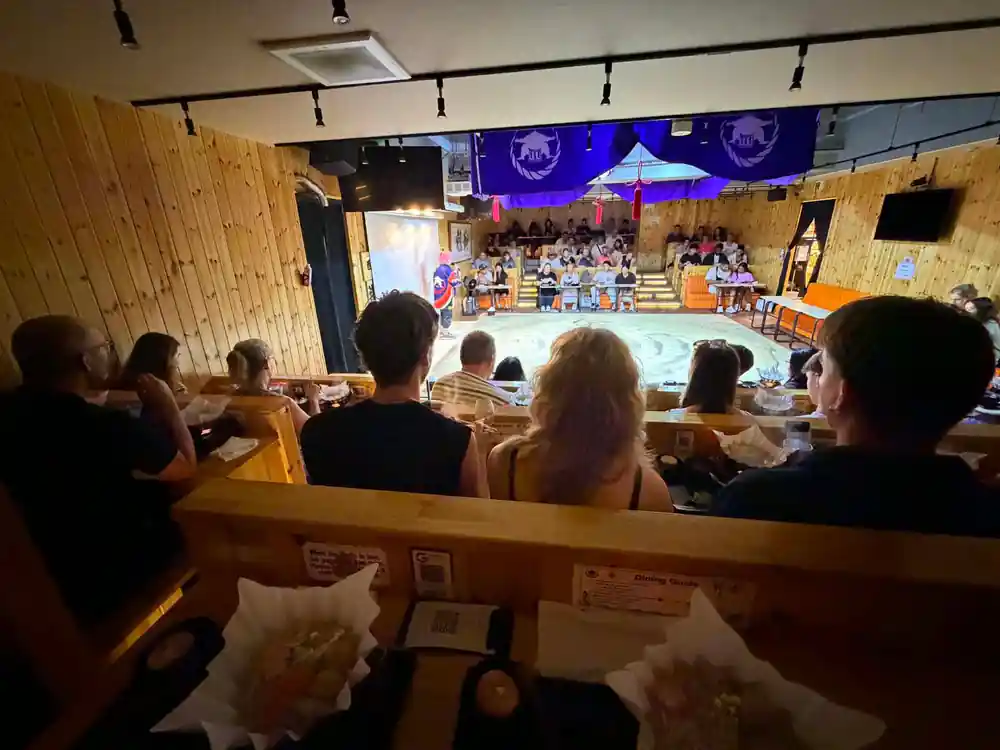
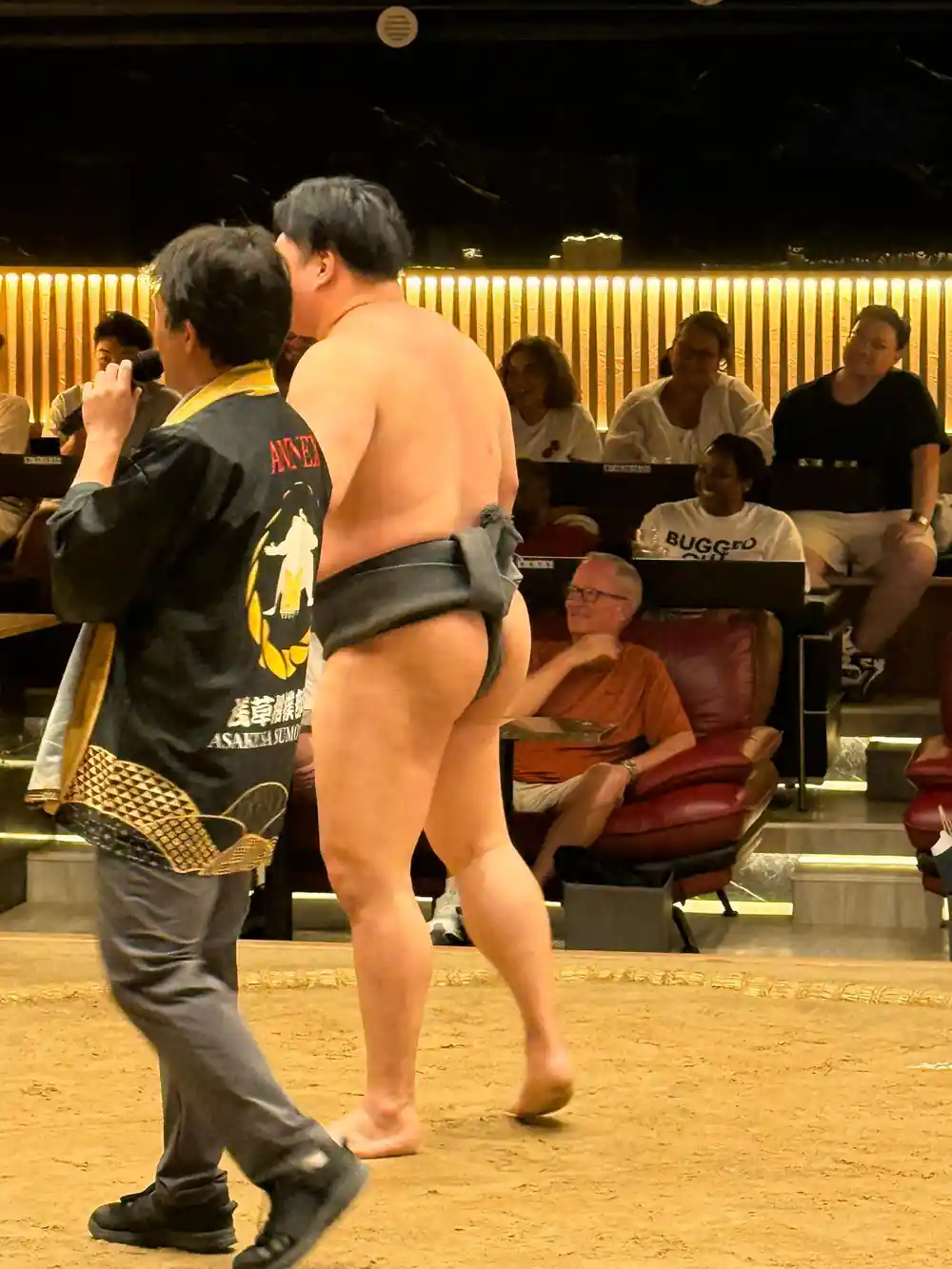
The room matters as much as the food. The show takes place beside a sand ring, the same kind of clay surface used for bouts, with seating close enough to see the footwork and the grip of the toes. The listing notes that the venue is wheelchair accessible, and that the whole evening lasts 2 hours.[1]
How to Plan Your Evening in Asakusa
Asakusa is easy to reach and easy to walk, so the show slots neatly into a day of temple browsing and street food. Check availability to see the starting times, since they vary, then build the rest of your evening around it.[1] Arrive with time to find the entrance, because the district gets busy in the early evening and the side streets are not laid out on a grid.
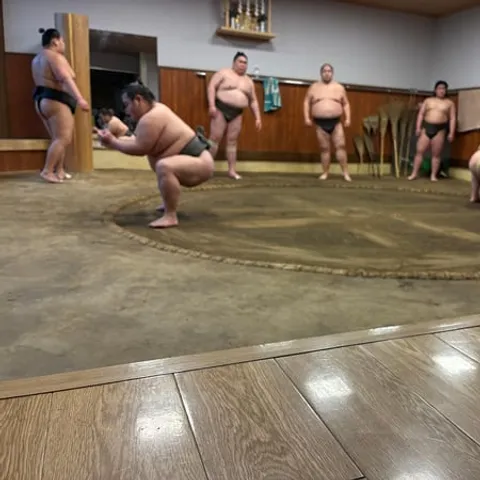
Two booking points are worth knowing. This listing lets you reserve now and pay later, and it offers free cancellation up to 24 hours in advance for a full refund.[1] If you want a full sumo day, Tokyo's morning practice typically begins between 5:00 and 7:30 AM and continues for 2 to 4 hours, depending on the stable and the season,[9] so an early start leaves your evening free for the show.
For the atmosphere of a real tournament, the Kokugikan National Sumo Arena in Ryogoku has a capacity of up to 10,000,[10] and second-floor B or C arena seats there cost between 3,500 and 5,500 yen.[11] Japan holds six Grand Sumo Tournaments each year, with the January tournament the first of them.[12] A stage show like this one fits into a single evening and does not depend on the tournament calendar, which makes it easier to plan around a short trip.
From prices for Tokyo sumo shows
From prices in US dollars as listed on GetYourGuide:[1][2][3][13]
From prices per person
GetYourGuide from prices in US dollars:[1][2][3][13]
When to Book Your Tokyo Sumo and Geisha Evening
How the evening works
Arrive and settle in
Come a little early, find your seat and get your bearings in the room before the show begins.
Watch the bouts
Contests are quick: a bout usually lasts only a few seconds, so keep your eyes on the ring.[6]
The dance begins
The geisha dance is slow and precise. Follow the fan and the sleeves rather than the feet.
Hot pot at the table
Chanko nabe arrives in a shared pot. Eat as it cooks and top up your bowl as you go.
After the show
The evening ends after the dance, and Asakusa is still lively for a walk or a nightcap.
See the Asakusa geisha dance and sumo show for yourself
from US$102Reserve now & pay later