The essentials
- Prices run from US$32 for a Shibuya sumo show to US$159 for a guided Grand Sumo Tournament package.[1][2]
- The Tokyo Sumo Entertainment Show with Chicken Hot Pot & Geisha runs 2 hours, from US$102, rated 4.79 from 8,004 reviews.[3]
- Evening show listings start from US$48 for a Ginza experience and from US$61 for a Ginza live performance.[4][5]
- Training typically begins between 5:00 and 7:30 AM and lasts 2 to 4 hours; practice tours are listed from US$76.[6][7]
- Second-floor B or C arena seats at the sumo arena cost between 3,500 and 5,500 yen.[8]
- Top choice Sumo Entertainment Show from US$102 Rating4.79 from 8,004 reviews[3]Duration2 hours[3]FormatEntertainment show, chicken hot pot, geishaAccessWheelchair accessible[3] Check availability
- Shinjuku Sumo Show from US$65 Rating4.84 from 7,180 reviews[9]Duration1.5 hours[9]FormatSumo show and experience with photoAccessNot listed See this tour
- Sumo Show & Dining from US$89 Rating4.80 from 3,454 reviews[10]Duration1.5 to 2 hours[10]FormatSumo show and dining at a historic sumo houseAccessWheelchair accessible[10] See this tour
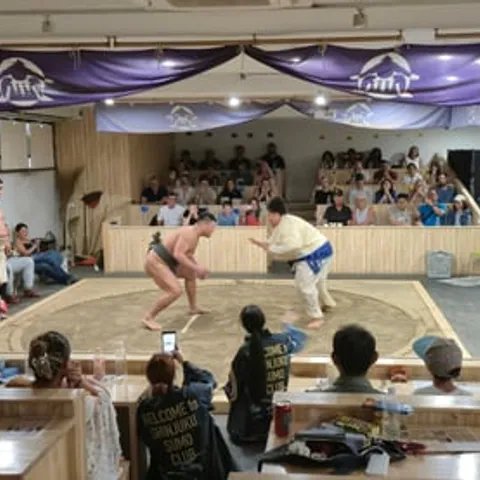
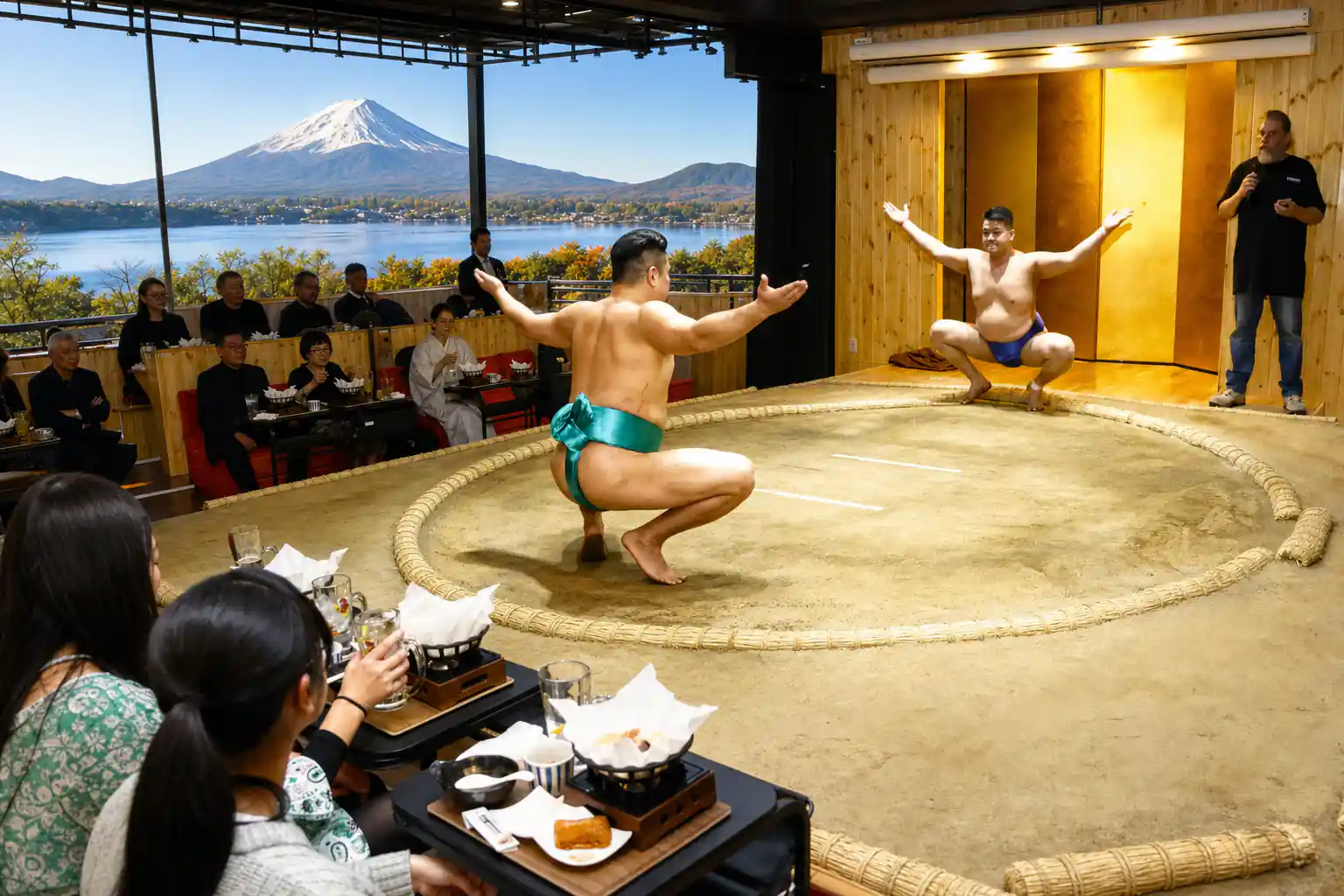
He then performs chiri-chozu : squatting low, extending both arms to the sides with palms turned upward, demonstrating to the gods and his opponent alike that his hands hold no weapons. He throws salt.
Is a Tokyo Sumo Show Worth Booking?
Tickets and prices
Sumo in Tokyo: Three Ways to Watch
Sumo in Tokyo comes in three shapes. On tournament days you sit in an arena and watch the top division work through its bouts. In the early morning you can sit quietly at a working stable while wrestlers train. There are also evening entertainment shows, with a ring, a host, music and a meal. Japan holds six Grand Sumo Tournaments each year, and the January tournament is the first of them.[13] The Kokugikan National Sumo Arena in Ryogoku, Sumida City, has a capacity of up to 10,000,[14] and a big tournament day there feels nothing like a theatre.
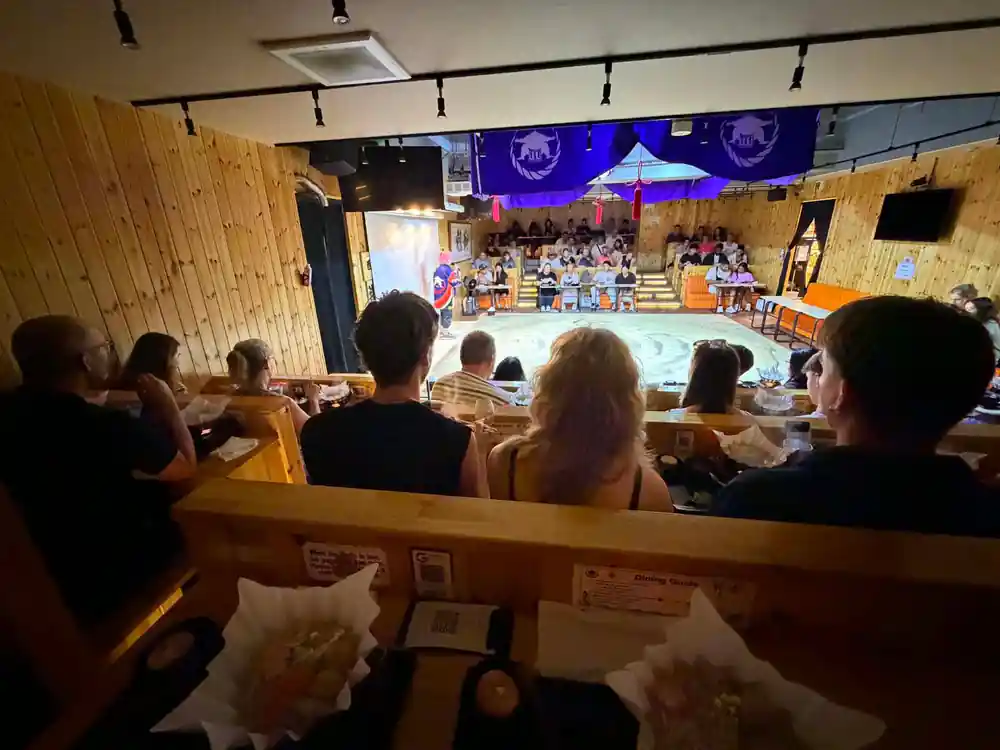
Shows are the easy entry point. Tokyo sumo show tickets are sold per listing rather than at a gate, and the shows run in fixed venues in Asakusa, Ginza and Shinjuku, usually in the evening, pairing a short programme of exhibition bouts with food. The Tokyo Sumo Entertainment Show with Chicken Hot Pot & Geisha is listed from US$102 and runs 2 hours, with small group seating available and a wheelchair accessible venue.[3] You get close to the ring, a host who explains what you are watching, and a set that ends on time. Book weekend dates early, and check whether your listing meets at the venue or at a nearby station.
What Tokyo Sumo Wrestling Tickets Cost
Prices split by what you are buying. A seat in the arena's second-floor B or C blocks costs between 3,500 and 5,500 yen.[8] Morning practice tours, where you watch wrestlers train rather than perform, are listed from US$76 up to around US$115.[7][15] Shows are the cheapest way in: from US$32 for a Shibuya show,[1] from US$48 for a Ginza experience[4] and from US$61 for a Ginza live performance.[5] Each of these is a from price, so a weekend date or a front seat costs more.
Two booking habits matter. The Tokyo Sumo Entertainment Show lets you reserve now and pay later and includes free cancellation up to 24 hours in advance for a full refund.[3] Others are stricter: a Ginza sumo show with kaiseki dinner is non-refundable,[12] and one morning practice visit asks for cancellation 11 days ahead.[7] Read that line before you pay: a non-refundable ticket and a flexible one are very different purchases.
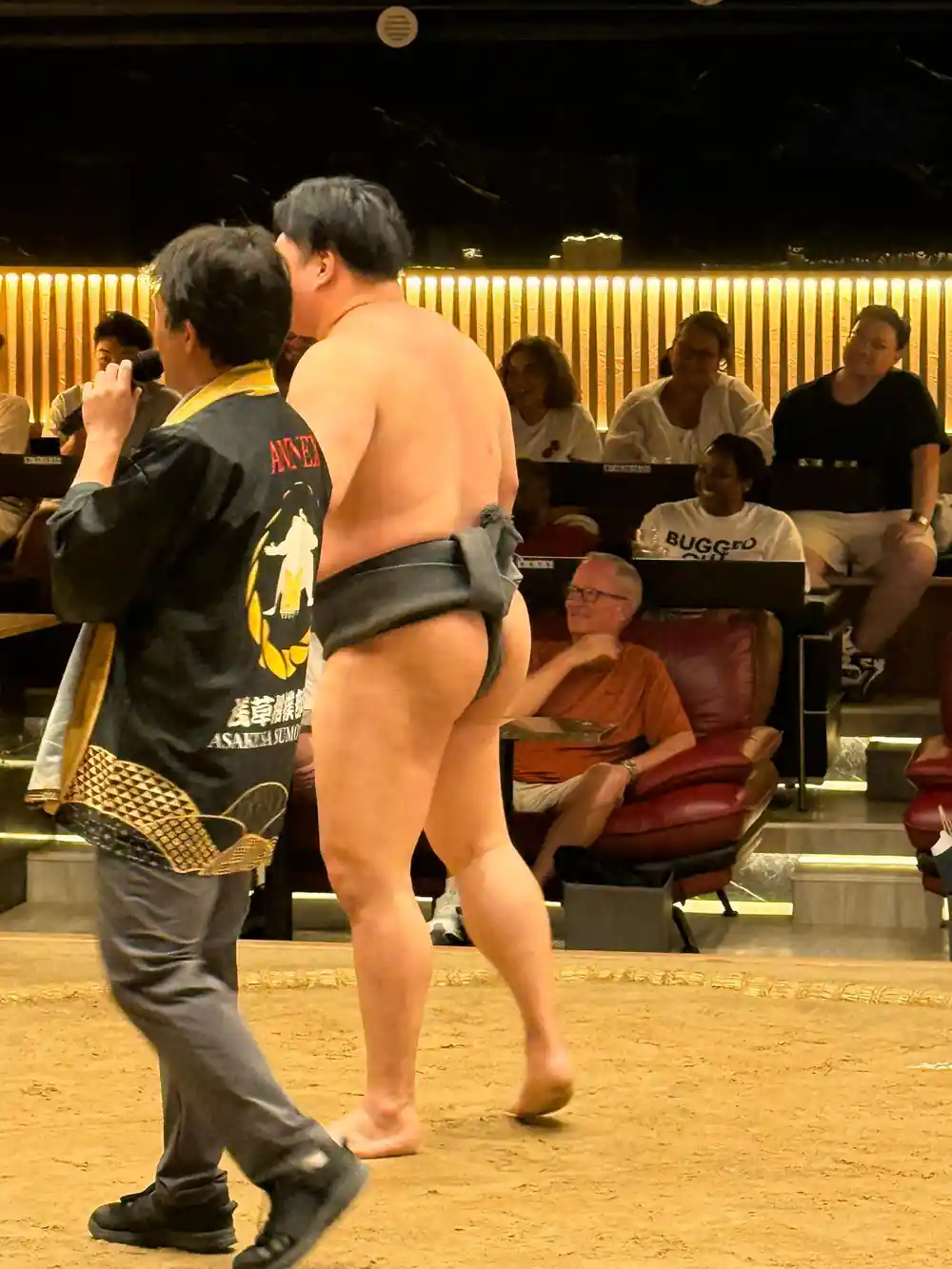
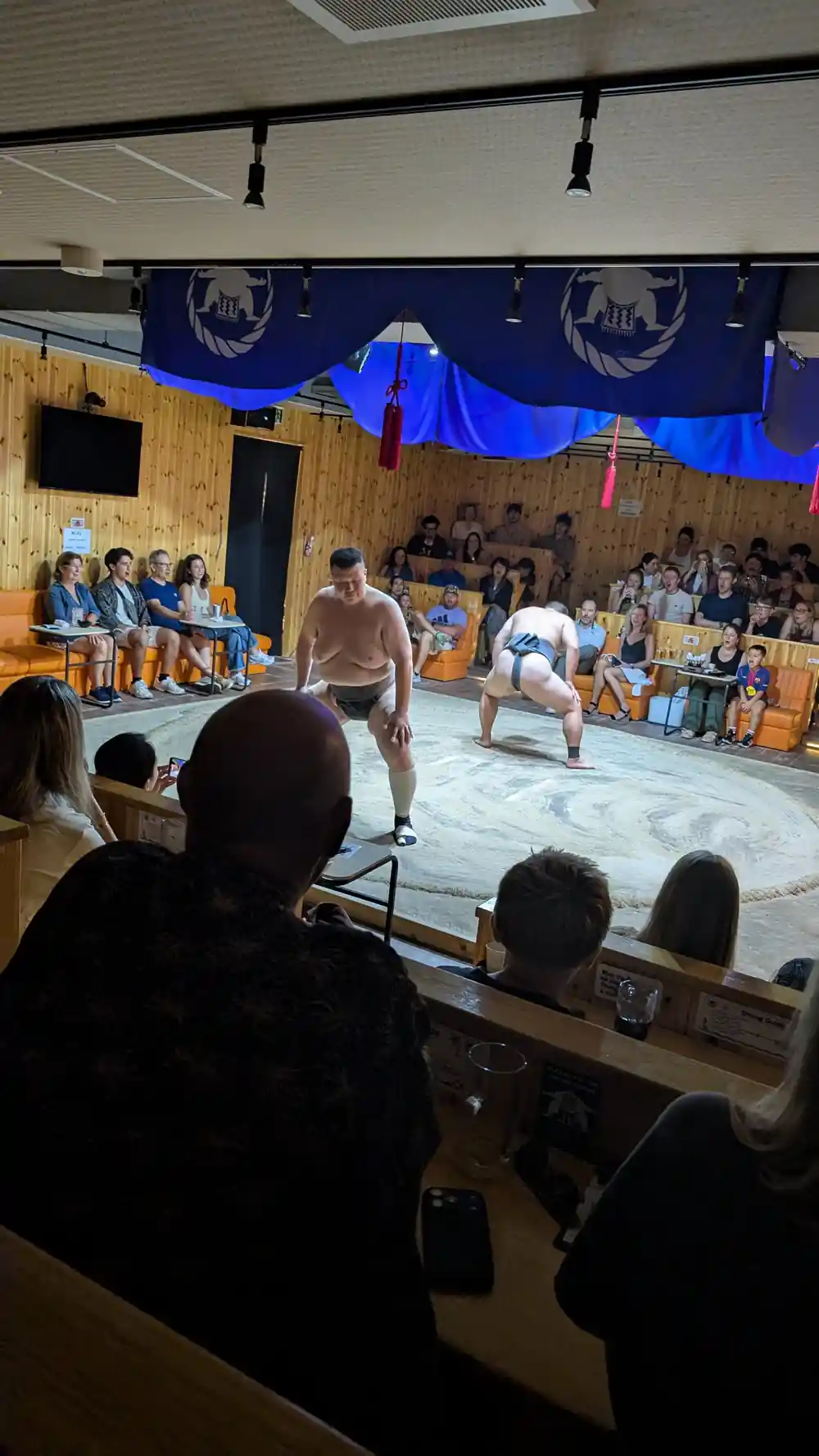
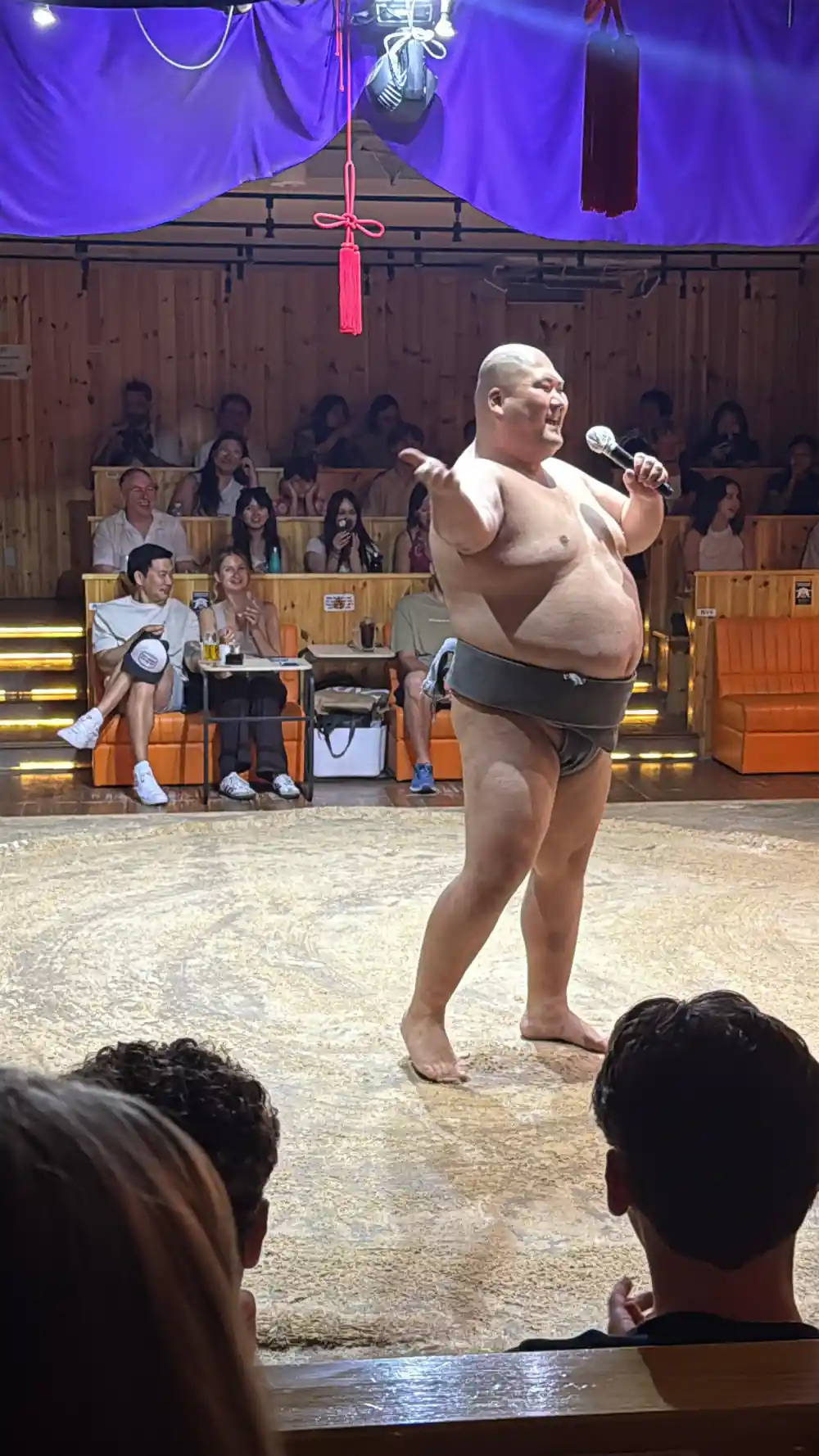
Wrestlers square up in the sand ring while the crowd leans in.
The Show: Chicken Hot Pot and Geisha
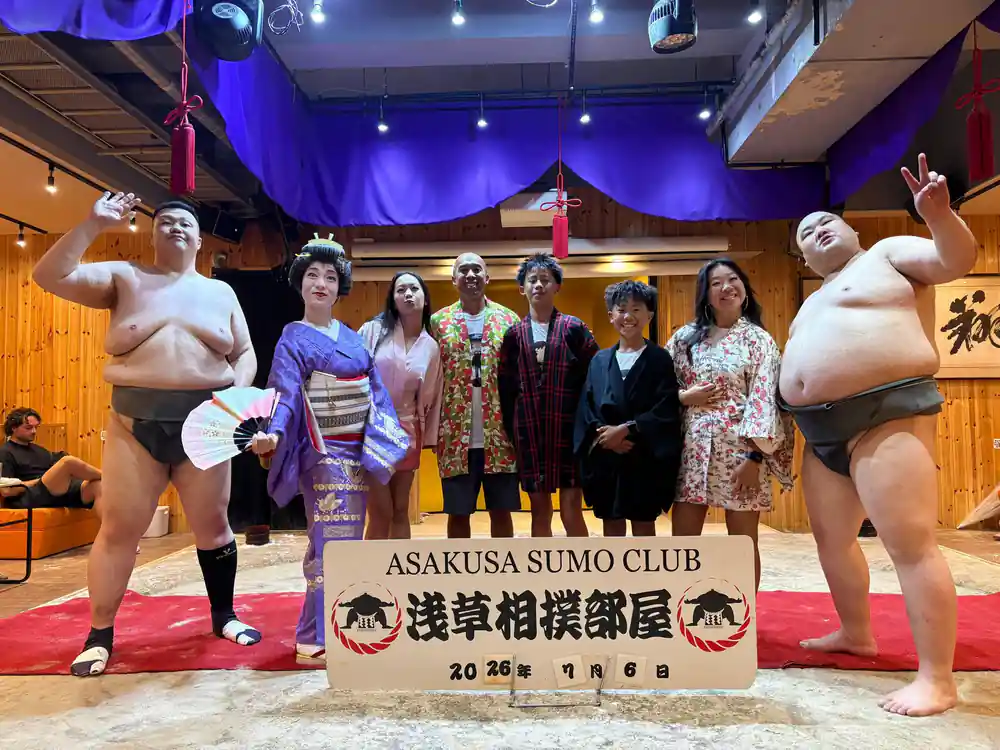
The Tokyo Sumo Entertainment Show with Chicken Hot Pot & Geisha is the tour this site is built around, and its numbers explain the appeal. It is rated 4.79 from 8,004 reviews, runs 2 hours and is listed from US$102.[3] Small group seating is available, the venue is wheelchair accessible, and the listing takes reserve now and pay later with free cancellation up to 24 hours in advance for a full refund.[3] Start times move, so check availability when you book.
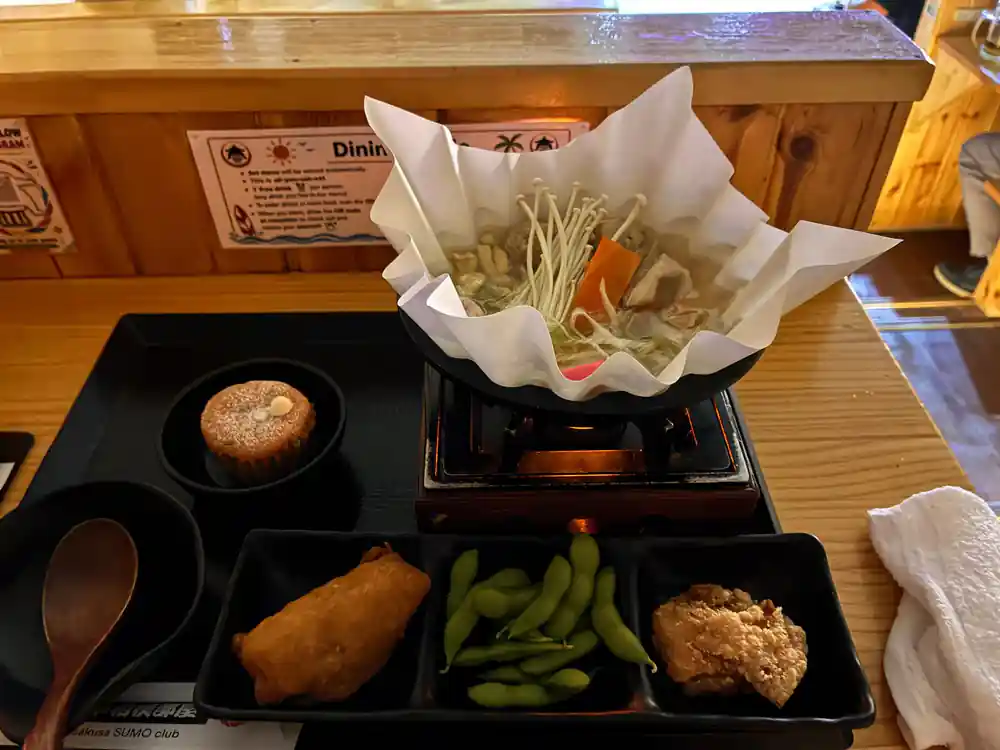
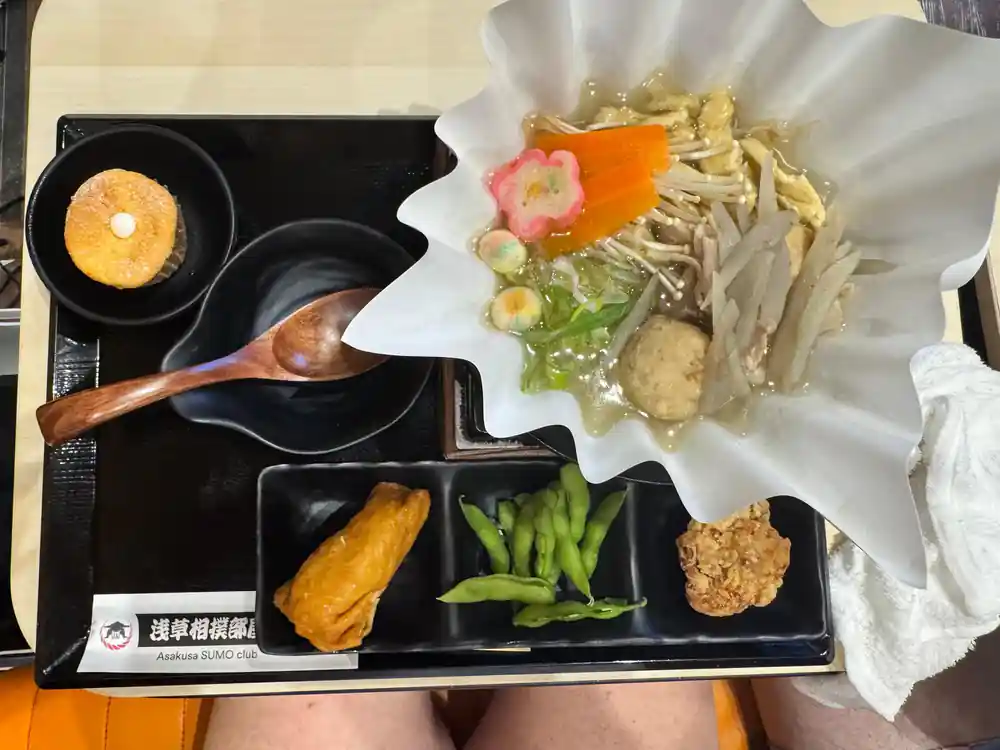
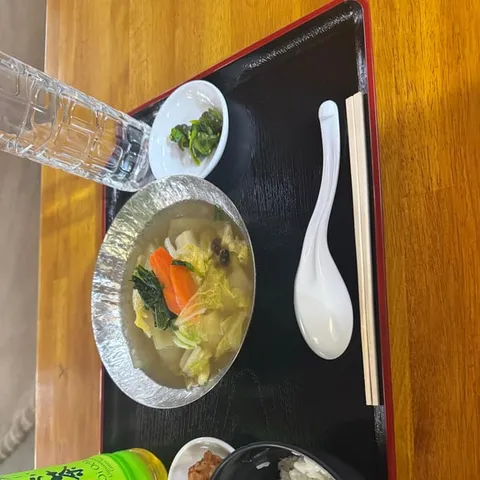
An evening like this is built around the ring rather than an arena scoreboard. You watch a programme of short exhibition bouts, with the quick, explosive clashes that make sumo watchable at close range, and the food comes as a shared hot pot: chanko nabe, the dish the show is named for. A geisha performance follows. The package reads more like dinner and a show than a sports ticket, and it suits first-timers, families and anyone who wants the sport explained between courses.
Morning Practice: The Real Work
Morning practice is where sumo looks least like entertainment. Training typically begins between 5:00 and 7:30 AM and continues for 2 to 4 hours, and the exact start time varies by stable and season.[6] Top-division bodies are enormous: a study of 25 makuuchi wrestlers put their average weight at 161.2 kg (about 355 lbs) and their average height at 186.3 cm.[16] Watching two of them collide in a small training room is the part that tends to stay with people.
These tours exist because stables are working gyms, not attractions. A morning practice viewing tour with behind-the-scenes access is listed from US$92, rated 4.93 from 107 reviews, runs 3 hours and skips the ticket line, with a guide in English and Japanese.[17] A morning practice viewing tour at a real stable is listed from US$102, rated 4.78 from 720 reviews, runs 1.5 to 2 hours and offers an optional English audio guide.[18] Cheaper options exist: one morning training visit is listed from US$76 but asks for cancellation 11 days ahead.[7]
from US$102
The Sumo Entertainment Show with Chicken Hot Pot & Geisha runs 2 hours in Tokyo and is rated 4.79 from 8,004 reviews.[3]
Tournament Days at the Kokugikan
A honbasho is the real thing. Japan holds six Grand Sumo Tournaments each year, and the January tournament is the first of them.[13] The Kokugikan National Sumo Arena in Ryogoku, Sumida City, has a capacity of up to 10,000.[14] Individual bouts usually last only a few seconds, and in rare cases can take a minute or more,[11] so the drama sits in the crouch, the salt throw and the first collision. A tournament day runs long, from lower-division bouts through to the top division, and the arena fills and empties around you as the day goes on.
Guided packages take the guesswork out. A Grand Sumo Tournament experience with a licensed guide is listed from US$159, rated 4.78 from 88 reviews, runs 4 hours and offers private or small group options.[2] A tournament viewing tour listed for September 2026 is from US$111, rated 4.48 from 141 reviews, takes 5 hours and is non-refundable.[19] For a one-off event, a sumo retirement ceremony at Ryogoku Kokugikan is listed for Oct 3rd 2026 from US$135, lasting 4 hours.[20]
Planning a Day Around Your Booking
Sumo fits into a Tokyo day in different ways. Tournament days in Ryogoku take an afternoon and an evening, in the museum-heavy quarter east of the river. Morning practice starts before the commuter rush and finishes in time for lunch. Shows are evening events of an hour or two, so they sit neatly before or after dinner. The timing detail that matters most is on the listing: check availability to see starting times, because schedules move.[3]
Book the sumo slot first and build the rest of the day around it. If you want a photo with a wrestler, pick a show or a workshop. If you want the sport at full speed, pick a tournament. If you want both, a morning practice tour plus an evening show is a long but doable day, since both ends of it are reachable by train. Evening shows finish early enough for a late dinner, and morning tours leave the rest of the day free. Save the meeting point and the arrival time to your phone, and give yourself a buffer at the start.
Chanko Nabe, Salt and What to Wear
Food is part of the ritual. Chanko nabe, the shared hot pot that gives the main Tokyo show its name, is what wrestlers eat in bulk: a rikishi's daily intake ranges from about 5,000 to 8,000 kcal and can sometimes exceed 10,000.[21] The pre-bout ritual is worth watching closely. The wrestler performs chiri-chozu, squatting low with both arms extended to the sides and palms turned upward to show that his hands hold no weapons, and then throws salt.[22] A guide beside you will make sense of it.
Dress for sitting on the floor. Show venues and arena boxes use cushions and low benches, so loose trousers or a long skirt beat tight jeans, and shoes come off at the door. Venues are warm in winter and cool in summer, so layers help, and mornings at a stable are cold and very quiet, so bring a warm jacket and a cushion if you have one. Summer shows get humid, and a folding fan is a small mercy. None of it is formal, but all of it is easier planned.
From-prices for Tokyo sumo shows
Tokyo sumo show prices per person
US dollar from-prices per person:[3],[9],[10],[5].
When to book what
How to book sumo in Tokyo
Decide what you want to see
Tournament day, morning practice or an evening show. The show is the friendliest introduction; practice is the quietest.
Pick a date and check times
Start times move, so every listing asks you to check availability for the start time on your date.[3]
Compare cancellation terms
Read the cancellation line carefully: the main Tokyo show refunds up to 24 hours in advance.[3]
Book and save the details
Reserve now and pay later is available on the main Tokyo show.[3] Save the meeting point to your phone.
Arrive early and switch off
Give yourself a buffer before the doors open, bring a warm layer for early starts, and keep phones quiet once the wrestlers enter.
Book the Tokyo Sumo Entertainment Show
from US$102Reserve now & pay later