The essentials
- Morning keiko at a working stable is quiet and early; an evening show is staged, with a host, a ring and a meal.
- Practice typically begins between 5:00-7:30 AM and continues for 2-4 hours, varying by stable and season.[1]
- Morning practice tours start from US$74, and the Tokyo Sumo Entertainment Show starts from US$102.[2][3]
- Listings let you reserve now and pay later, with free cancellation up to 24 hours in advance.[3][4]
- Pick morning practice for real training, and an evening show if you want a meal, a host and a later start.
- Top choice Sumo Show, Hot Pot, Geisha from US$102 Duration2 hours[3]Rating4.79 from 8,004 reviews[3]CancellationFree cancellation up to 24 hours[3]Pay laterReserve now & pay later[3] Check availability
- Morning Practice Viewing from US$102 Duration1.5 - 2 hours[4]Rating4.78 from 720 reviews[4]CancellationFree cancellation up to 24 hours[4]Pay laterReserve now & pay later[4] See this tour
- Sumo Show & Dining from US$89 Duration1.5 - 2 hours[5]Rating4.80 from 3,454 reviews[5]CancellationFree cancellation up to 24 hours[5]Pay laterReserve now & pay later[5] See this tour
Morning practice typically begins between 5:00-7:30 AM and continues for 2-4 hours . The exact start time varies by stable and season.
Morning practice or an evening sumo show?
Plan a morning stable visit
Plan an evening sumo show
Morning Keiko and Evening Shows: How They Differ
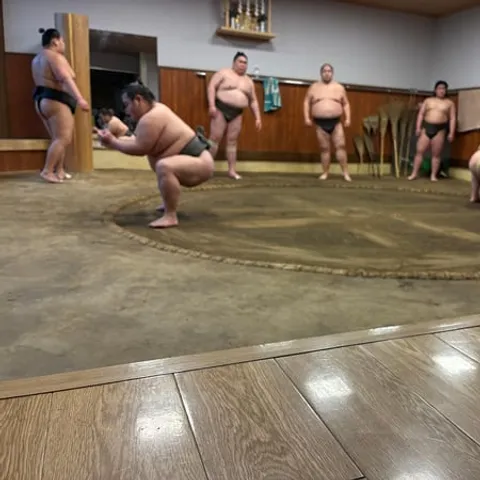
In Tokyo you can watch sumo in two very different settings. At a stable in the early morning, wrestlers train in a working practice hall: bare feet on clay, the slap of bodies meeting, a coach calling from the side of the ring, and very little noise from the small group of visitors sitting along the wall. An evening show is a different animal. It is staged for an audience, with a ring, lighting and a host, and dinner often follows. One is a look inside a working day; the other is a night out built around the sport.
Timing decides most of the difference. Morning practice typically begins between 5:00-7:30 AM and continues for 2-4 hours, and the exact start time varies by stable and season.[1] You are watching men work, not perform: warm-ups, stretching and repeated bouts that stop when the coach says so. A contest usually lasts only a few seconds, but in rare cases can take a minute or more.[9] A morning session mixes bursts of action with long, quiet pauses.
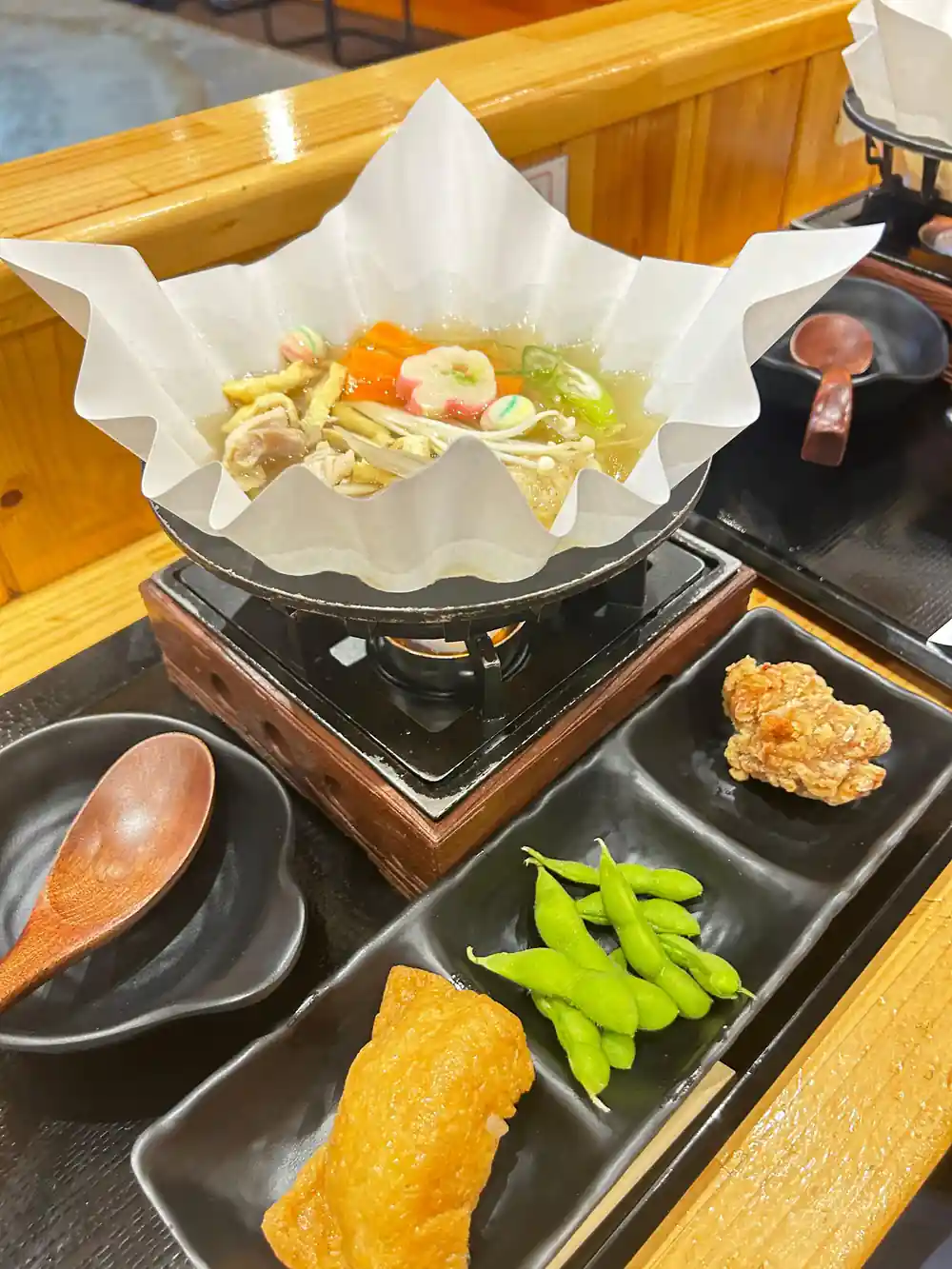
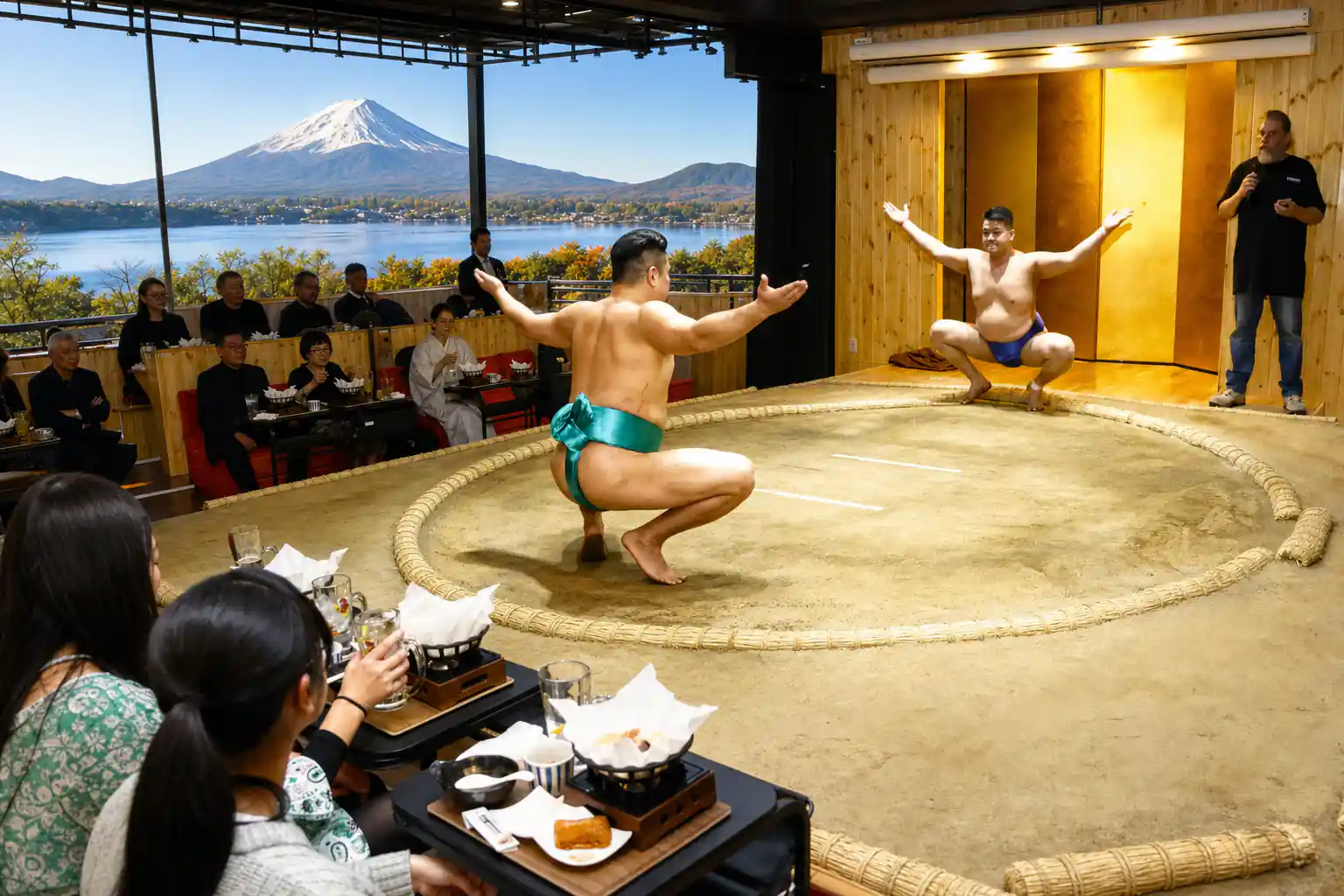
Evening shows are later, tighter and usually include a meal. The Tokyo: Sumo Entertainment Show with Chicken Hot Pot & Geisha lasts 2 hours, is rated 4.79 from 8,004 reviews, and starts from US$102.[3] Expect a ring, demonstrations of technique, chances for the audience to join in, a geisha performance and a chicken hot pot served afterwards. You sit down, you eat, and the whole evening is done in a couple of hours.
Inside a Tokyo Sumo Stable in the Morning
A stable, or beya, is a house where wrestlers live and train together. The practice hall is plain: a clay ring, low wooden benches, windows that fog up, and a small shrine shelf above the ring. Wrestlers arrive early, wrap their mawashi and work through drills while the senior men take their turns. Visitors sit along one wall, out of the way, and the room stays quiet while the top of the group trains.
The bodies are part of the spectacle. Research from the Keio University Sports Medicine Research Center put the average weight of 25 makuuchi wrestlers at 161.2 kg (about 355 lbs), with an average height of 186.3 cm.[10] Feeding that takes work: a rikishi's daily caloric intake ranges from approximately 5,000 to 8,000 kcal, and can sometimes exceed 10,000.[11] The power in a single shove is obvious, and the sound of contact carries across the hall.
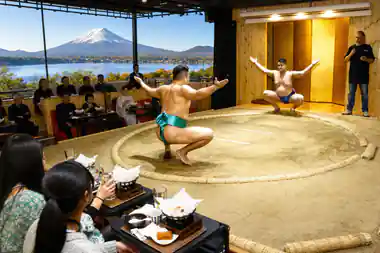
The formalities matter too. Before a bout a wrestler performs chiri-chozu, squatting low with both arms extended to the sides and palms turned upward, showing the gods and his opponent that his hands hold no weapons, and then throws salt.[12] A guide will point out the ritual moments, and knowing what the gestures mean makes a morning at a stable far easier to follow than watching large men push each other.
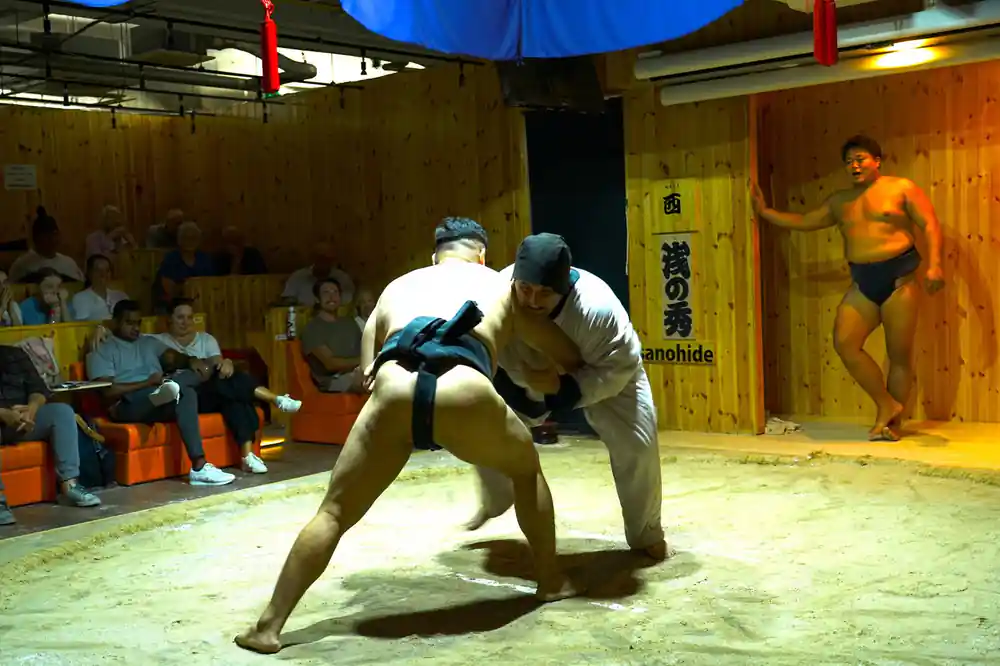
Wrestlers train through the morning while a small group of visitors watches from the edge of the ring.
What Morning Practice Costs and How to Book
Morning visits in Tokyo are sold as guided tours you book in advance. One option, the Tokyo Sumo Morning Practice Viewing Tour at a real stable, starts from US$91, is rated 4.91 from 70 reviews, and lasts 2 hours.[6] Another, Tokyo Sumo Morning Practice: Viewing & Exclusive Interaction, runs 3 hours, is rated 4.93 from 107 reviews and starts from US$92.[7] Both list skip-the-ticket-line entry.
Cheaper and pricier listings sit side by side. Tokyo: Sumo Morning Training Visit starts from US$76, is rated 4.40 from 378 reviews, and allows free cancellation up to 11 days in advance.[13] At the other end, Authentic Sumo Morning Practice with Seat and Audio Guide starts from US$162.[14] A middle option, Tokyo: Sumo Morning Practice Viewing Tour, starts from US$102, is rated 4.78 from 720 reviews and offers an optional audio guide in English.[4]
Booking itself is simple. Some listings let you reserve now and pay later and offer free cancellation up to 24 hours in advance, while one morning tour sets its window at 11 days and another at 3 days.[4][13][15] Read the meeting point carefully, because some tours gather at a station and others at the stable itself. If a stable is your priority, book the morning slot first and build the rest of the day around it.
Etiquette, Silence and Photos at a Stable
Training halls are working spaces, and the mood is closer to a library than a sports arena. Practical habits that help: arrive before the start time, follow your guide's lead on where to sit and where to leave shoes, keep your voice down, and put your phone on silent. Stay seated during a bout, and move only between rounds.
Ask about photography before you raise a camera, especially flash and video. Language support varies, so check each listing: one morning practice viewing tour offers an optional audio guide in English, and a keiko training tour includes an audio guide in languages such as Chinese, French, German, Italian, Korean, Spanish and Portuguese.[4][16] That keiko tour lasts 40 minutes - 1.5 hours and is rated 4.92 from 9 reviews.[16]
from US$102
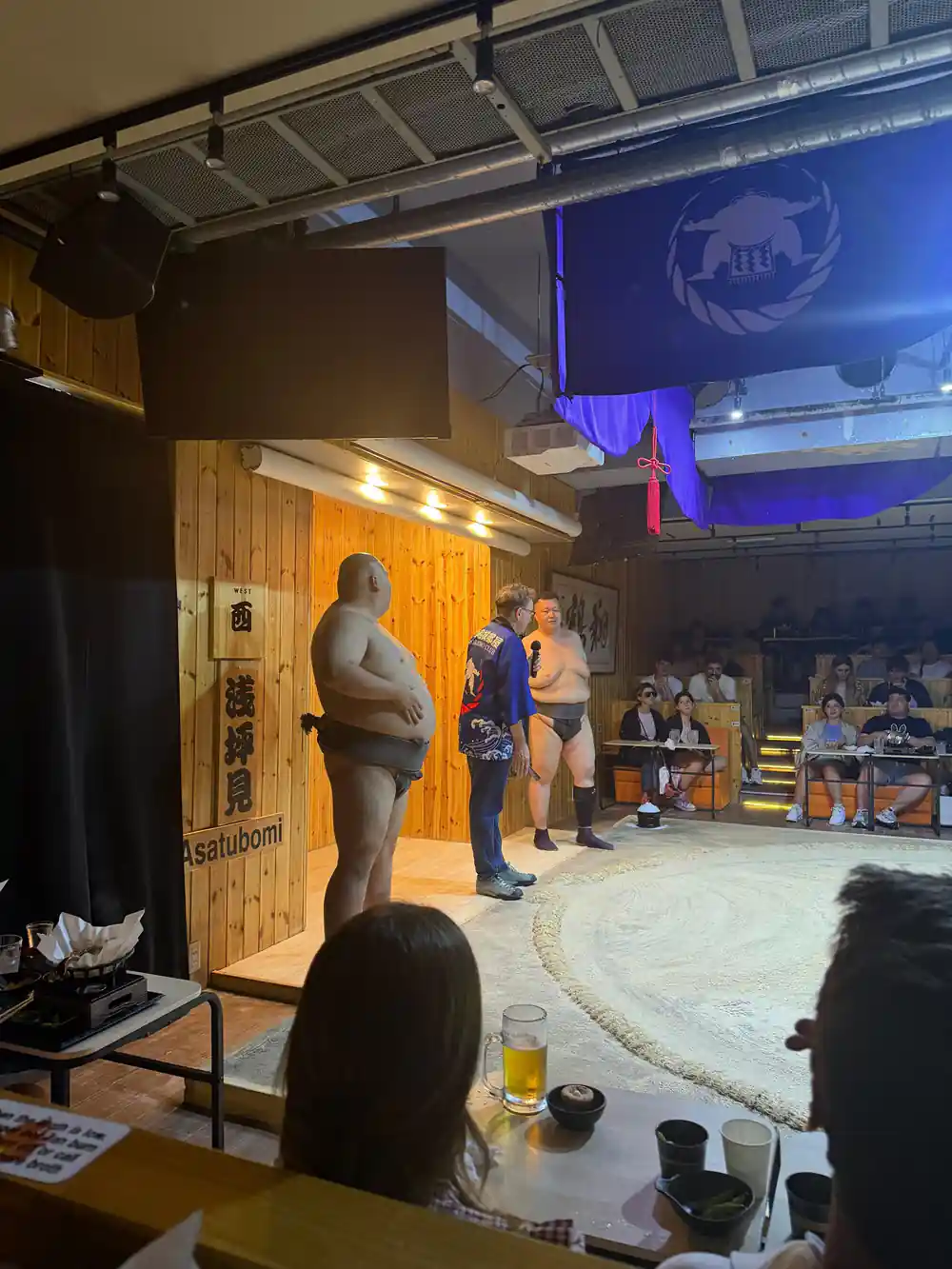
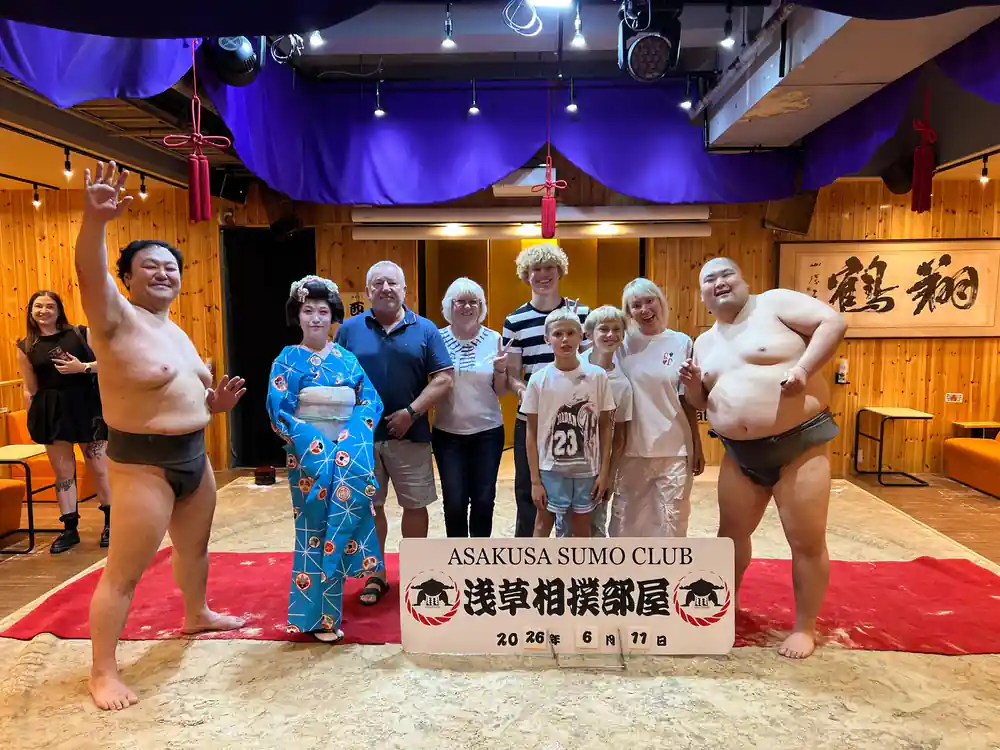
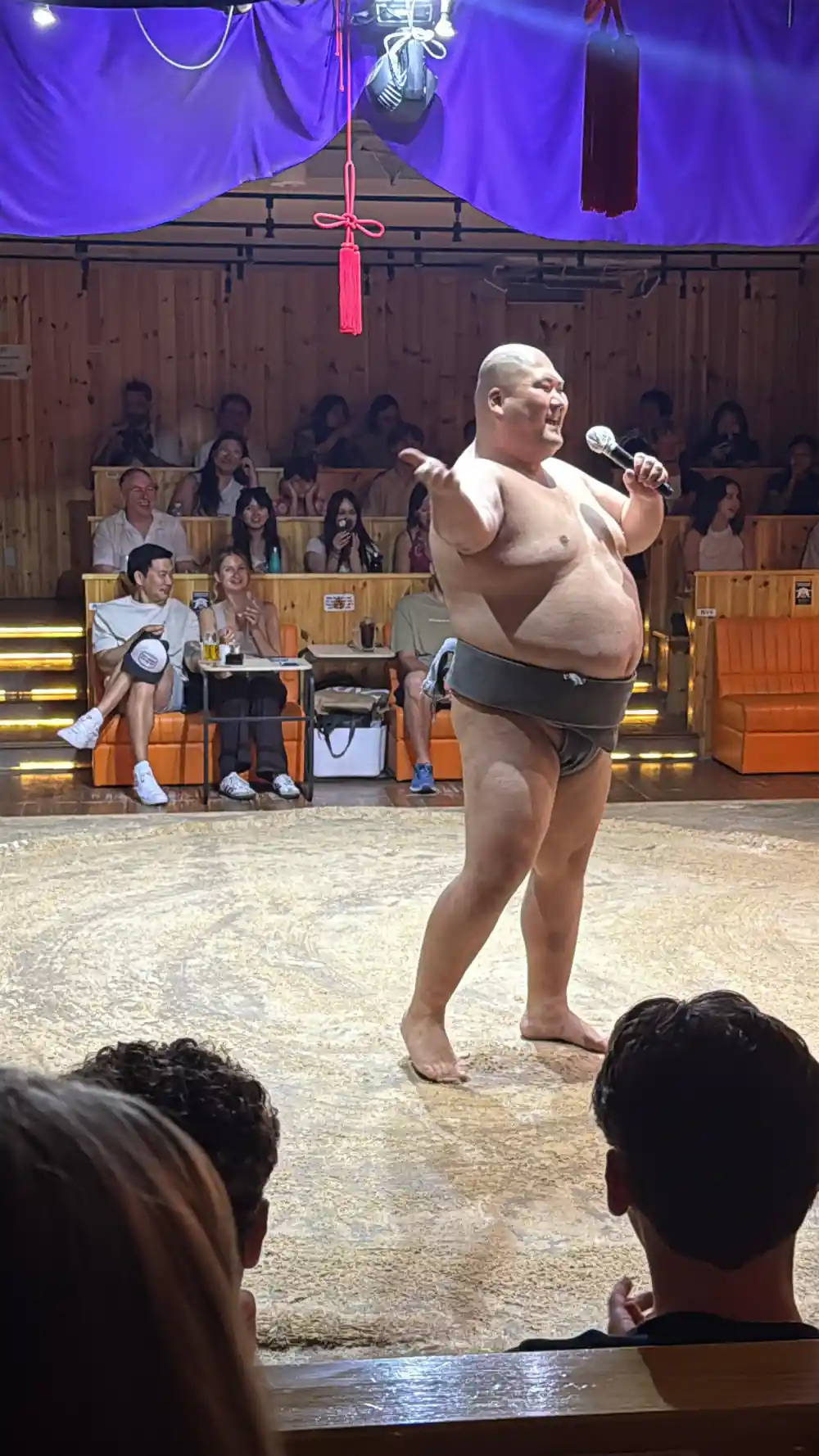
The Tokyo Sumo Entertainment Show with Chicken Hot Pot & Geisha runs 2 hours and comes in small group options.[3]
The Evening Side: Sumo Shows With Food and Geisha
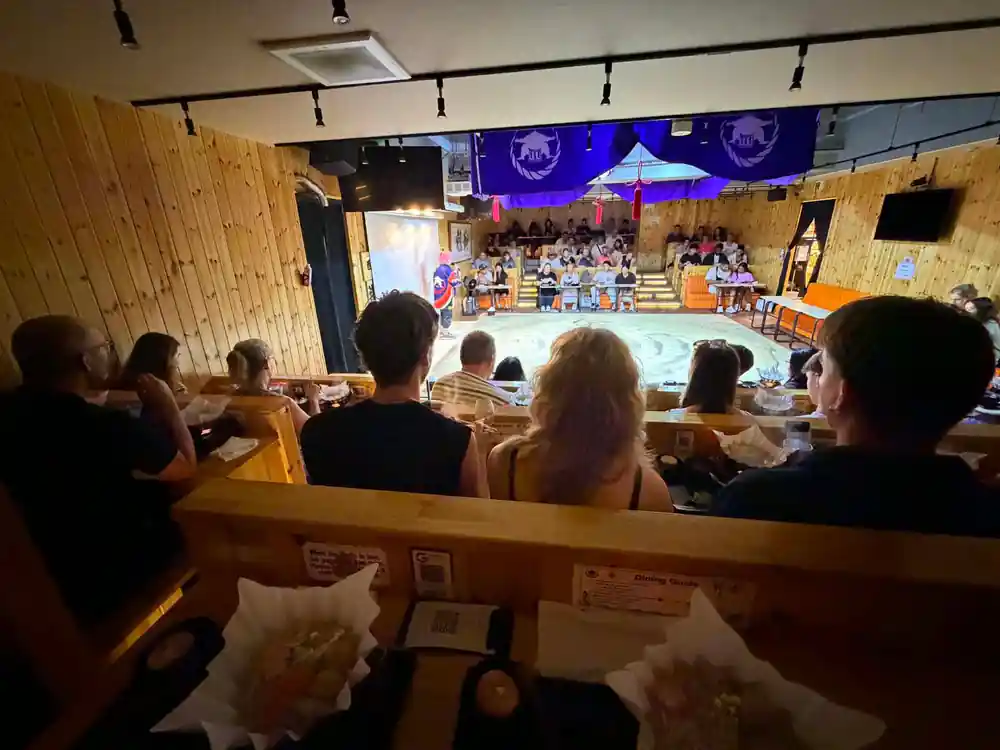
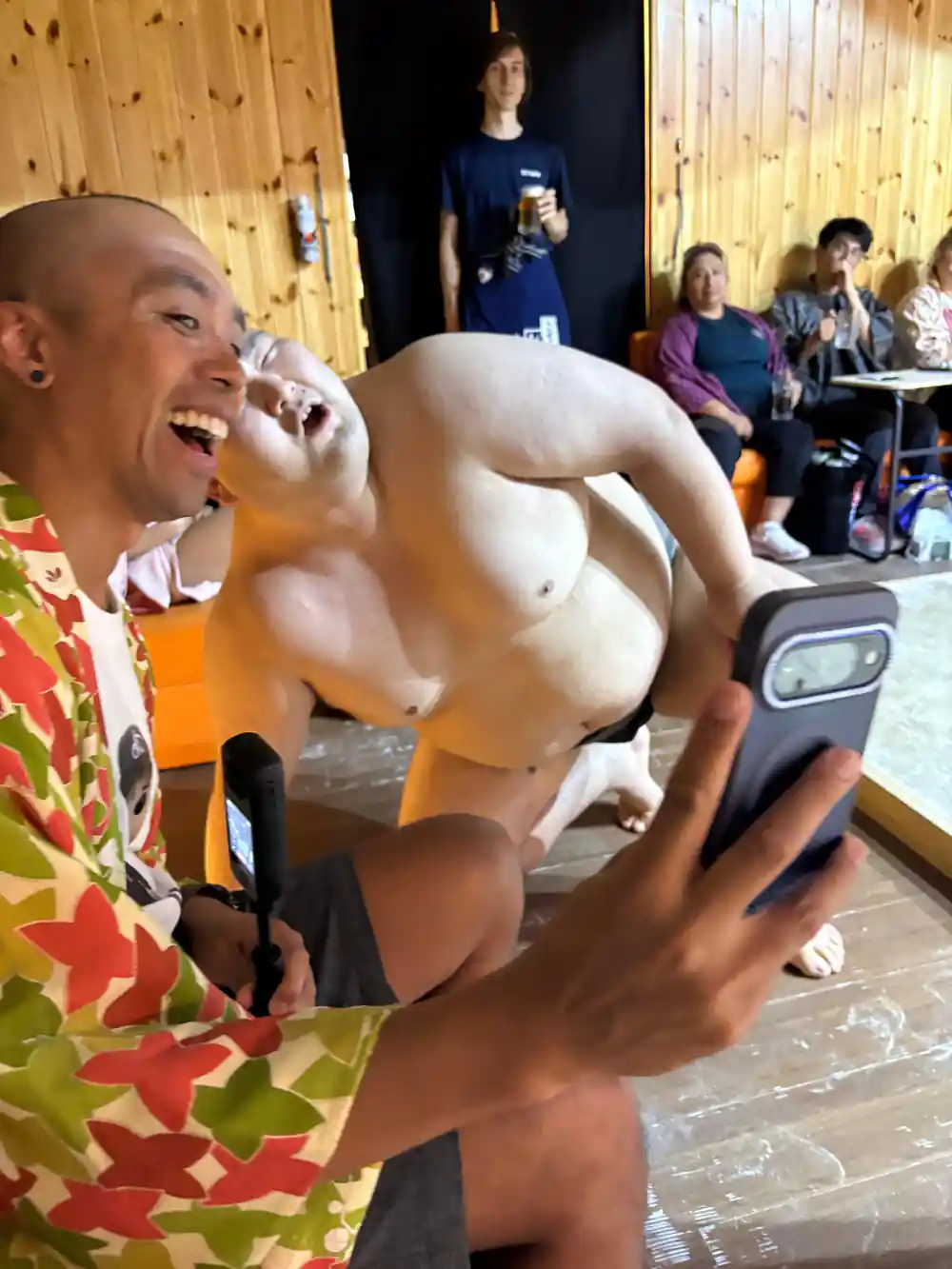
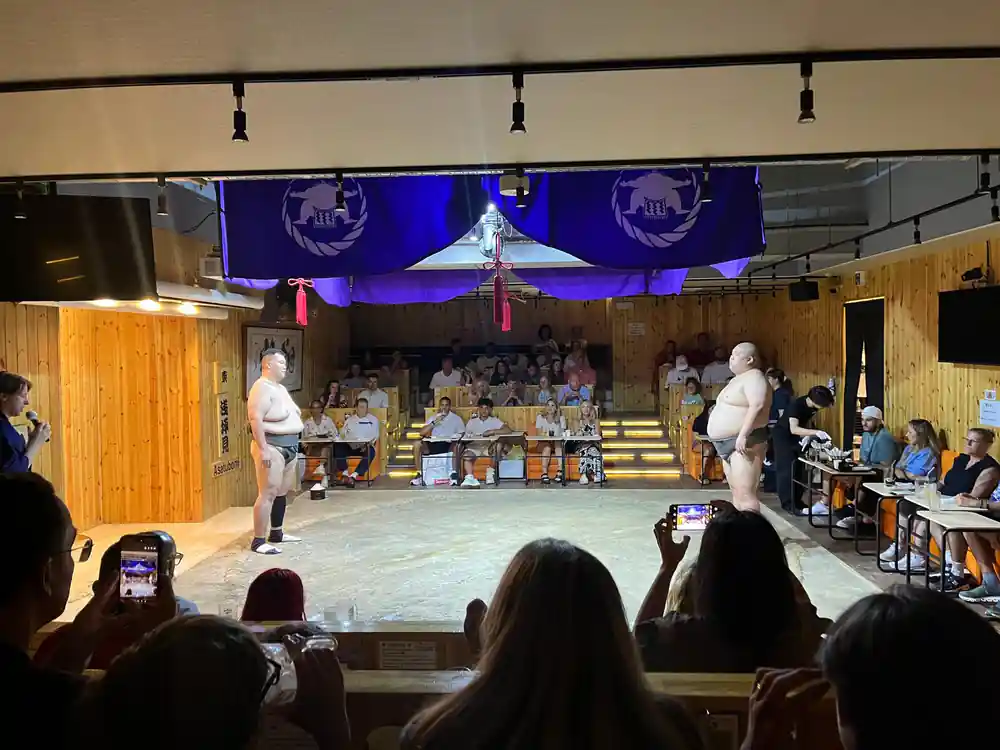
Evening sumo in Tokyo is dinner theatre with a ring in the middle. Retired wrestlers demonstrate throws and rituals, a host explains what is happening, and guests are often invited up to try their balance. The Tokyo: Sumo Entertainment Show with Chicken Hot Pot & Geisha runs 2 hours, comes in small group options, is wheelchair accessible and starts from US$102.[3] The meal is chicken hot pot, served at the table, and a geisha performance closes the evening.
Other evening listings follow a similar shape. Tokyo: Sumo Show & Dining Experience at Historic Sumo House lasts 1.5 - 2 hours, is rated 4.80 from 3,454 reviews, is wheelchair accessible and starts from US$89.[5] Tokyo: Shinjuku Sumo Show & Experience with Photo starts from US$65 and is rated 4.84 from 7,180 reviews, with a running time of 1.5 hours.[8]
If you want to learn the sport rather than only watch it, Tokyo: Sumo Wrestling Experience with Chanko Nabe & Mochi lasts 2 hours and starts from US$102, with instruction listed in English and Japanese.[17] Tokyo: Authentic Sumo Experience with Hot pot, Photo & Gift is another option: 2 hours, from US$81, rated 4.98 from 130 reviews.[18]
Language Support, Accessibility and Group Size
Access matters if someone in your group uses a wheelchair. The Tokyo: Sumo Entertainment Show with Chicken Hot Pot & Geisha is wheelchair accessible and offers small group options.[3] The Sumo Show & Dining Experience at Historic Sumo House is also wheelchair accessible, with an English-speaking instructor.[5] For families, the Tokyo Family Sumo Workshop & Live Wrestling Show with Lunch is wheelchair accessible, runs 2 hours, is rated 4.90 from 430 reviews, starts from US$62, and includes skip-the-line entry through a separate entrance.[19]
On the morning side, check what each listing says about guiding language and entry. Tokyo: Sumo Morning Practice: Viewing & Exclusive Interaction runs 3 hours with a live tour guide in English and Japanese.[7] The Tokyo Sumo Morning Practice Viewing Tour at a real stable lists an English live tour guide and skip-the-ticket-line entry.[6] Both are good picks if you want the day explained as it happens rather than reading about it afterwards.
Which Sumo Experience Fits Your Tokyo Itinerary
Choose by the shape of your day. If you have a free morning and someone in the group is happy to get up early, a stable visit is the closer look at the sport; one morning listing lasts 1 hour, and a viewing tour with interaction runs 3 hours.[7][13] If your days are already full, an evening show slots in after sightseeing, and the Sumo Entertainment Show with Chicken Hot Pot & Geisha runs 2 hours.[3]
Season matters too. Japan holds six Grand Sumo Tournaments each year, and the January tournament is the first.[20] The Kokugikan National Sumo Arena in Ryogoku has a capacity of up to 10,000.[21] If your trip overlaps a tournament, a guided tour that includes a seat is worth comparing with the practice and show options above.
Whichever you pick, look at the cancellation terms before you pay. The Tokyo: Sumo Entertainment Show with Chicken Hot Pot & Geisha offers free cancellation up to 24 hours in advance and lets you reserve now and pay later.[3] Some morning listings follow the same pattern, while one sets its free cancellation window at 11 days before the tour.[13] If your plans are firm, book ahead; if they are loose, take the flexible option.
From prices for Tokyo sumo experiences
From prices in US dollars as listed on GetYourGuide:[3][4][5][8][19]
Compare from prices for Tokyo sumo tours
From prices in US dollars as listed:[3][4][5][8]. Child prices are not listed for these tours.
When to book and when to go
How to plan a sumo day
Decide morning or evening
A stable visit is an early start with quiet, real training; an evening show is later, seated and built around a meal.
Check the exact start time
Morning practice typically begins between 5:00-7:30 AM and lasts 2-4 hours, varying by stable and season.[1]
Compare the listing details
Look at duration, guide language, group size and entry. One Tokyo morning tour runs 3 hours with a guide in English and Japanese.[7]
Book with a flexible policy
This show lets you reserve now and pay later, with free cancellation up to 24 hours in advance.[3]
Pack for the setting
For a morning stable visit, bring layers and quiet shoes; for a show, you are seated indoors and can dress for dinner afterwards.
Ready to book the Tokyo sumo show with hot pot and geisha?
from US$102Reserve now & pay later