The essentials
- A two-hour sumo entertainment show in Tokyo with a chicken hot pot meal and a geisha performance.[1]
- From US$102, with reserve now and pay later available on the listing.[1]
- Rated 4.79 from 8,004 reviews on GetYourGuide.[1]
- Small group seating is available and the show is wheelchair accessible.[1]
- Free cancellation up to 24 hours in advance for a full refund.[1]
- Top choice Sumo show with geisha from US$102 Duration2 hours[1]Rating4.79 from 8,004 reviews[1]CancellationFree up to 24 hours in advance[1]BookingReserve now & pay later[1] Check availability
- Sumo house dining show from US$89 Duration1.5 - 2 hours[2]Rating4.80 from 3,454 reviews[2]CancellationFree up to 24 hours in advance[2]BookingReserve now & pay later[2] See this tour
- Shinjuku sumo show from US$65 Duration1.5 hours[3]Rating4.84 from 7,180 reviews[3]CancellationFree up to 24 hours in advance[3]BookingReserve now & pay later[3] See this tour
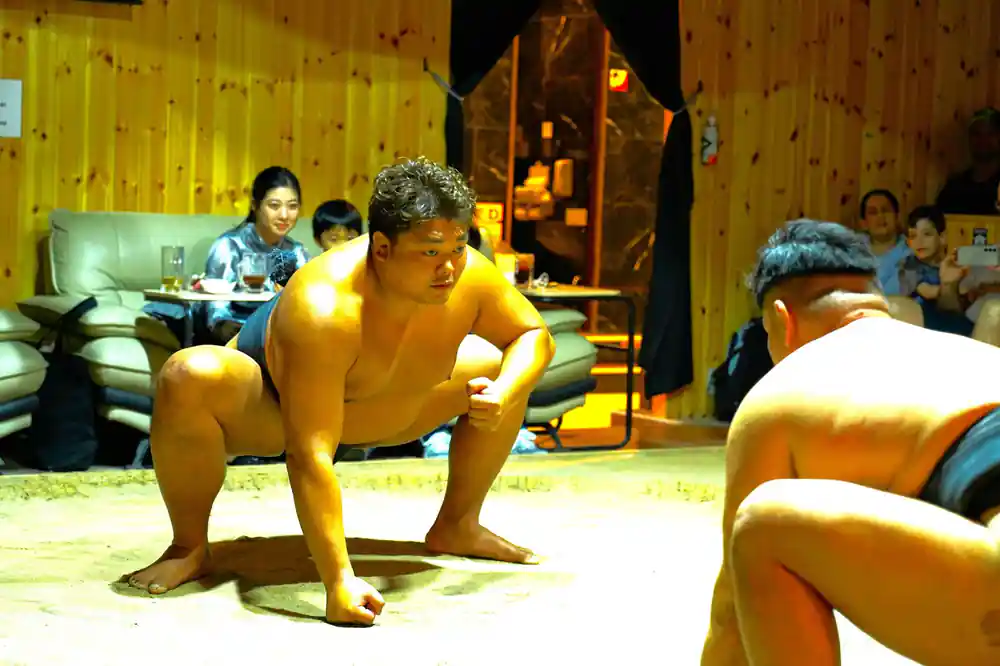
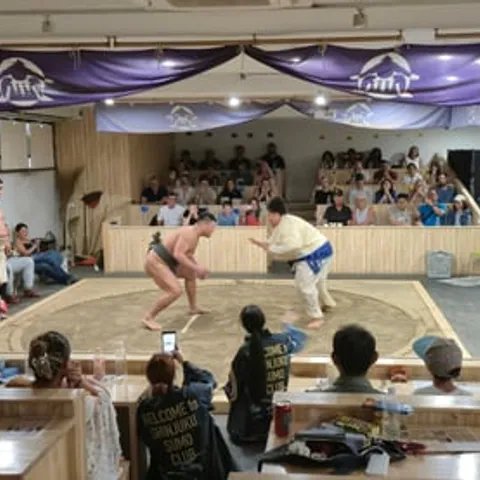
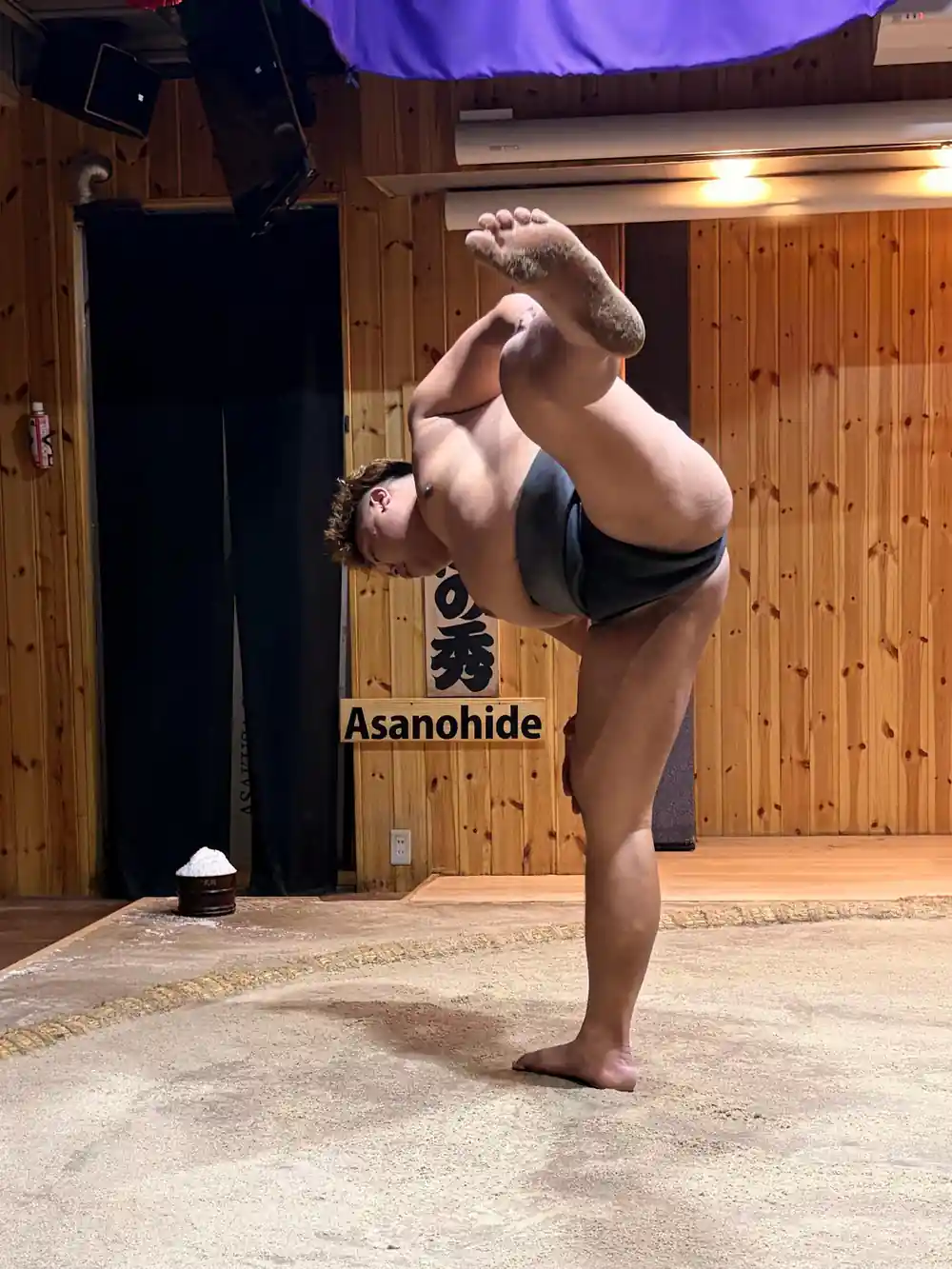
He then performs chiri-chozu : squatting low, extending both arms to the sides with palms turned upward, demonstrating to the gods and his opponent alike that his hands hold no weapons. He throws salt.
Is the Sumo Show Worth Booking?
Booking notes
- Prices shown are GetYourGuide from-prices, per person.
- Check availability to see starting times before you plan the evening.
- This show lists wheelchair access and small group seating available.
- Free cancellation up to 24 hours in advance for a full refund.[1]
On the night
- Arrive with time to find your seat and order a drink.
- Small group seating puts you close to the clay.
- Light layers work well in a warm hall.
- Ryogoku and Asakusa are easy to reach by train.
The Show Begins: Commentary and the Rules of Sumo
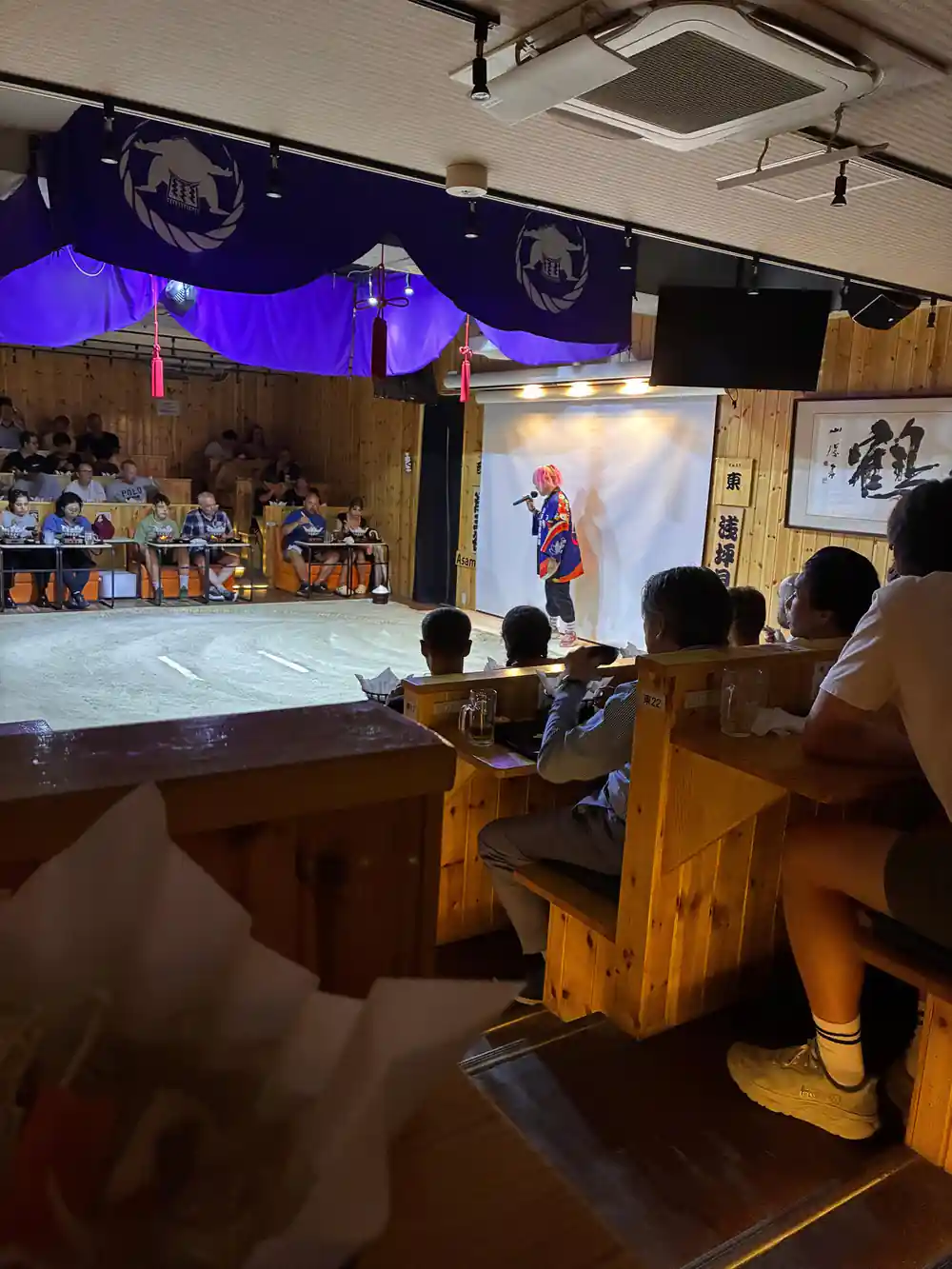
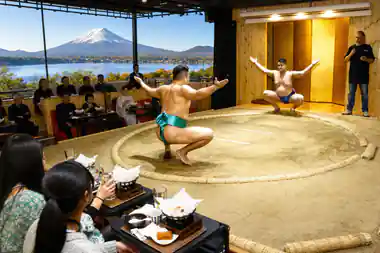
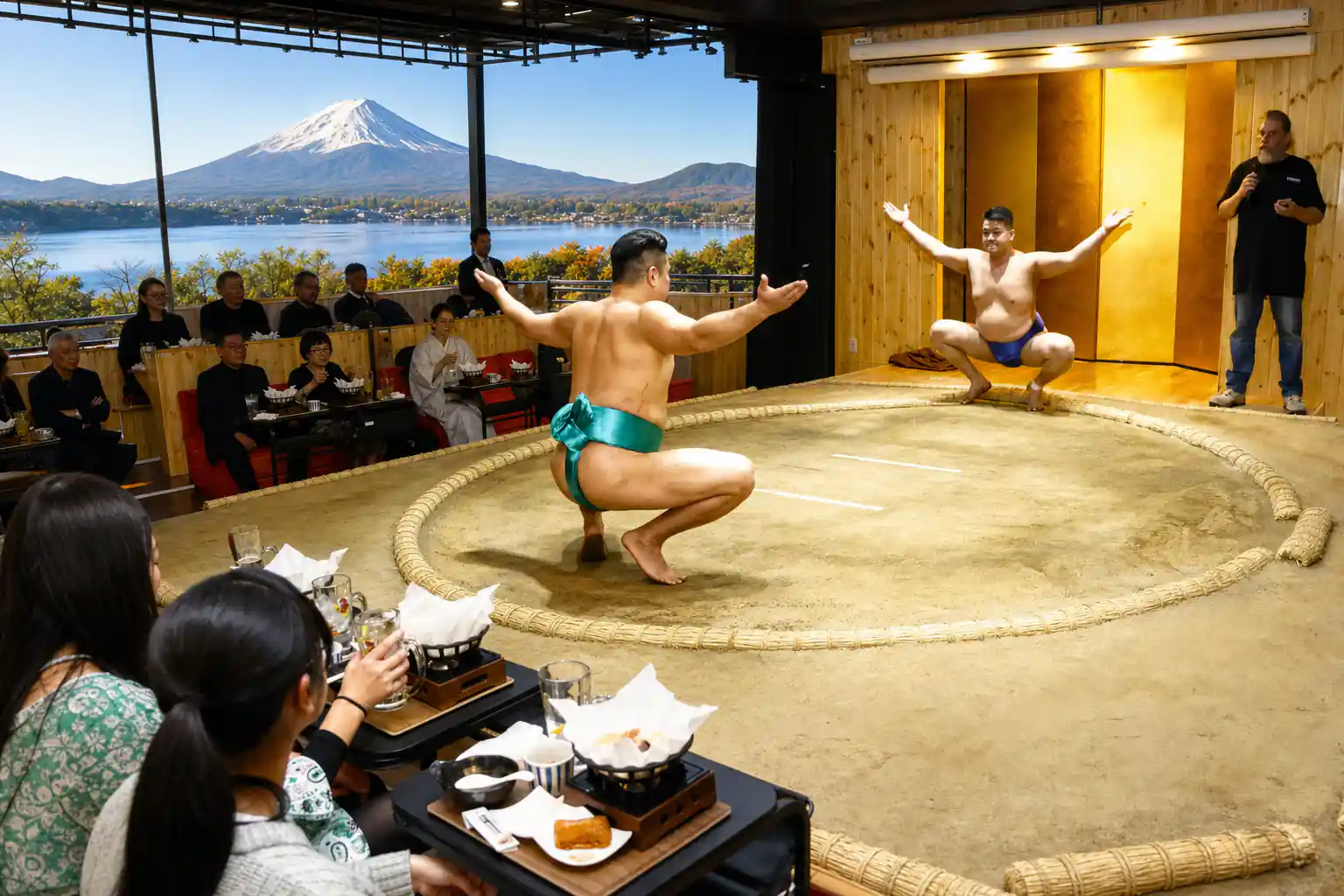
A sumo show is a small-room version of a very old sport. You sit close to a clay ring, often only a few metres from the sand, and watch the wrestlers warm up, square off and collide. Between bouts a host talks the audience through what is happening: the referee and his fan, the rope belt, the way a wrestler plants both feet before the charge. You do not need to know anything in advance, and you do not need to speak Japanese to follow the shape of the evening.
The rules are simpler than the ceremony suggests. Stay inside the ring, keep your feet off the sand, and you win. A contest usually lasts only a few seconds, but in rare cases can take a minute or more.[4] Winners are credited with one of 82 kimarite, or match-winning techniques, that the Japan Sumo Association defines, along with 5 non-techniques or ways to lose.[5] Before the clash comes the ritual: the chiri-chozu crouch, both arms out with palms up to show that the hands hold no weapons, and then the throw of salt.[6]
Sumo sorts its wrestlers into six divisions covering ten ranks in total, and only the top division, Makuuchi, is divided further into five separate ranks.[7] The highest rank of all is the yokozuna, and as of November 2025 exactly 75 wrestlers have reached it.[8] You will not see that level of sumo at an entertainment show, but you will hear the names.
Live Sumo Bouts in the Ring
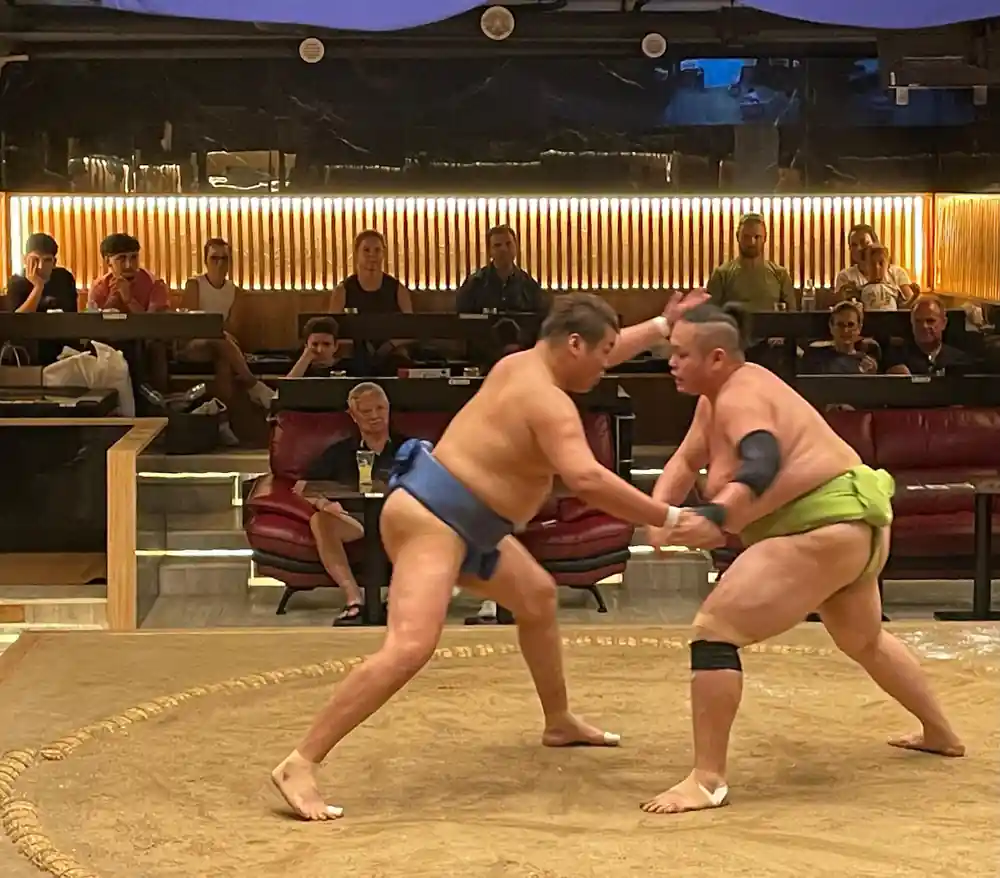
The bouts are fast. Two wrestlers crouch, eye each other, and then everything happens at once: the slap of the charge, a scramble of feet, a body driven back over the straw bales. The ring is small, and the audience is close. You hear the impact as much as you see it. Between bouts there is time to breathe, to talk about what just happened, and to watch the next pair step up.
Real sumo lives at the Kokugikan National Sumo Arena in Ryogoku, Sumida City, Tokyo, a hall with a capacity of up to 10,000.[9] Japan holds six Grand Sumo Tournaments each year, and the January tournament is the first of them.[10] Second-floor B or C arena seats at the Kokugikan cost between 3,500 and 5,500 yen.[11] An entertainment show is a different animal, shorter and built for visitors, and it is a friendly way to learn what to look for.
If you are in Tokyo during a tournament, plan the tournament day separately from a show night. They scratch different itches: one is a competition with rankings at stake, the other is a performance with dinner in front of you.
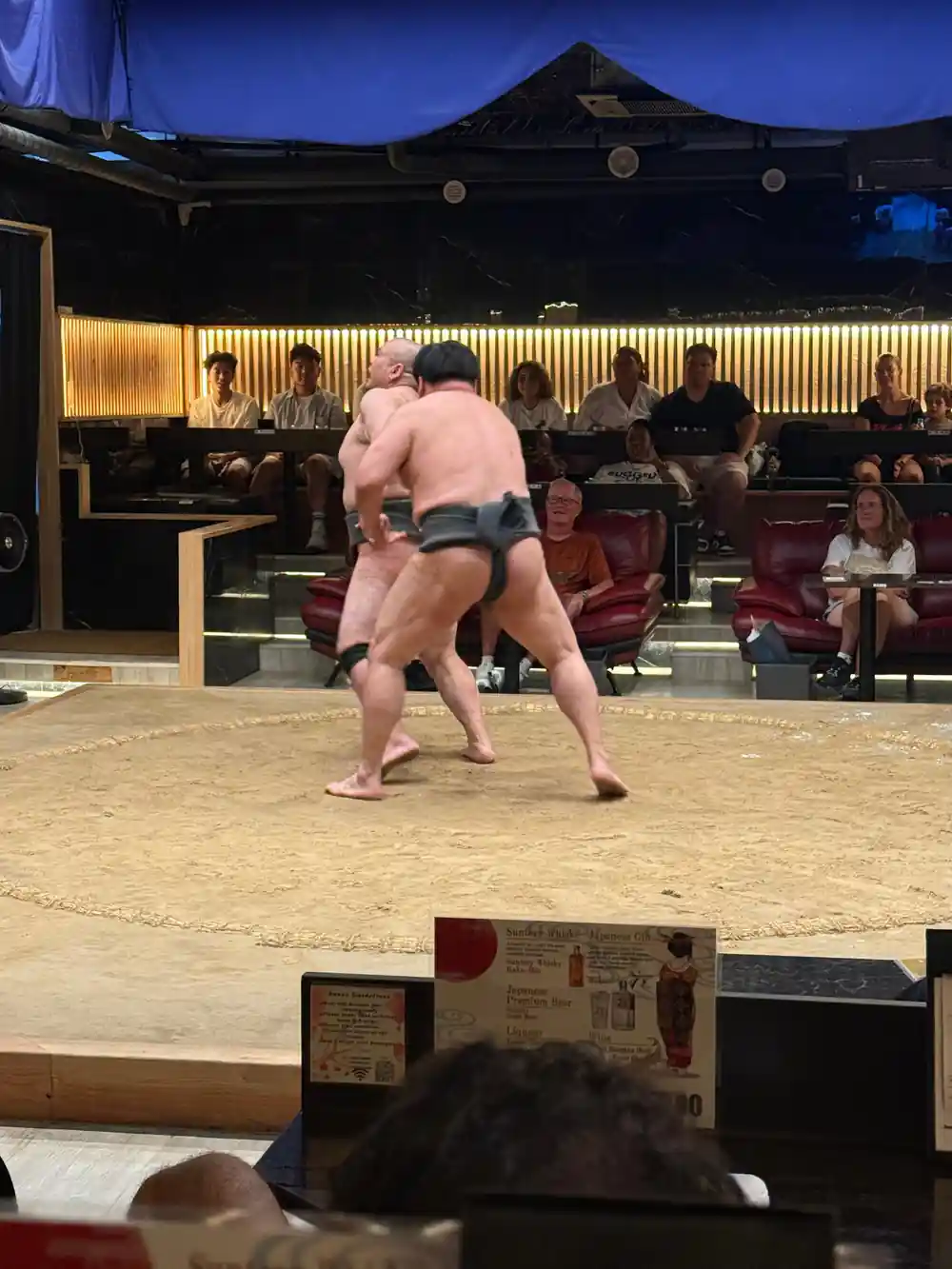
Wrestlers square up in the sand ring while the audience watches from ringside.
Stepping Into the Ring: The Sumo Challenge
The part everyone remembers is the invitation. Where a show includes an audience challenge, guests are called up to step onto the clay, take the crouch, and try to shift a wrestler who has no intention of moving. It is funny, a little nerve-racking, and over in seconds. The rest of the room takes sides immediately.
You will not be expected to know anything. Take your shoes off, copy the stance you have just watched, keep your elbows in and push from the legs rather than the shoulders. Wrestlers are trained to absorb a shove and stay upright, and the person opposite you is far better at landing on their feet than you are.
For scale, research from the Keio University Sports Medicine Research Center put the average weight of 25 makuuchi wrestlers at 161.2 kg (about 355 lbs), with an average height of 186.3 cm.[12] The Tokyo Sumo Entertainment Show with Chicken Hot Pot and Geisha is wheelchair accessible, has small group seating available, and runs for 2 hours.[1]
The Geisha Dance: Art and Tradition
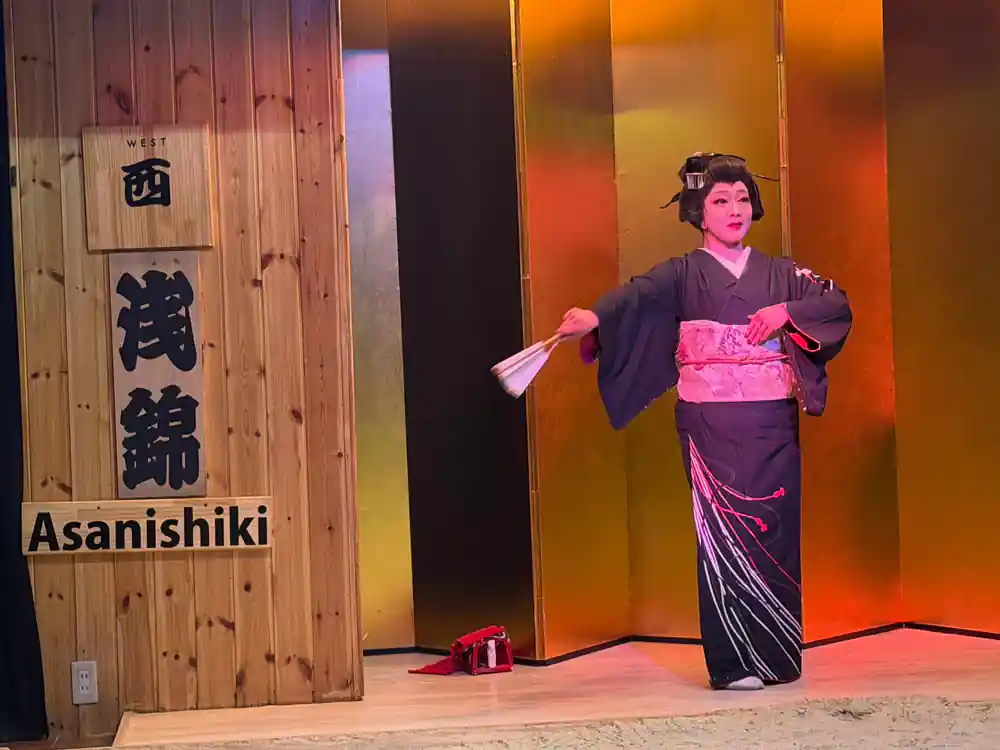
The geisha performance is the quiet half of the evening. A performer in kimono moves through a short dance with a fan or a small prop, and the room goes still in a way it does not during the wrestling. Watch the hands and the feet. That is where the control sits, and it is easy to miss if you are looking at the costume.
Geisha are trained performers rather than hostesses. Years of dance, music and etiquette sit behind a piece that may last only a few minutes. The Tokyo Sumo Entertainment Show with Chicken Hot Pot and Geisha sets a geisha performance alongside the wrestling.[1] Keep your phone out of the way while she dances, and take your pictures afterwards.
It is worth reading a little about the districts where this tradition grew up before you go, so the dance reads as more than decoration. A little background reading changes what you notice, and it makes the quiet part of the evening feel earned rather than tacked on.
from US$102
The Tokyo Sumo Entertainment Show with Chicken Hot Pot and Geisha runs for 2 hours and is rated 4.79 from 8,004 reviews.[1]
Chicken Hot Pot and Drinks
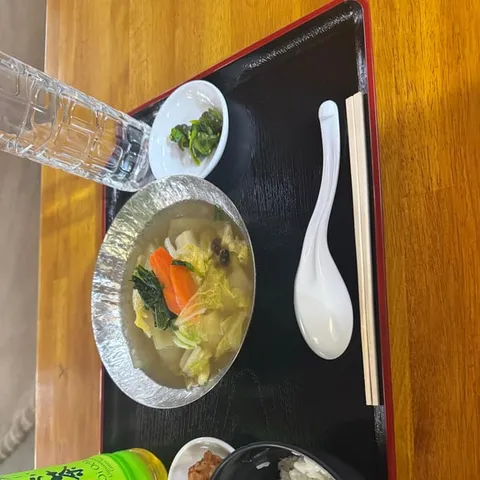
Chanko-nabe is the food of sumo stables: a shared pot of broth with chicken, vegetables and tofu, cooked at the table, and eaten in rounds. Chicken is the traditional choice, and the pot keeps going while there is anything left to add. It is warm, salty and easy to eat while you talk, which is exactly the point of it.
The numbers behind the wrestlers' diet are startling. A rikishi's daily intake is approximately 5,000 to 8,000 kcal, and can sometimes exceed 10,000.[13] Nobody expects a guest to match that, and the meal is served at a human pace. Check your listing for what the meal includes before you book, and say so if you do not eat chicken.
Keep cash or a card to hand for drinks, and ask about allergies when you sit down. The broth gets richer as the evening goes on, and the last ladle is the richest. If you are vegetarian, mention it when you book rather than on the night.
The Souvenir Photo With the Wrestlers
A photo with a wrestler is the keepsake to aim for. Where a show offers a photo stop, it tends to come at the end of the evening, when the wrestlers are relaxed and the room has thinned out. Ask first, and let them decide the pose.
A few things make a better picture. Stand side-on rather than squared up to the camera, keep your hands away from the belt unless you are invited to touch it, and give the lens a second to adjust to the hall lighting. Clean the camera on your phone before you hand it over, and ask for a second frame, in case someone blinks.
If you are travelling with children, put them in the middle of the group, and let them stand in front. Their pictures are usually the ones that end up on the wall at home, long after the food and the bouts have blurred together.
Souvenir Set and Taking the Experience Home
Sumo merchandise is small and practical: a hand towel, a folding fan, a keyring, a packet of the salt used in the ring. Where a show sells a souvenir set, it is a reminder rather than a treasure, and it packs flat in a suitcase. Buy it at the venue if you want the memory to have a date on it.
If the evening leaves you curious, Ryogoku in Sumida City is where the Kokugikan National Sumo Arena stands, with a capacity of up to 10,000.[9] Walking the streets around it the next morning is a calm way to see where the sport lives, and it costs nothing but a train ride.
Before you book, read what each listing includes. A show with dinner is a different purchase from a morning at a stable. The Tokyo Sumo Entertainment Show with Chicken Hot Pot and Geisha runs for 2 hours, costs from US$102, is wheelchair accessible, has small group seating available, and has free cancellation up to 24 hours in advance for a full refund.[1]
Reviews for Tokyo sumo shows
Each bar is the number of GetYourGuide reviews on that listing.[1][2][3][14][15][16]
What the Tokyo sumo shows cost
All amounts are GetYourGuide from-prices in US dollars per person.[1][2][3][17]
When to book and when to go
How the evening runs
Arrive and settle in
Doors open before the start. Check availability to see starting times, then plan to arrive with time to find your seat.[1]
Learn the rules
A contest usually lasts only a few seconds, but in rare cases can take a minute or more.[4]
Watch the bouts
The chiri-chozu crouch and the throw of salt open each bout, and the charge follows seconds later.[6]
Try the ring challenge
Where the show includes a ring challenge, shoes come off, and guests take the crouch in front of the crowd.
Eat the chicken hot pot
The shared pot comes out hot. A rikishi's daily intake is approximately 5,000 to 8,000 kcal, and can sometimes exceed 10,000.[13]
Take your photo
Where a photo stop is offered, it usually comes at the end, after the geisha dance and the meal.
Book the Tokyo Sumo Entertainment Show with Geisha
from US$102Reserve now & pay later