The essentials
- No formal dress code. Smart casual clothes you can sit and eat in, with light layers for a warm room, are all you really need for the evening.
- Slip-on shoes and clean socks make low seating simple, and the clay ring is the wrestlers' space rather than somewhere to put your feet.
- A small bag for your lap, your booking on your phone, glasses, a thin wrap and nothing dangling that could snag during a ring challenge.
- Bouts are over in seconds, so watch the first one properly and take your pictures in the pauses between them instead.
- The Tokyo show is listed with chicken hot pot, so tell the operator in advance about allergies or anything you would rather not eat.
- Top choice Sumo, hot pot and geisha from US$102 Duration2 hours[1]Rating4.79 from 8,004 reviews[1]Free cancellationUp to 24 hours in advance[1]PaymentReserve now and pay later[1] Check availability
- Sumo show and dining from US$89 Duration1.5 - 2 hours[2]Rating4.80 from 3,454 reviews[2]Free cancellationUp to 24 hours in advance[2]PaymentReserve now and pay later[2] See this tour
- Shinjuku sumo and photo from US$65 Duration1.5 hours[3]Rating4.84 from 7,180 reviews[3]Free cancellationUp to 24 hours in advance[3]PaymentReserve now and pay later[3] See this tour
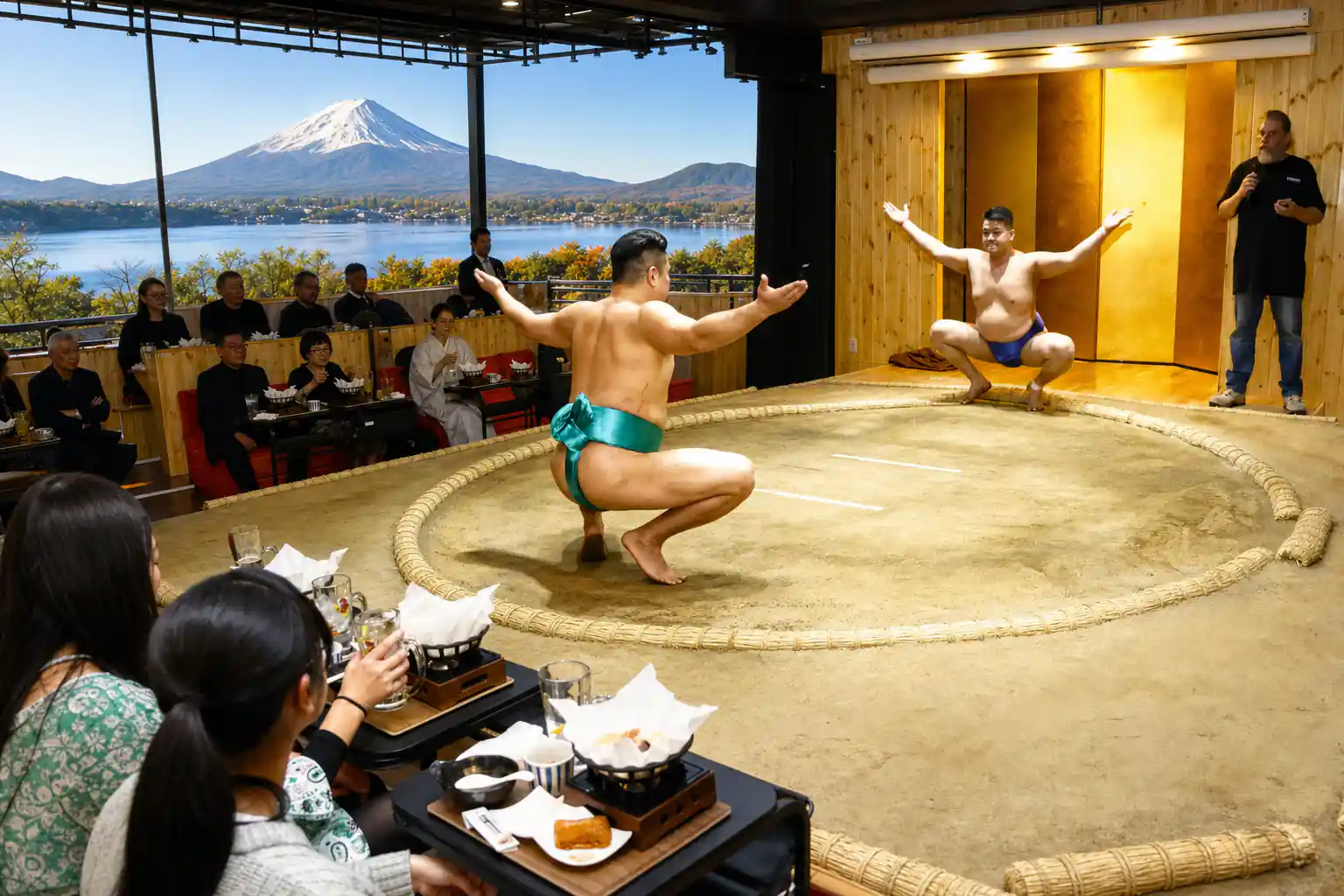
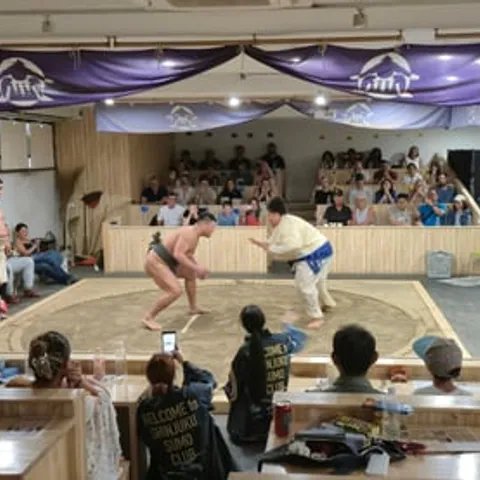
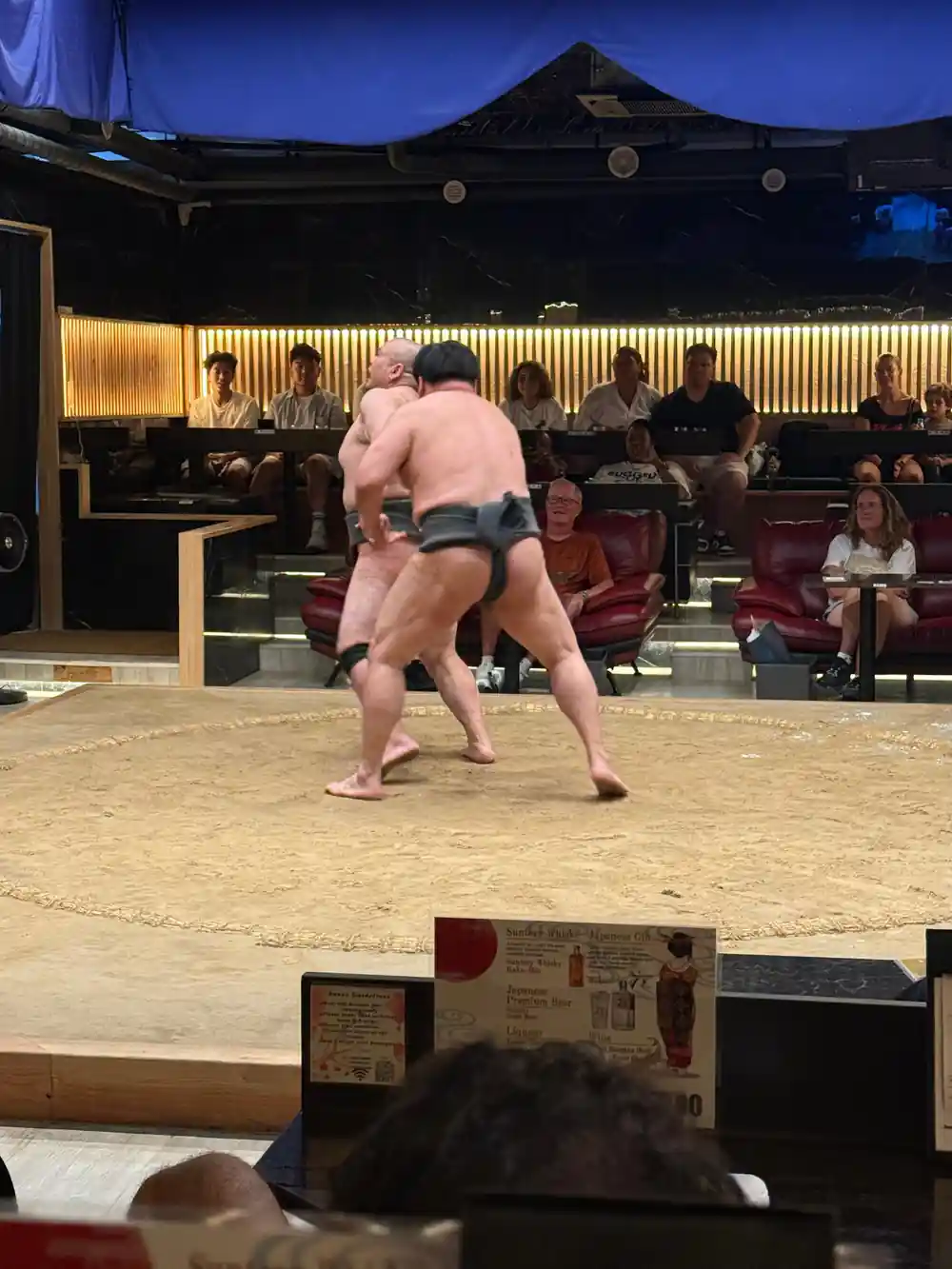
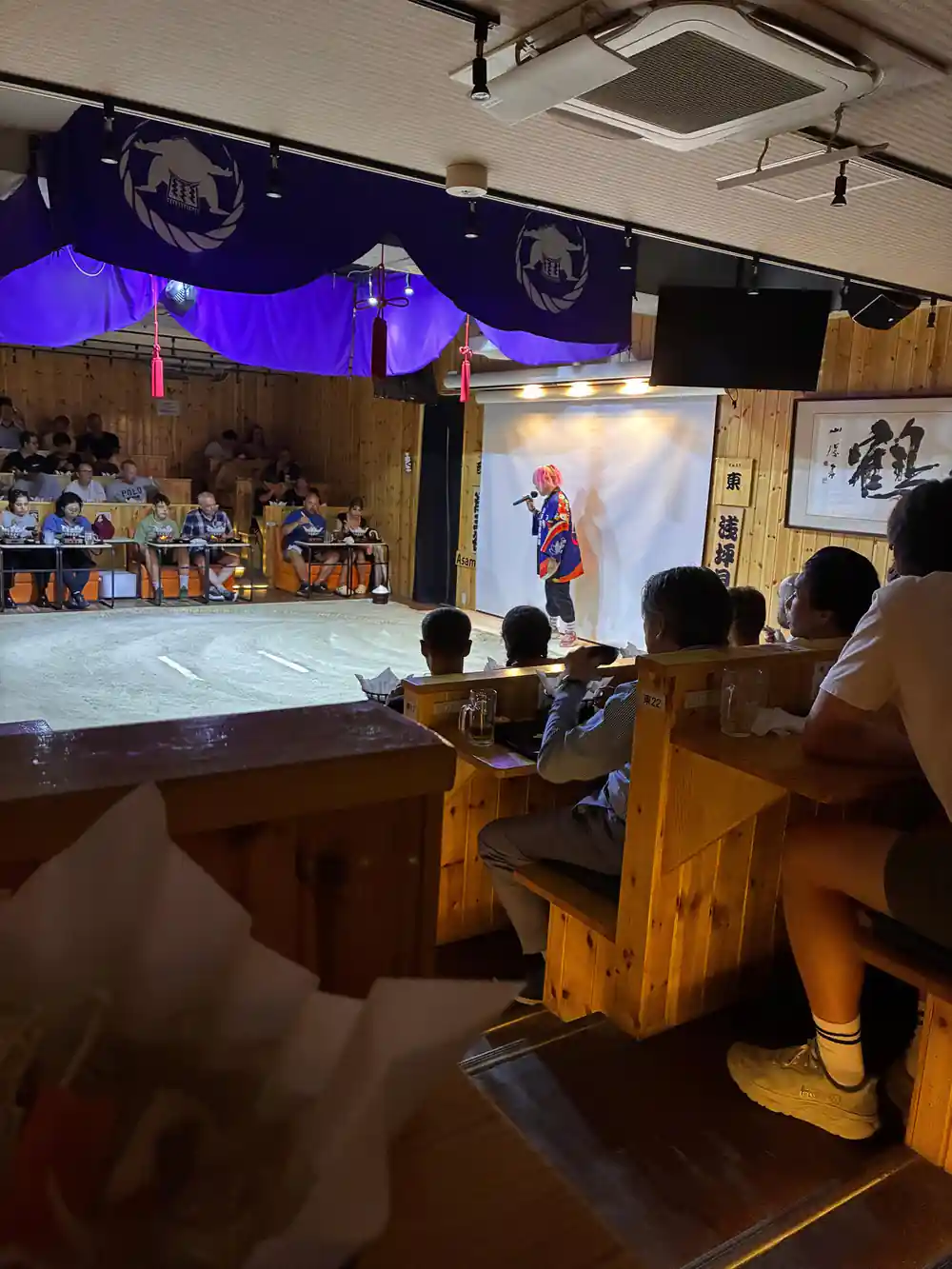
A contest usually lasts only a few seconds, but in rare cases can take a minute or more.
Our verdict on what to wear and bring
Booking notes
On the night
- Smart casual clothes you can sit and eat in
- The Tokyo show is wheelchair accessible[1]
- Layers for a warm dining room and a cool walk back
- A small bag on your lap instead of a big daypack
What to wear to a sumo dinner show
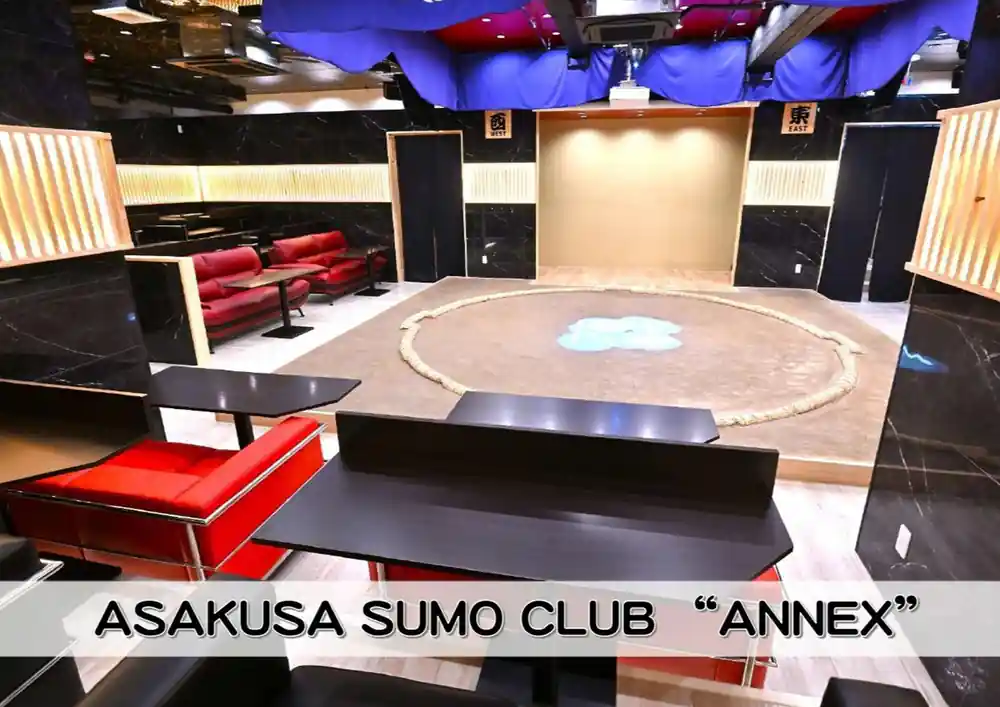
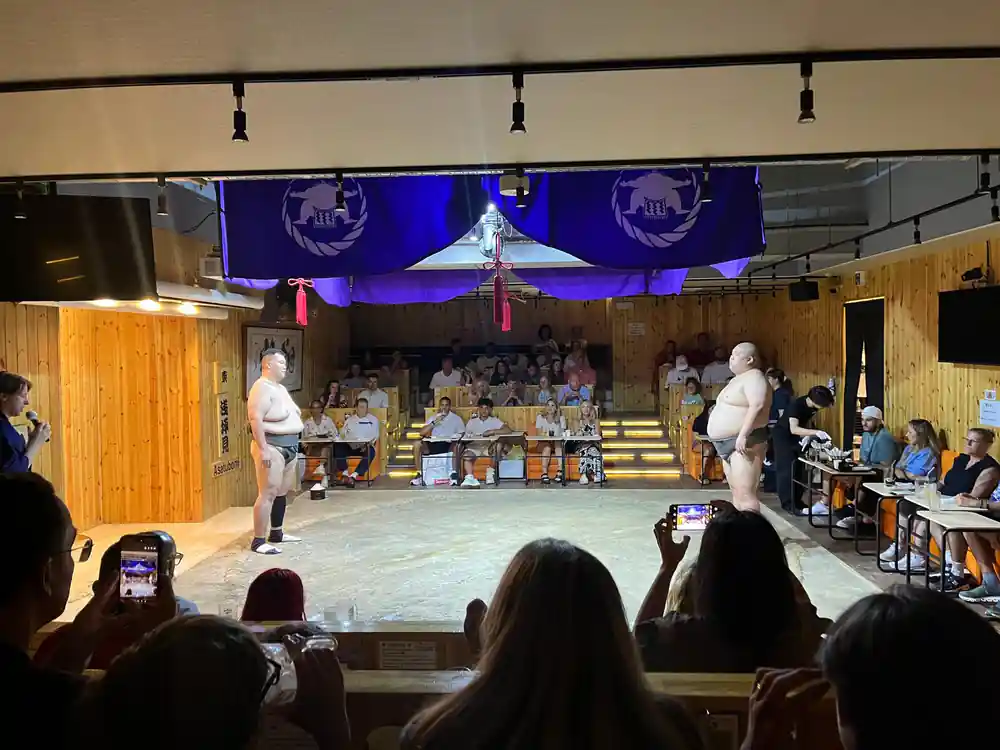
A sumo dinner show is an indoor evening built around a clay ring, a shared meal and a bit of theatre. You will sit close to other guests for the length of the show, eat from a hot pot that keeps going, and watch wrestlers work through their routines a few steps away. That is a comfort-first setting rather than a formal one. Tokyo is humid in summer and cold in winter, but the room you are sitting in will be warm either way, so layers you can take off are the safest choice.
Think smart casual and you will fit right in: clean jeans or chinos, a shirt, a blouse or a light knit, and shoes you can walk back to the station in. If you come straight from a day of sightseeing, nobody will mind. Avoid anything tight around the waist, because the food keeps arriving, and pick a top that lets you sit cross-legged or on a low chair without rearranging yourself. Leave the heavy perfume at the hotel; in a small room full of hot pot, it does nobody any favours.
A hat and sunglasses are fine for the walk there and easy to tuck away once you are inside. Beach sandals are best left at the hotel, and anything you would wear to the gym will look out of place at a table with a bubbling pot on it.
Footwear, seating and ring etiquette
In many Japanese dining rooms the shoes come off at the edge of the floor, and low seating is common, so slip-on shoes beat anything with laces. Clean socks matter more than most visitors expect, and a spare pair in your bag is a kindness to yourself after a long day on your feet. If you are on a cushion on the floor, sit with your legs to one side or cross-legged and shift position when you need to; nobody expects a formal kneeling pose all evening.
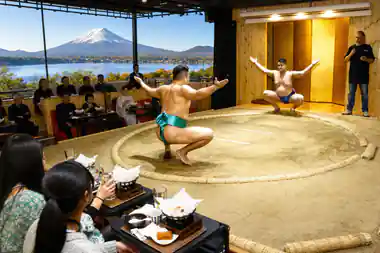
Treat the clay ring as the wrestlers' space. Keep your bag beside you rather than behind you where people walk, and keep drinks away from the edge of the ring. Before a bout, the wrestler performs chiri-chozu, squatting low with both arms extended to the sides and palms turned upward to show the gods and his opponent that his hands hold no weapons, and then he throws salt.[4] Watching that opening closely is worth more than a photograph of it.
When the show ends, take your time leaving. Rows are tight, people are gathering bags, and a slow and orderly exit keeps the mood friendly. If you are sitting near the ring, wait for the wrestlers to clear the space before you stand up and start moving.
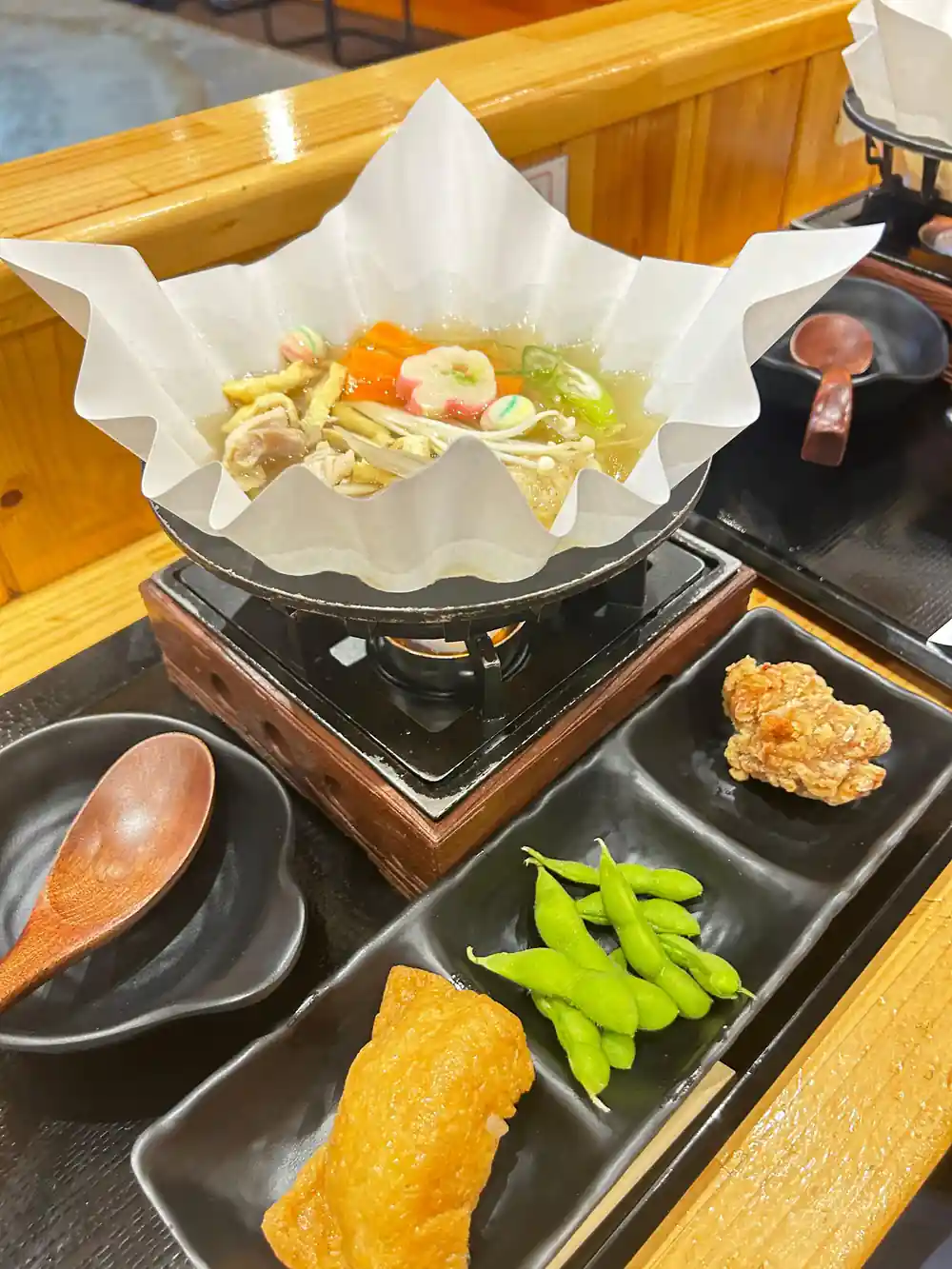
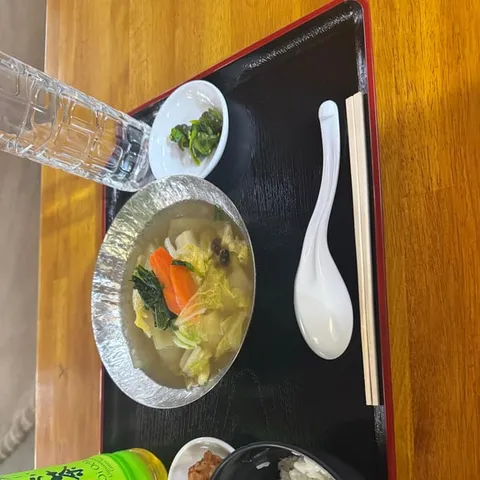
A shared hot pot, the centre of every sumo dinner show table
What to bring to the show
Keep it light. A small crossbody bag or a tote that sits on your lap is ideal, and a full daypack will be in everyone's way, including yours. Phone, wallet, hotel key, glasses and a thin wrap for the ride home covers almost everything. If you plan to take plenty of photos, a portable charger is worth the space, since a long evening of screens drains a battery quickly.
Many travellers carry a little cash alongside a card, which covers most situations in Tokyo, and small change is handy for lockers and vending machines on the way. A packet of tissues or a small hand towel is useful at a shared table, where hot pot and conversation both get messy.
If you wear contact lenses and the room turns dry, bring your glasses as a backup. And if you are heading somewhere afterwards, a spare shirt in the bag takes you from ring-side to a bar without a detour to the hotel.
Photos and phones during the bouts
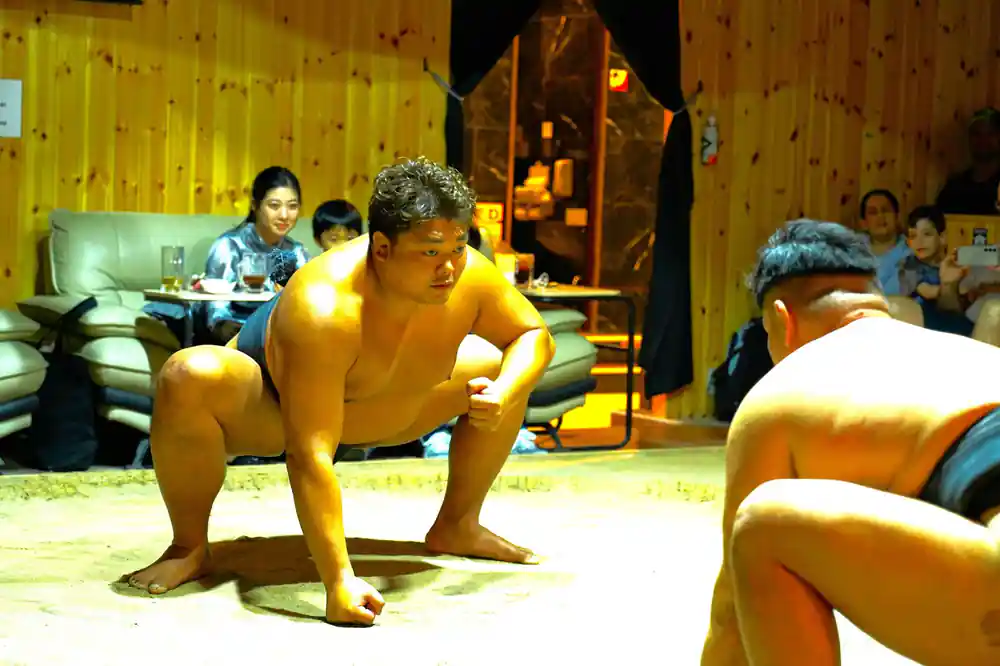
A sumo contest usually lasts only a few seconds, and in rare cases can take a minute or more.[5] The action you came for is finished almost before your phone is out of your pocket. That is the argument for watching the first bout with your own eyes and deciding afterwards what you want to capture.
A screen held up in a dim room blocks the view behind you, and the people behind you paid for the same seats. Take your pictures in the pauses between bouts, when everyone else is posing anyway, and keep the phone low and close to your chest rather than up in the air.
Ask before you photograph anyone up close, whether that is a wrestler, a geisha or another guest. If you are unsure whether filming is welcome, ask a member of staff before the show rather than mid-bout. Turn the flash off and the shutter sound down, and nobody in the room will have a reason to mind.
from US$102
The Tokyo sumo entertainment show with chicken hot pot and geisha is listed from US$102, rated 4.79 from 8,004 reviews.[1]
Meeting the wrestlers and asking for photos
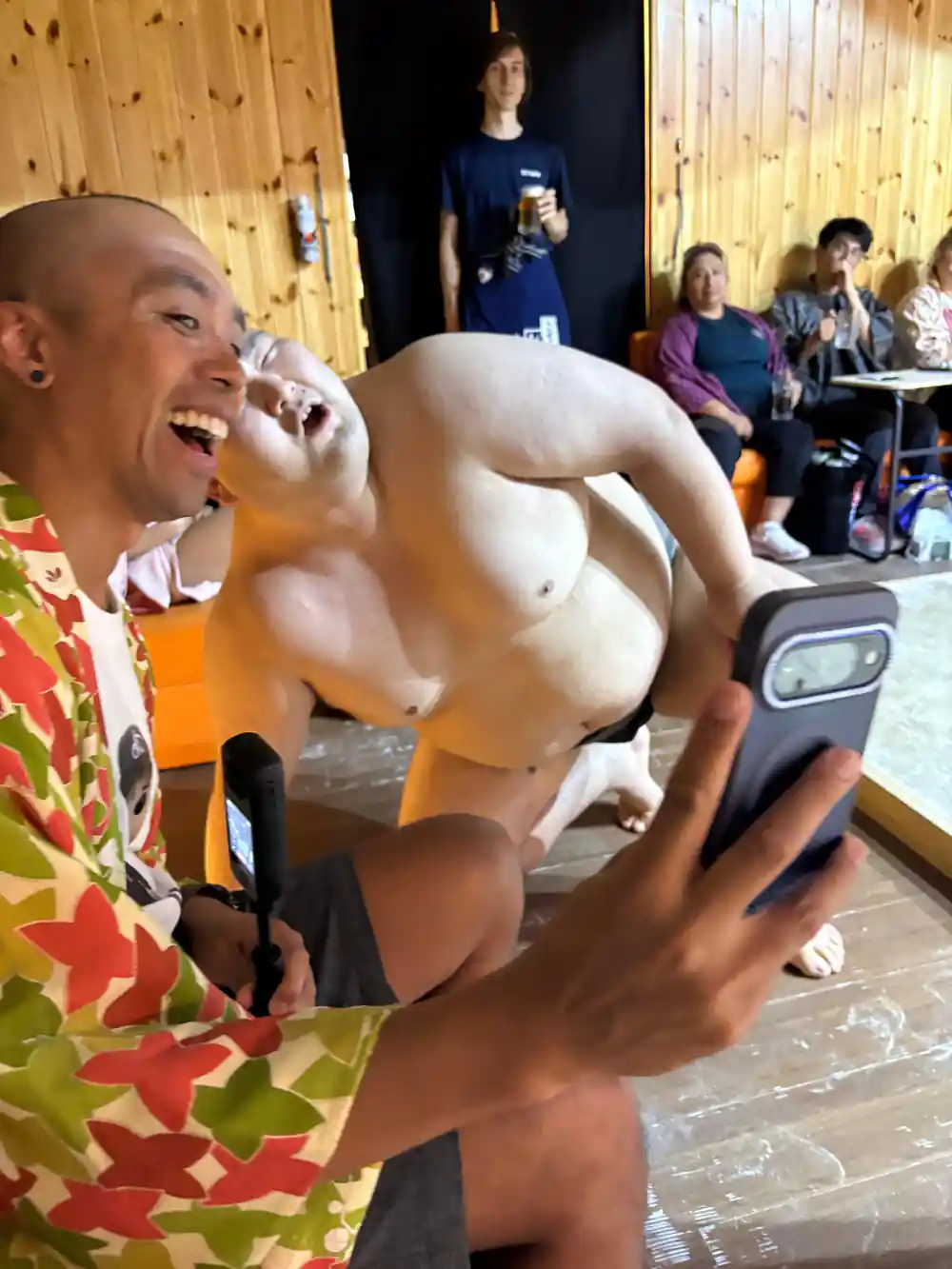
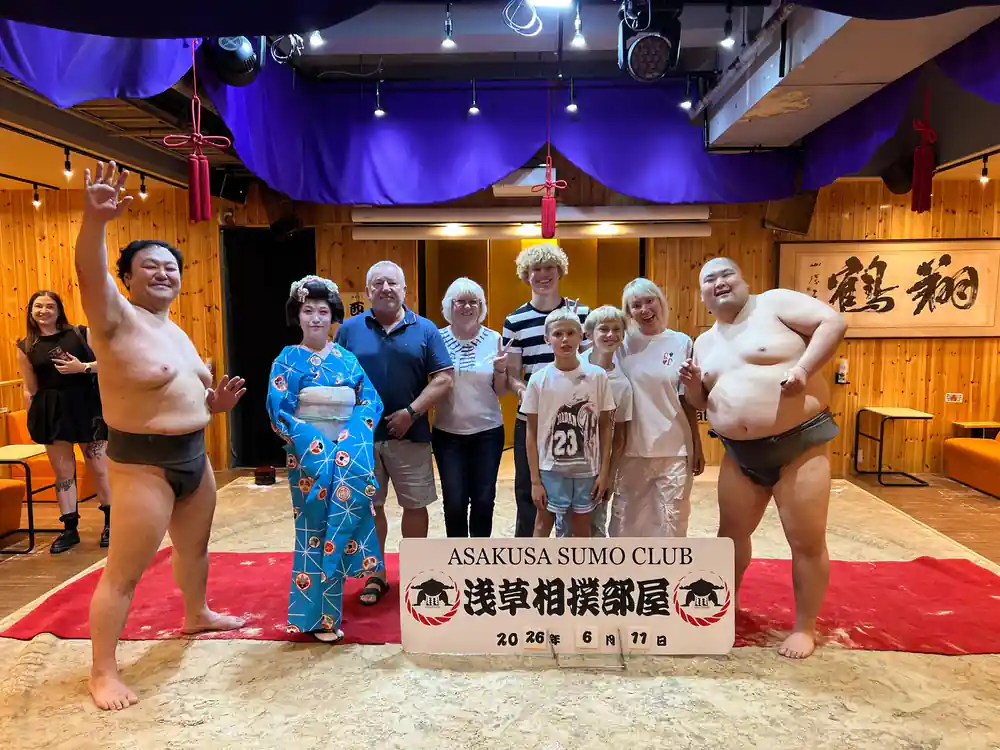
Interaction is part of the fun at these shows, and several Tokyo listings put a photo with the wrestlers near the centre of the evening. The Shinjuku sumo show and experience with photo is listed from US$65 and rated 4.84 from 7,180 reviews.[3]
Wrestlers are professionals doing a job, so use the approach you would use with anyone else: ask first, keep it brief, and let them lead. If you want a photo, hold up your phone and raise your eyebrows; a nod is usually answer enough. Avoid patting a wrestler on the back or grabbing the mawashi, the heavy belt, which is equipment rather than costume.
Photos taken between bouts come out better than photos taken during them, and a group shot with the ring behind you is the one people keep. If a wrestler offers a handshake or a bow, take it, say thank you, and step aside so the next person gets their turn.
Drinks, dinner and dietary questions
The Tokyo sumo entertainment show with chicken hot pot and geisha is listed from US$102 and runs 2 hours.[1] A hot pot is a shared dish cooked at the table, so if you do not eat chicken, avoid alcohol or have an allergy in the group, say so when you book rather than on the night. The operator is the person who can answer that properly.
The meal is a big part of why these shows exist. Professional wrestlers eat a great deal to build and hold their size: a rikishi's daily intake ranges from approximately 5,000 to 8,000 kcal and can sometimes exceed 10,000.[6] You are not expected to match that. Eat what you enjoy, share the rest, and let the pot sit at the middle of the table where it belongs.
If you fancy a drink with dinner, order one; if you do not, water and tea do the job just as well. The evening moves quickly, and a clear head makes the bouts easier to follow.
Tipping, gratitude and the ring challenge
The tipping question is the awkward part of many travellers' evenings in Japan. A warm, clear thank you as you leave is the gesture that lands best, said to the person who looked after your table rather than pressed into a hand. Keep your wallet where it is and enjoy the applause at the end.
The ring challenge is the other moment people wonder about. Several listings build an audience challenge into the show, including the Osaka sumo experience with a live show and audience challenge, from US$41 and rated 4.83 from 1,325 reviews, and the Osaka show with ex-pro wrestlers and a ring challenge, from US$44.[7][8]
If you step up, dress for it in advance: clothes you can move in, empty pockets, and no watches, rings or dangling jewellery. Listen to the wrestlers running the segment, keep your effort gentle, and enjoy the moment. If you would rather watch from your seat, that is a perfectly good choice too.
Review counts for Tokyo sumo show and dinner listings
Tokyo sumo shows and dinner, from-prices
Adult from-prices:[1],[2],[3],[9].
When to book the Tokyo sumo show and dinner
Getting ready for the show
Check the starting time
The Tokyo show does not have a fixed start; check availability to see the starting times before you plan the rest of your evening.[1]
Dress for a warm room
Light layers, nothing tight at the waist and no heavy perfume. You will be eating, sitting and possibly standing up to join in.
Choose slip-on shoes
Low seating and dining rooms where shoes come off make slip-on footwear the easy option, and clean socks are worth packing.
Pack a small bag
Phone, wallet, hotel key, glasses and a thin wrap. Leave the daypack behind and keep your hands free for photos.
Ask about food and the ring
Mention allergies or a dislike of chicken when you book, and decide on the night whether you fancy the ring challenge.
Book the Tokyo sumo show and dinner in one evening
from US$102Reserve now & pay later