The essentials
- Ryogoku Kokugikan in Sumida City, Tokyo, seats up to 10,000 for Grand Tournament sumo.[1]
- Japan holds six Grand Sumo Tournaments a year, and the January tournament is the first of them.[2]
- Second-floor B or C arena seats at the Kokugikan cost between 3,500 and 5,500 yen.[3]
- The Tokyo sumo entertainment show with chicken hot pot and geisha runs 2 hours and is rated 4.79 from 8,004 reviews.[4]
- Stable practice typically begins between 5:00 and 7:30 AM and lasts 2 to 4 hours.[5]
- Top choice Sumo Entertainment Show from US$102 Duration2 hours[4]Rating4.79 from 8,004 reviews[4]CancellationFree cancellation, 24 hours ahead[4]Good forAn evening of wrestling and hot pot Check availability
- Sumo Morning Practice from US$102 Duration1.5 to 2 hours[6]Rating4.78 from 720 reviews[6]CancellationFree cancellation, 24 hours ahead[6]Good forEarly risers who want real training See this tour
- Sumo Show & Dining from US$89 Duration1.5 to 2 hours[7]Rating4.80 from 3,454 reviews[7]CancellationFree cancellation, 24 hours ahead[7]Good forDinner with a show at a sumo house See this tour
Held every January, this is the first of Japan’s six annual Grand Sumo Tournaments, known as honbasho .
Tournament Sumo or the Asakusa Show?
Booking notes
- Check whether a Grand Tournament falls in your dates before you plan a sumo night.
- Morning practice starts early, so pick a morning with nothing else on the schedule.
- Keep small change handy for food stalls and souvenirs around the arenas.
- Read the accessibility line on each listing if you need step-free seating.
On the day
- Arrive ahead of the start for practice; latecomers disturb a very quiet room.
- Halls get warm under the lights, so dress in layers you can take off.
- Keep voices low and phones silent while wrestlers are training.
- Ask before photographing close up, and never use a flash in a stable.
Ryogoku Kokugikan: Tokyo's Grand Sumo Arena
The Ryogoku Kokugikan is the building most people picture when they imagine sumo in Japan: a big roofed hall on the east side of central Tokyo, ringed by banners on tournament mornings, with a square of packed clay at its centre and steep tiers of seats climbing around it. The Kokugikan National Sumo Arena in Ryogoku, Sumida City, Tokyo, has a capacity of up to 10,000.[1] It is a working sports venue rather than a museum piece, and on a tournament day the streets outside fill with spectators, food stalls and the smell of grilled skewers.
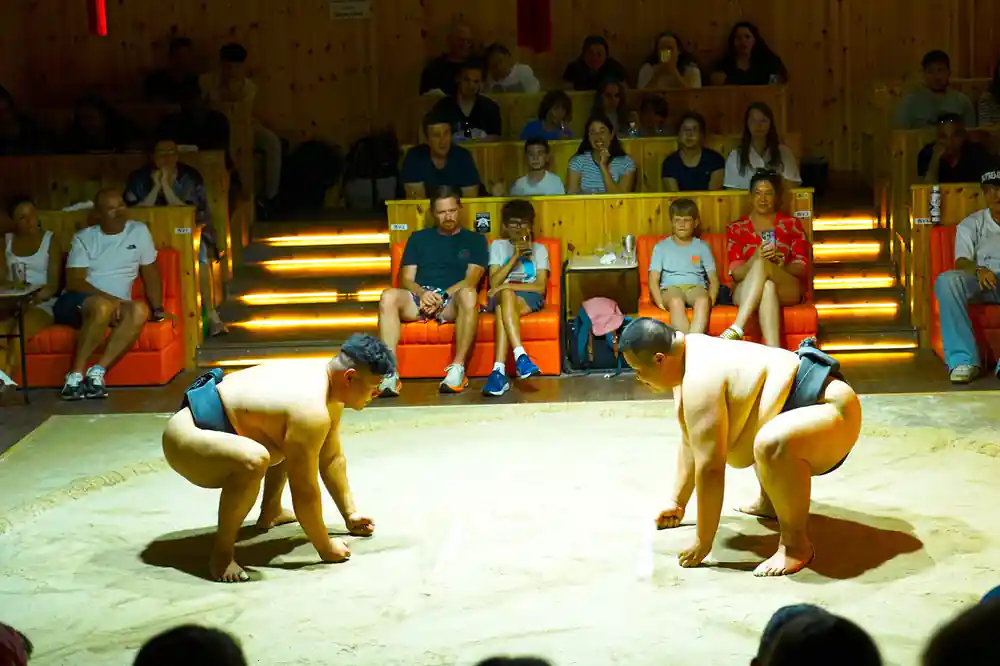
The ring looks small from the upper rows, and the wrestlers do not. Research by the Keio University Sports Medicine Research Center found that the average weight of 25 makuuchi wrestlers was 161.2 kg (about 355 lbs), with an average height of 186.3 cm.[8] That scale makes the speed of a bout startling. A contest usually lasts only a few seconds, but in rare cases it can take a minute or more.[9] Two huge men crouch, stare and charge, and it is over, often before a first-time visitor has worked out quite what happened.
When Grand Tournament Sumo Comes to Tokyo
Grand Tournament sumo is a calendar event rather than a nightly show. Japan holds six Grand Sumo Tournaments each year, with the January tournament being the first of them.[2] Those six tournaments anchor the sporting year, so a Tokyo trip that happens to land in one of them is a stroke of luck. If your dates do not line up, sumo is still watchable in the city, just in a different form and with a very different atmosphere.
Seat prices depend heavily on where you sit, and the middle tiers are good value in a hall this size. Second-floor B or C arena seats cost between 3,500 and 5,500 yen.[3] If you would rather not work through a Japanese ticketing site, guided tournament tours pair a seat with an English-speaking guide and some background on the sport. Tokyo and Nagoya Grand Sumo Tournament listings with a licensed guide are available from US$159.[10]
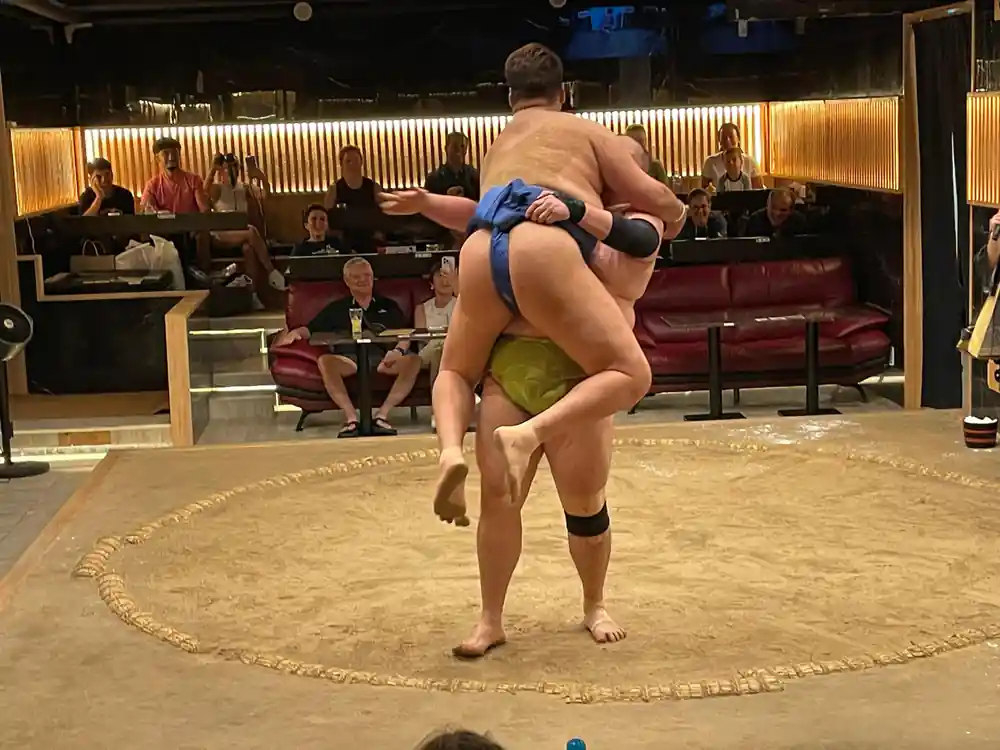
Wrestlers grapple in the sand ring while the crowd watches from tiered seats.
Inside the Kokugikan: Seats, Atmosphere and Ritual
Inside, the arena is calmer than the noise outside suggests. Seating runs from floor cushions close to the ring, where you sit low and near enough to hear the impact of two bodies colliding, up through box seats and arena chairs to the upper rows. The middle tiers look down on the ring and on the roofed canopy that hangs above it like a small shrine. A tournament day also brings bento boxes, beer, grilled skewers and souvenir stalls, and eating in your seat is entirely normal.
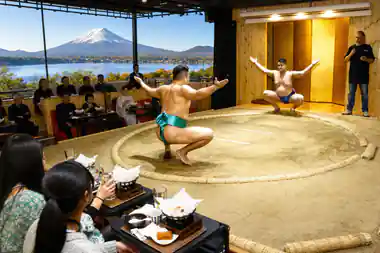
The ritual before each bout is worth following closely. Before a bout the wrestler performs chiri-chozu, squatting low with both arms extended to the sides and palms upward, showing the gods and his opponent that his hands hold no weapons, and then throws salt.[11] Behind that gesture sits a deep hierarchy: sumo sorts its wrestlers into six divisions covering ten ranks in total, and only the top division, Makuuchi, is subdivided further into five separate ranks.[12] Sitting through a full session, you start to notice how much of sumo is ceremony rather than collision.
The Sumo Museum and the Ryogoku Neighbourhood
The Kokugikan holds a small sumo museum, a quiet room of rankings sheets, portraits and memorabilia that gives context to what you are about to watch, and it is a useful place to cool down between sessions. Outside, Ryogoku is a sumo town. Stables, chanko restaurants, shops selling wrestler merchandise and small shrines tied to the sport sit within a short walk of the hall, and the neighbourhood rewards an hour of wandering before or after a visit.
The history runs much longer than the building. Professional sumo took shape in the Edo period (1603 to 1867), when matches were staged to raise money for building shrines and temples or replacing bridges, and professional wrestlers emerged from that circuit.[13] The sport also keeps an exact vocabulary. There are 82 kimarite, or match-winning techniques, and 5 non-techniques that describe ways to lose, all defined by the Japan Sumo Association.[14] Above them all sits a rank almost nobody reaches: as of November 2025, exactly 75 wrestlers have attained yokozuna status in sumo history.[15]
from US$102
The Tokyo sumo entertainment show with chicken hot pot and geisha runs 2 hours and carries a rating of 4.79 from 8,004 reviews.[4]
How the Asakusa Sumo Show Differs
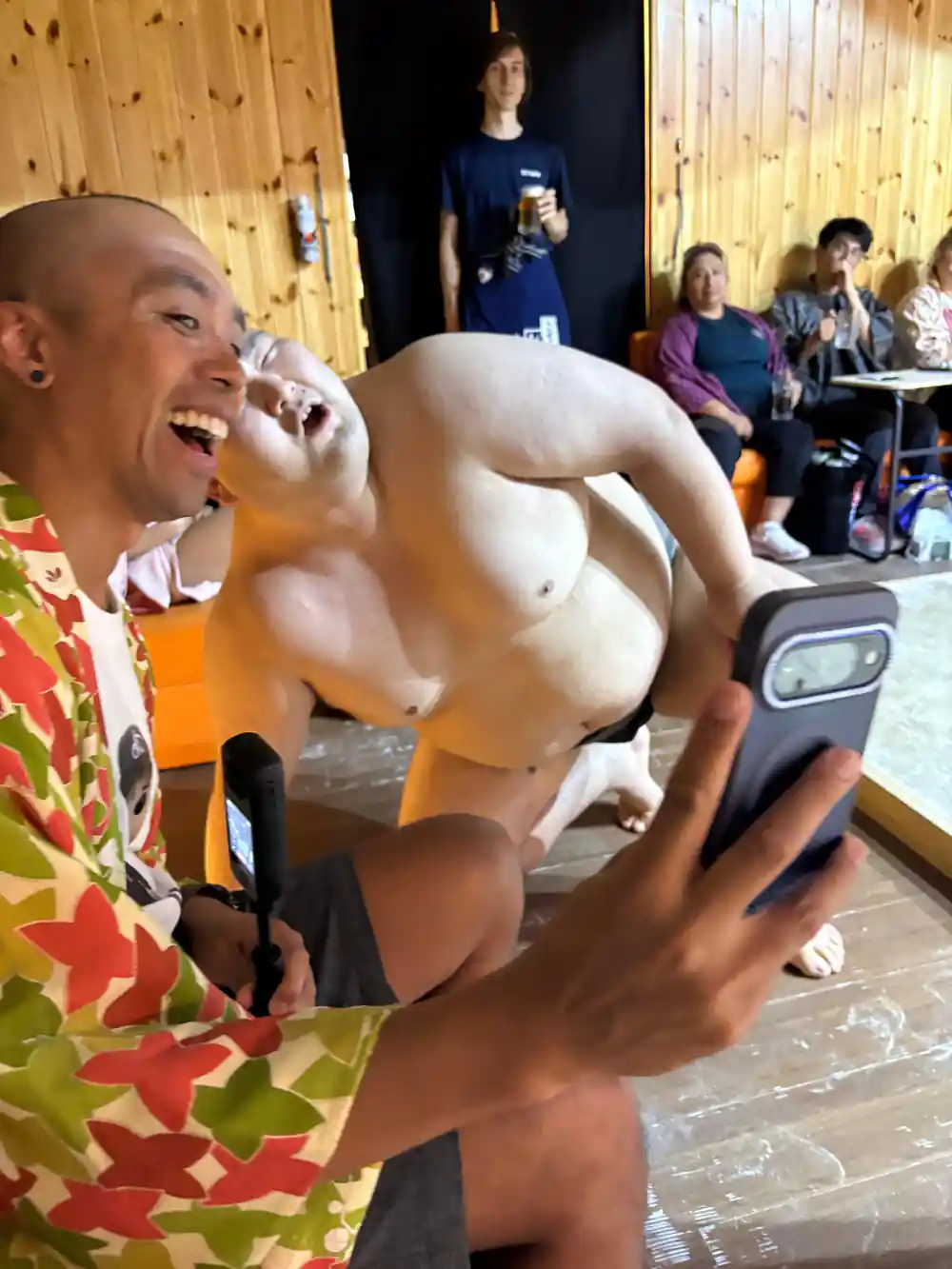
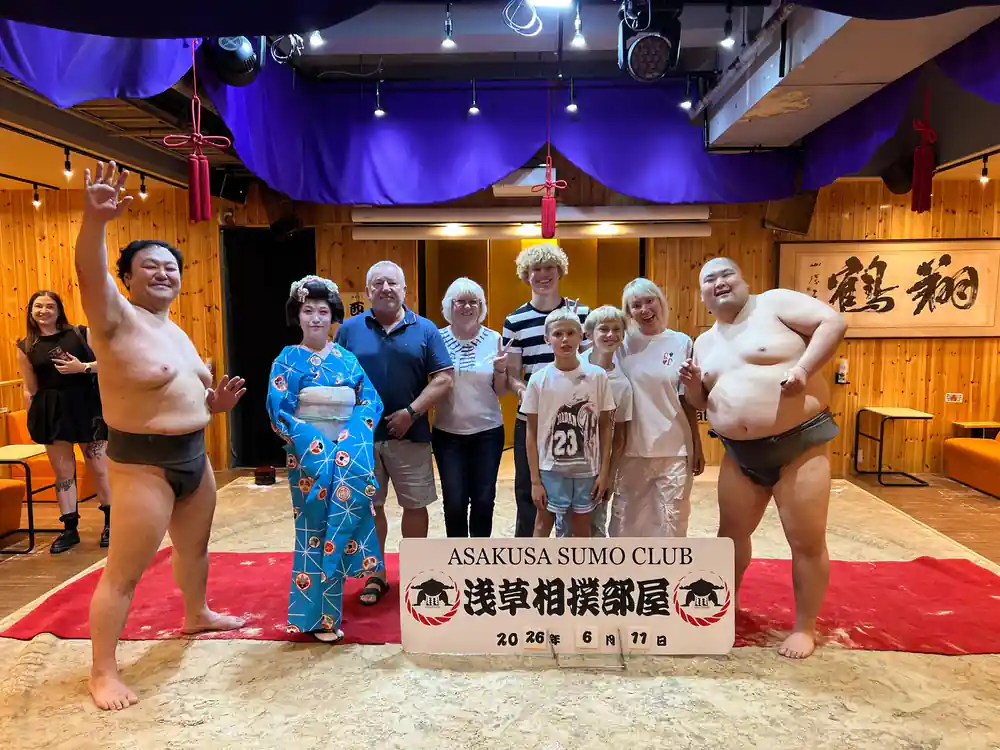
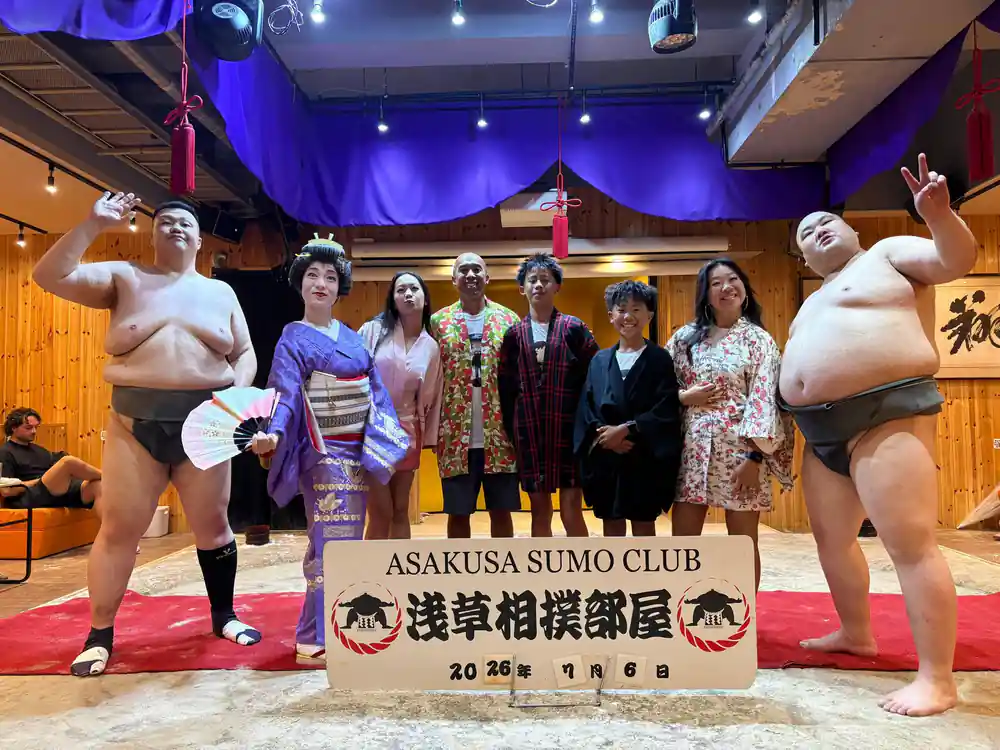
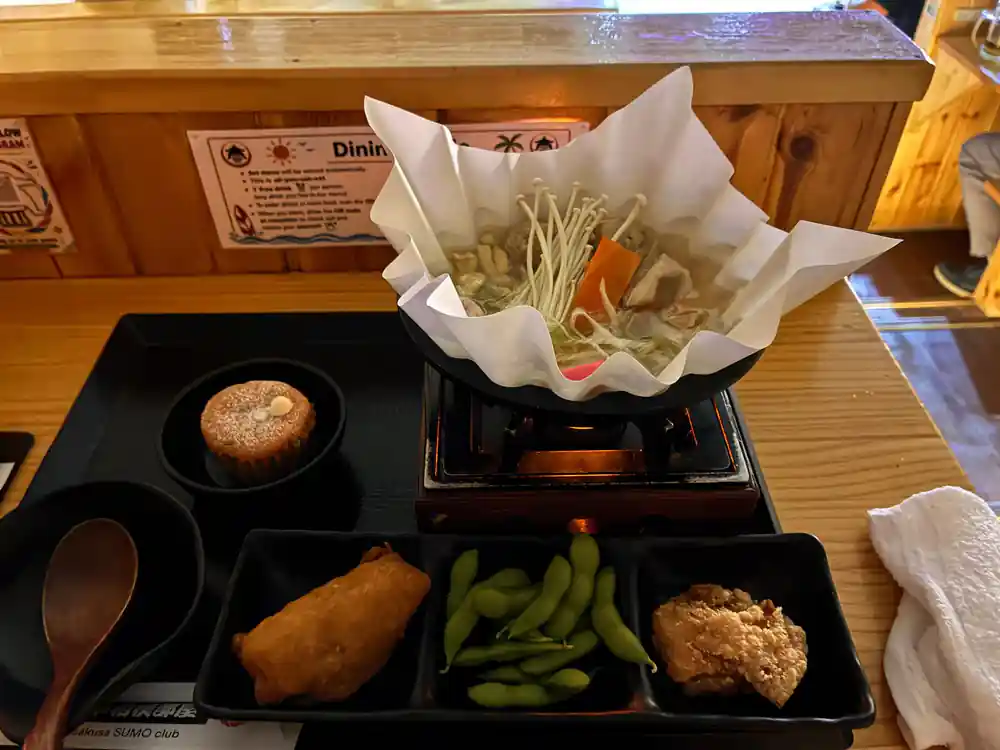
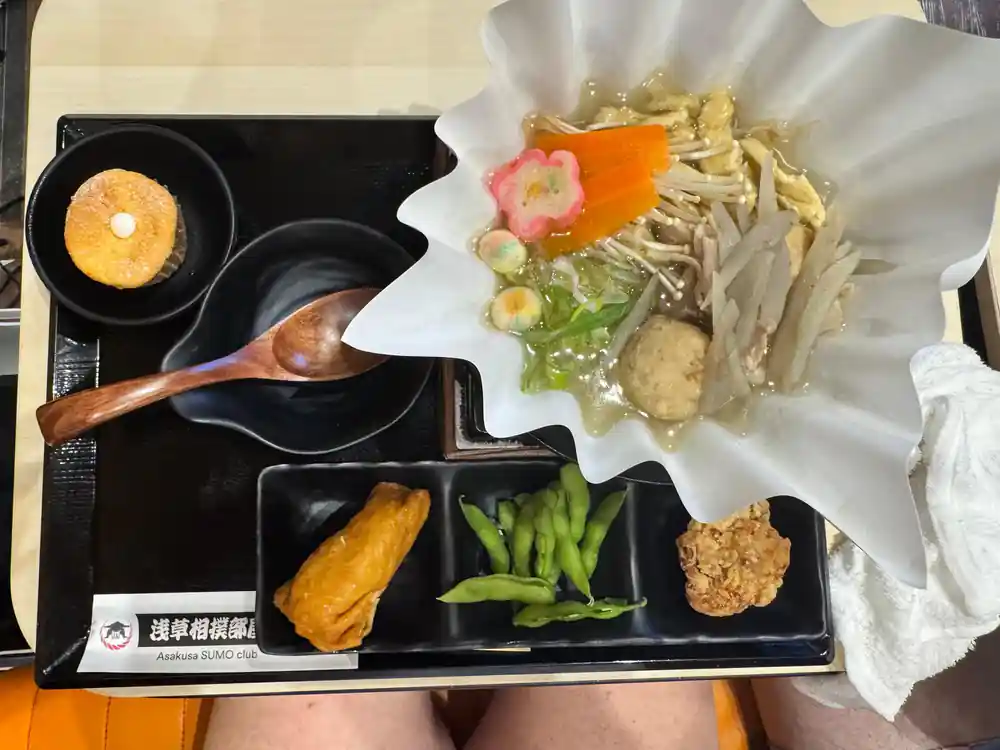
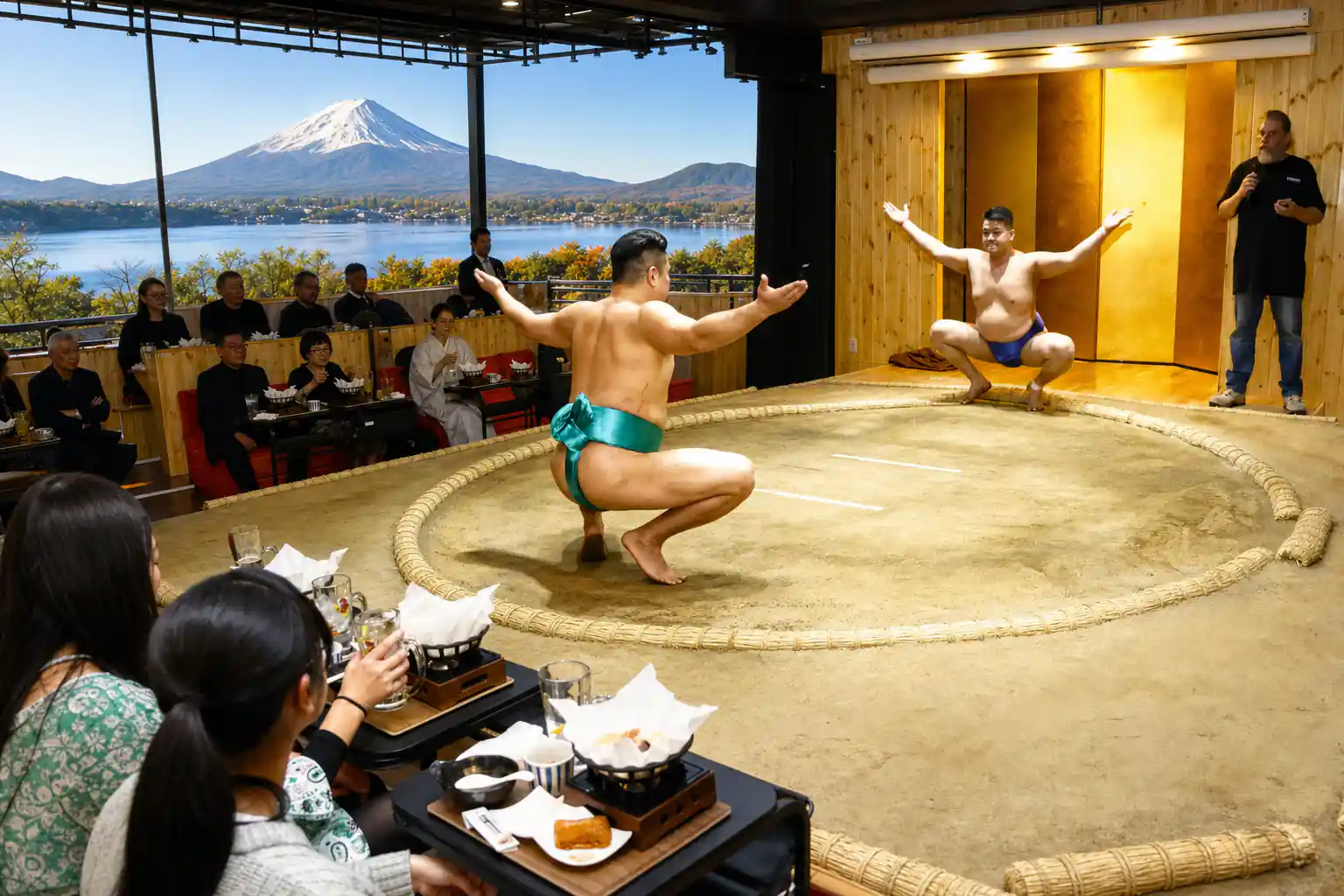
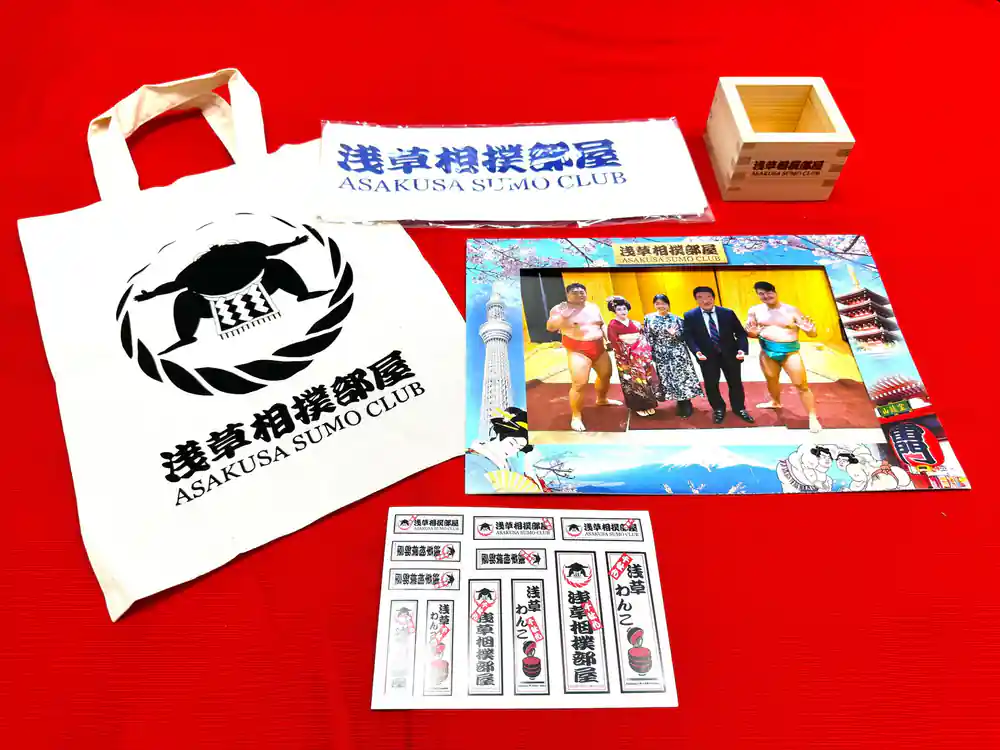
Not every sumo experience depends on a tournament calendar. At the Asakusa Sumo Club the ring, the rituals and the wrestling are staged for a seated audience, with explanations in English so you can follow what passes between the two men in the sand ring. The Tokyo Sumo Entertainment Show with Chicken Hot Pot & Geisha is listed from US$102 and carries a rating of 4.79 from 8,004 reviews.[4] For many visitors it is the first sumo they see, and it is built to be understood without any background knowledge.
The practical shape of the evening is simple. The show lasts 2 hours, and the listing says to check availability to see starting times, so you choose a date and see what runs.[4] Small group availability is noted on the listing, as is wheelchair access.[4] Booking terms are forgiving: reserve now and pay later, with free cancellation up to 24 hours in advance for a full refund.[4]
The same style of show appears outside Tokyo. A Kyoto sumo entertainment show with chicken hot pot and geisha is listed from US$102 and rated 4.81 from 1,411 reviews, which suits travellers whose trip ends in Kansai rather than the capital.[16]
Morning Practice: Watching Rikishi Train in Tokyo
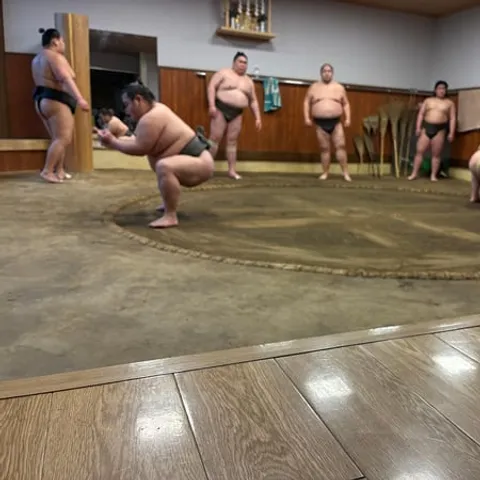
Morning practice, known as keiko, is the other real sumo experience in Tokyo, and the one that feels least like a performance. The timing is early and the room is quiet. Morning practice typically begins between 5:00 and 7:30 AM and continues for 2 to 4 hours, though the exact start time varies by stable and season.[5] You sit still, phones off, watching heavy men repeat the same drills until they are breathing hard.
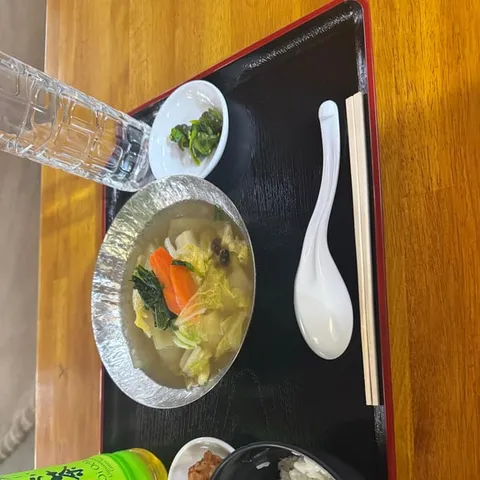
The meal that follows is famously large. A rikishi's daily caloric intake ranges from approximately 5,000 to 8,000 kcal, and can sometimes exceed 10,000.[17] Guided visits make the etiquette easier to follow. Tokyo sumo morning practice viewing tours are listed from US$102, rated 4.78 from 720 reviews, and run 1.5 to 2 hours with an English-speaking guide and an optional English audio guide.[6] A longer viewing and interaction session is listed from US$92 and rated 4.93 from 107 reviews, over 3 hours.[18]
Planning Your Sumo Visit: Choosing What Fits
Choosing comes down to what you want from the day. A tournament at the Kokugikan is the full ceremonial sport, but it depends on the tournament calendar.[2] Morning practice is the closest thing to the inside of the sport, and it starts before most hotel breakfasts.[5] The evening show slots around sightseeing easily: 2 hours, with start times you check when you book.[4]
The good news is that you can combine two of them. Practice in the morning and the show in the evening makes a full sumo day without needing a tournament to be running, and both leave plenty of room for the rest of Tokyo. If your dates are fixed, book the show first and then add a practice visit for the morning you are least likely to oversleep. Wear comfortable shoes, bring layers for warm halls and cold mornings, and keep your camera ready but your phone silent.
Sumo Wrestlers' Daily Calorie Intake
Daily calorie intake for sumo wrestlers ranges from approximately 5,000 to 8,000 kcal and can sometimes exceed 10,000.[17]
Tokyo sumo listings, from-prices in US dollars
US dollar from-prices for these Tokyo sumo listings.[4][6][7][19]
When to Plan Each Kind of Sumo
Choosing your sumo
Pick a format
Decide between a ranked tournament, a morning practice visit and a stage-style show.
Match the calendar
Tournament months are fixed, while practice visits and shows depend on the date you pick.
Book ahead
Popular dates fill up, so reserve now and pay later to keep your plan flexible.
Check access
Read the listing notes for group size and wheelchair access before you commit.
Plan the meal
Chicken hot pot or chanko turns a viewing into a full evening out.
See the Tokyo sumo entertainment show with chicken hot pot and geisha
from US$102Reserve now & pay later