The essentials
- Japan holds six Grand Sumo Tournaments each year, and the January tournament is the first of them.[1]
- The Kokugikan National Sumo Arena in Ryogoku, Sumida City, Tokyo, has a capacity of up to 10,000.[2]
- Second-floor B or C arena seats at the Ryogoku arena in Tokyo cost between 3,500 and 5,500 yen.[3]
- Shows and morning practice visits run alongside the tournament calendar, including a Tokyo entertainment show from US$102.[4]
- The show booked from this site runs 2 hours, with small group availability and free cancellation up to 24 hours in advance.[4]
- Top choice Sumo Entertainment Show from US$102 Duration2 hours[4]Rating4.79 from 8,004 reviews[4]FormatSmall group available[4]CancellationCancel up to 24 hours in advance[4] Check availability
- Morning Practice Viewing from US$102 Duration1.5 to 2 hours[5]Rating4.78 from 720 reviews[5]FormatLive tour guide: English[5]CancellationCancel up to 24 hours in advance[5] See this tour
- Sumo Show & Dining from US$89 Duration1.5 to 2 hours[6]Rating4.80 from 3,454 reviews[6]FormatInstructor: English[6]CancellationCancel up to 24 hours in advance[6] See this tour
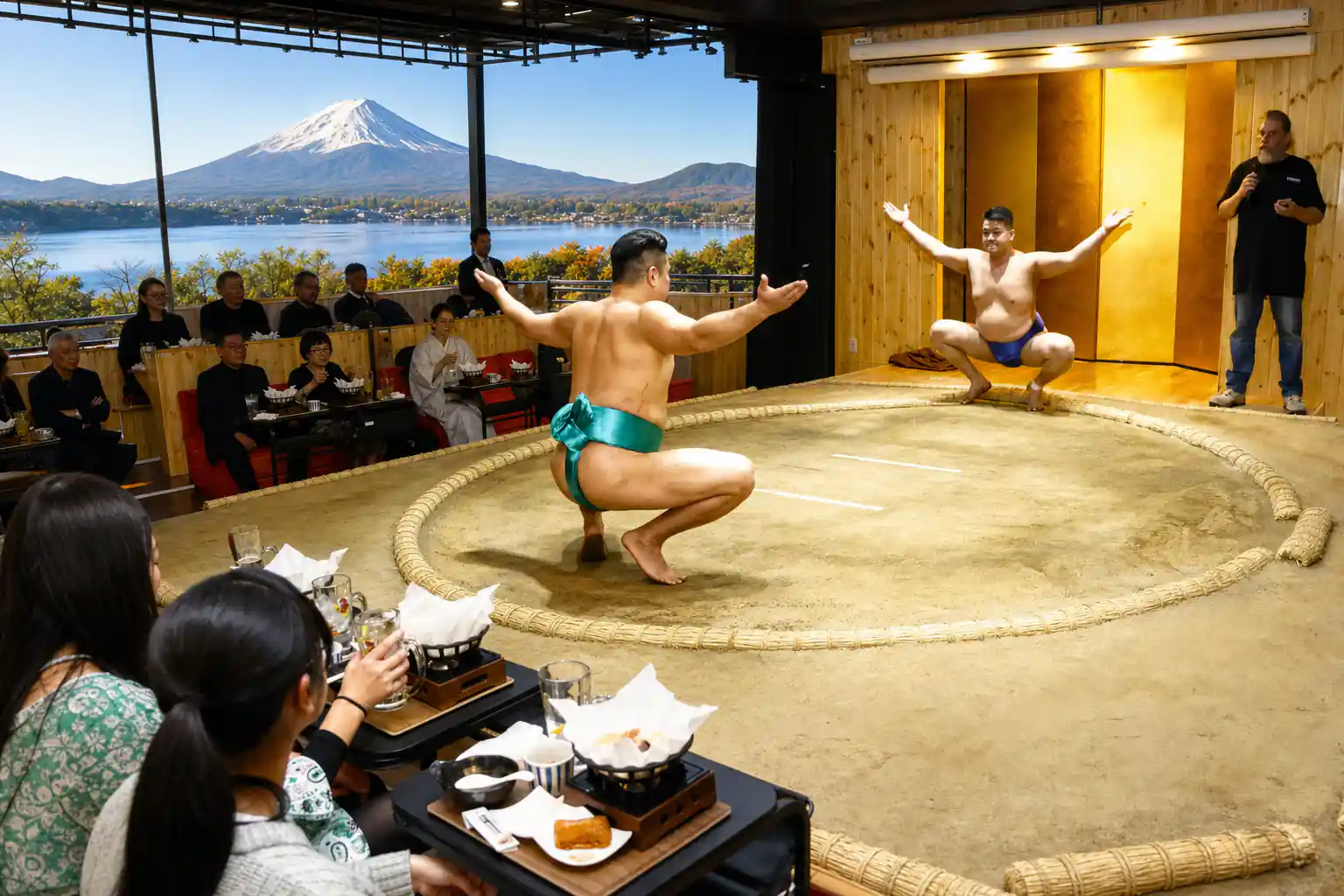
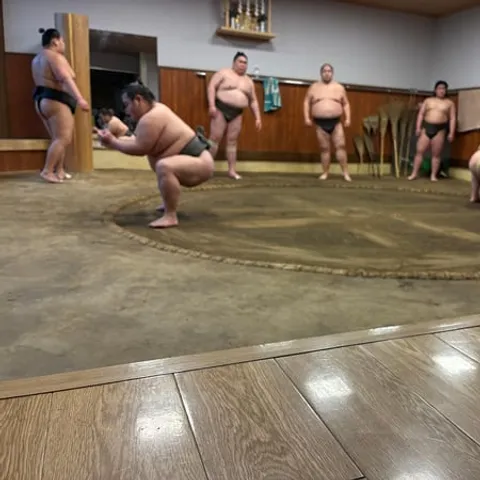
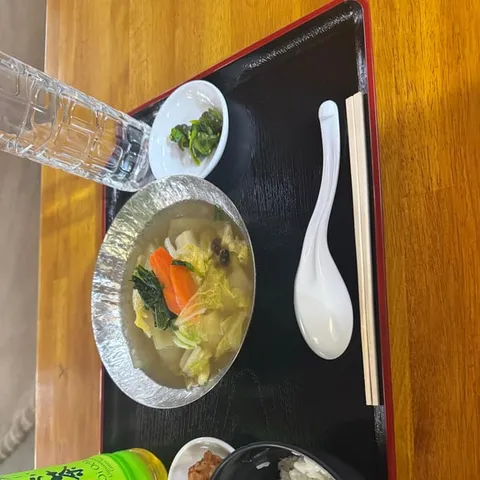
Held every January, this is the first of Japan’s six annual Grand Sumo Tournaments, known as honbasho.
Is a 2026 sumo trip worth planning around?
Booking notes
- Line up your dates with the tournament calendar, then choose the week and city you want.
- Compare an arena seat with a guided tournament viewing tour before you commit.
- Second-floor B or C arena seats at the Ryogoku arena cost between 3,500 and 5,500 yen.[3]
- The show booked from this site lists small group availability.[4]
On the day
- Morning sumo practice typically begins between 5:00 and 7:30 AM, so plan an easy start.[7]
- The venue for the entertainment show booked from this site is wheelchair accessible.[4]
- Free cancellation up to 24 hours in advance applies to the show booked from this site.[4]
- Dress for the season: Tokyo summers are humid, and winter mornings at a stable are cool.
How the Tokyo sumo tournament year works
Grand sumo runs on a repeating calendar rather than one long season. Japan holds six Grand Sumo Tournaments each year, and the January tournament is the first of them.[1] For a visitor, that means the sport's biggest stage turns up on a known rhythm, while the rest of the year belongs to stables, shows and regional events. Planning a Tokyo trip around a tournament usually means fixing your week first and letting everything else follow. If your dates do not line up, a show or a morning practice visit still puts you close to the sport.
Fixed dates are already attached to tours on sale. A grand sumo tournament viewing tour is listed for September 2026 and runs 5 hours, with a live English-speaking guide and stops that include Ryogoku Kokugikan.[8] A sumo retirement ceremony at Ryogoku Kokugikan is listed for 2026 Oct 3rd and runs 4 hours.[9] Both are fixed-date events rather than daily shows, so check them as soon as your flights are set.
Ryogoku, the Kokugikan and a tournament day
The Kokugikan National Sumo Arena in Ryogoku, Sumida City, Tokyo, has a capacity of up to 10,000.[2] Ryogoku is the district that comes to mind when people think of sumo, and it rewards a slow walk: stables sit along quiet streets, and the sumo museum, shrines and gardens are all a short distance from the arena. Arriving well before the bouts begin gives you time to find your gate, watch the crowd arrive and settle in before the first ceremony.
Sumo sorts its wrestlers into six divisions covering ten ranks in total, and only the top division, Makuuchi, is subdivided further into five separate ranks.[10] A typical contest lasts only a few seconds, though in rare cases it can take a minute or more.[11] That rhythm surprises first-time visitors: long stretches of ritual and stillness, then a sudden collision, and it is over. Watching a full session, you start to notice how much of the drama happens before anyone touches.
Before a bout the wrestler performs chiri-chozu, squatting low with both arms extended to the sides and palms turned upward, showing the gods and his opponent that his hands hold no weapons, and then throws salt.[12] Once you can read those two moments, the build-up stops feeling like waiting and starts feeling like part of the contest.
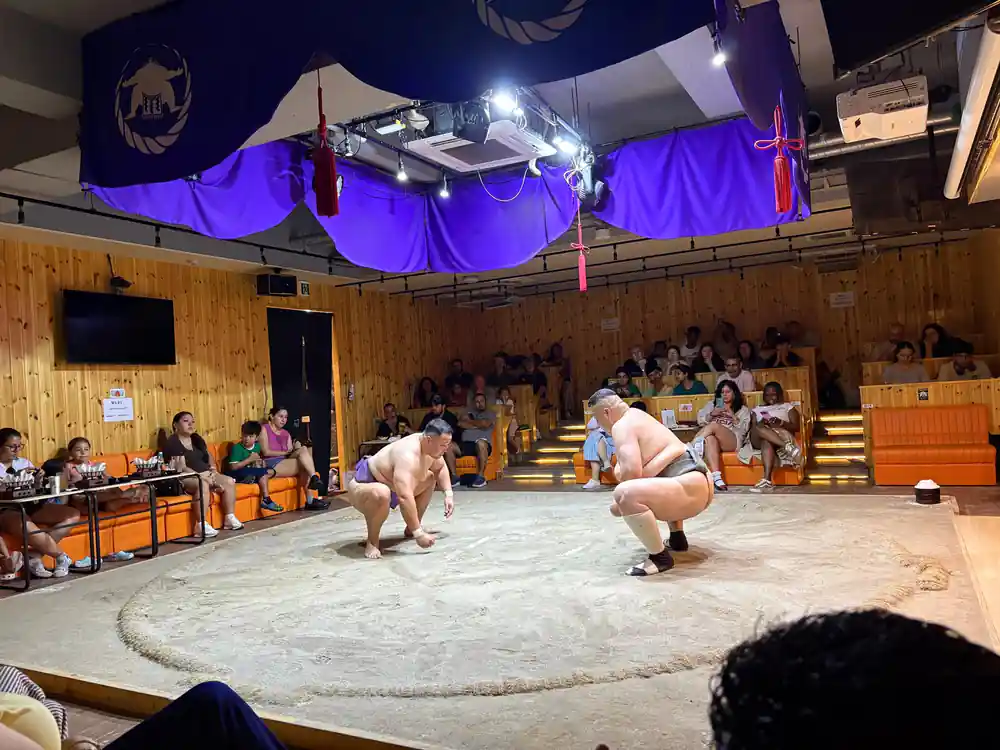
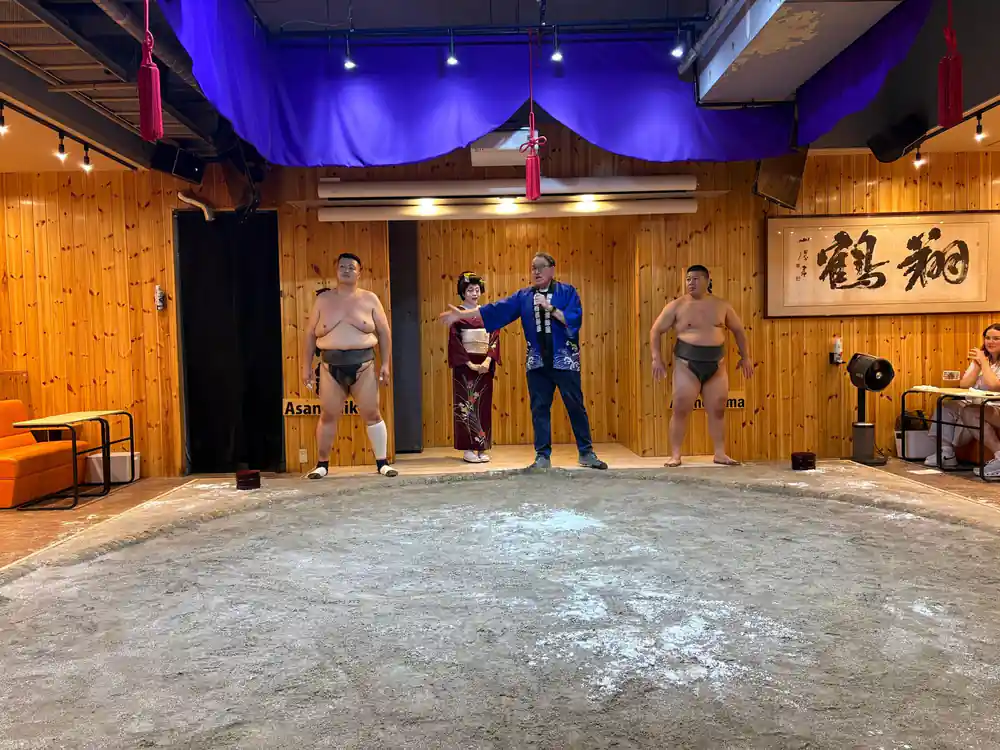
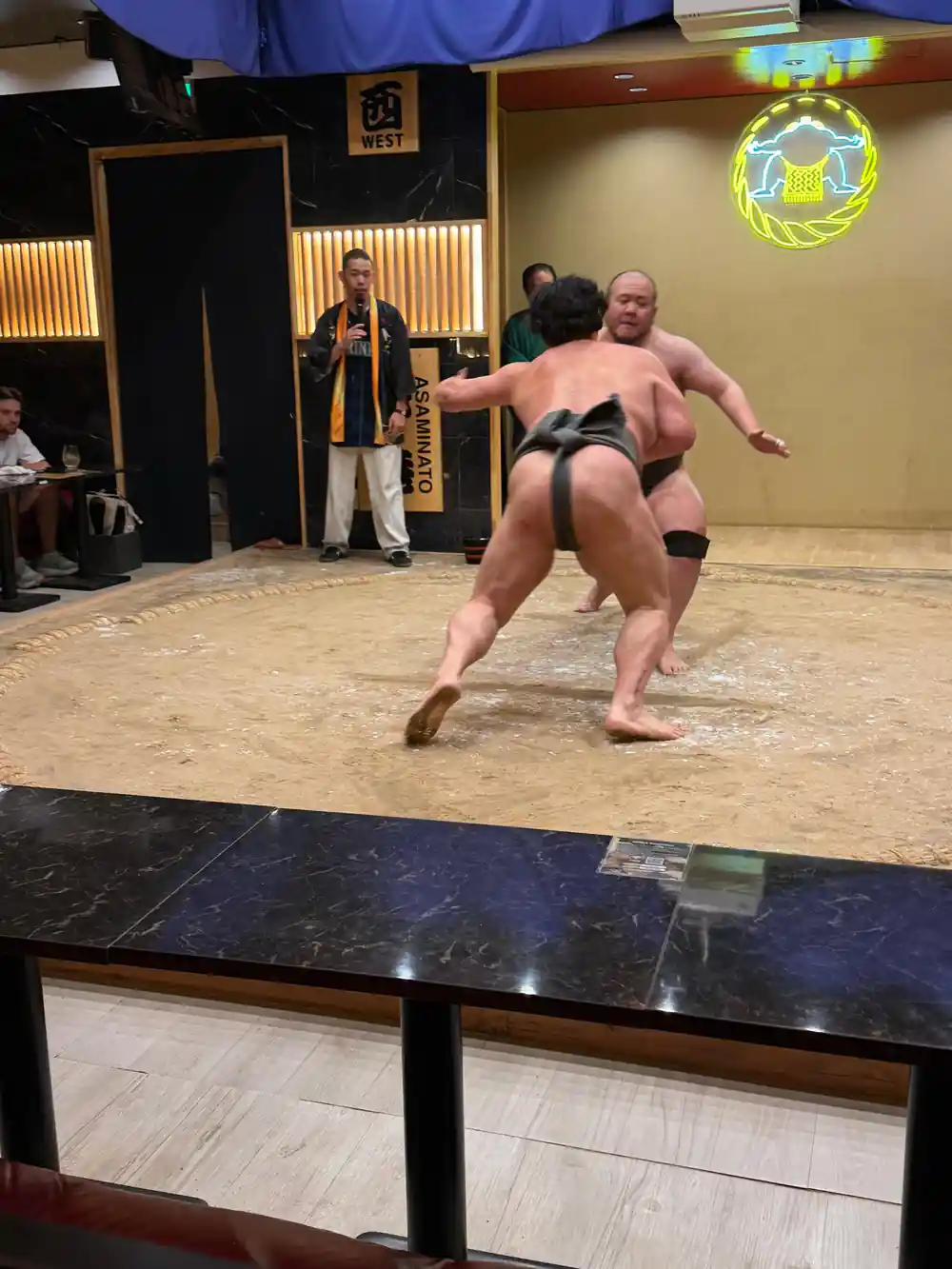
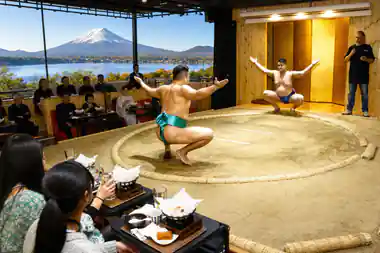
Wrestlers take the ring at a Tokyo sumo show, with the sand pit lit and the front row close.
Tokyo sumo tournament tickets and seat prices
Second-floor B or C arena seats at the Ryogoku arena in Tokyo cost between 3,500 and 5,500 yen.[3] That band covers one category of seat, so treat it as a starting point rather than the price of everything in the building. From the upper floor you see the whole ring and the shape of each bout, while closer seats trade that overview for proximity.
Guided tournament tours handle the seat categories for you. A Tokyo and Nagoya grand sumo tournament tour with a licensed guide is from US$159, rated 4.78 from 88 reviews, runs 4 hours, and offers private or small groups.[13] The September 2026 viewing tour is from US$111, rated 4.48 from 141 reviews, and runs 5 hours.[8] A third option with a match ticket included is from US$95 and runs 4.5 hours.[14]
Cancellation terms differ, read them before you pay. The September 2026 viewing tour is non-refundable[8], while the licensed-guide tournament tour allows free cancellation up to 24 hours in advance.[13] That tour also carries a published rating breakdown, which shows where the value sits.
If your dates miss the Tokyo sumo tournament
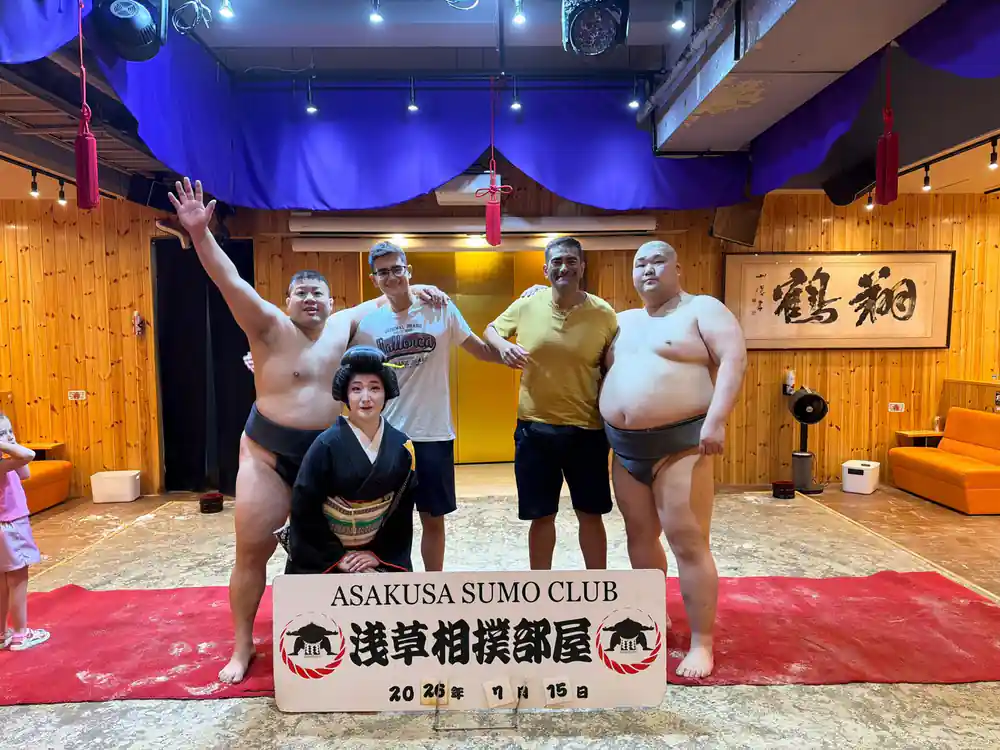
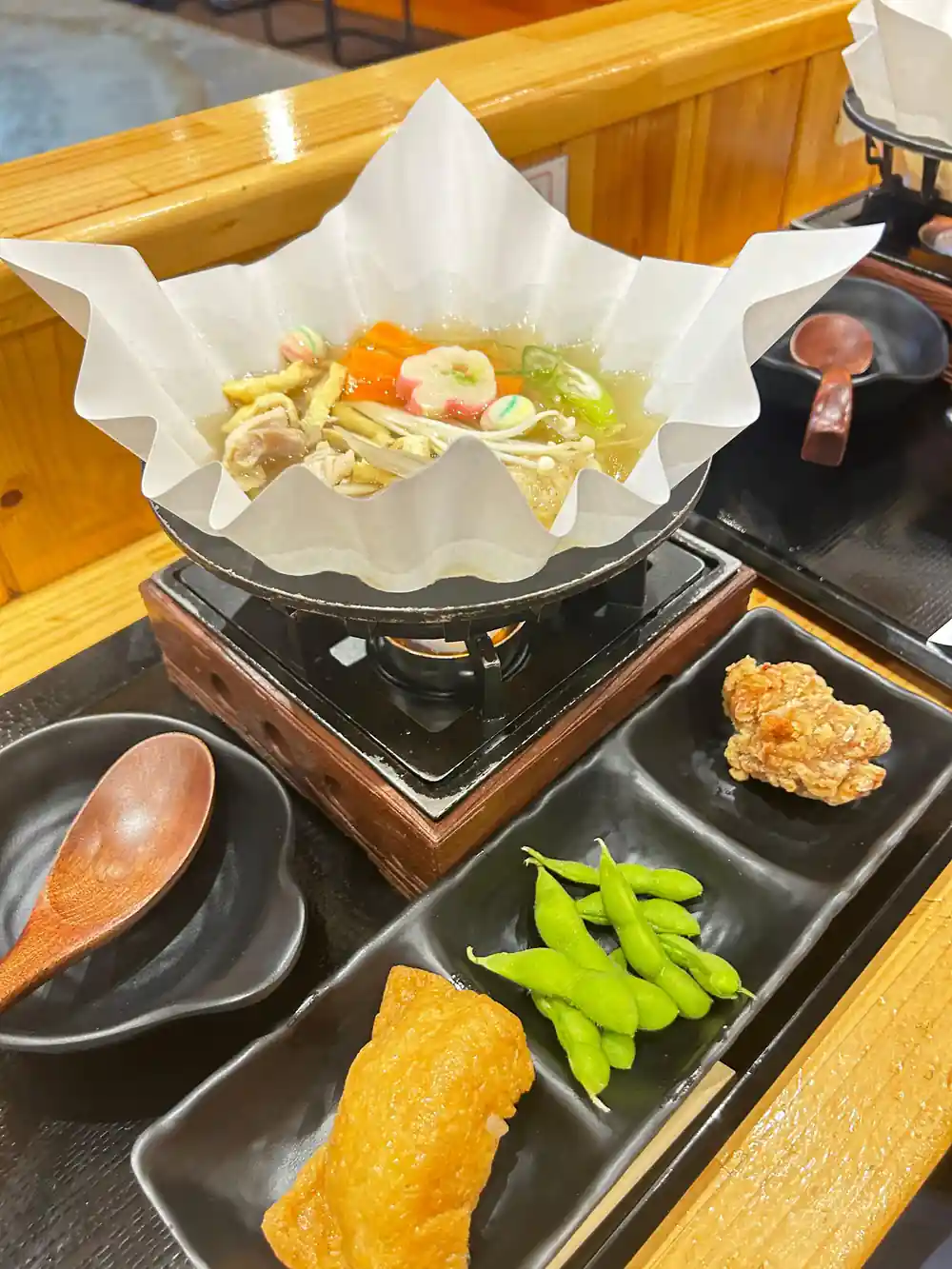
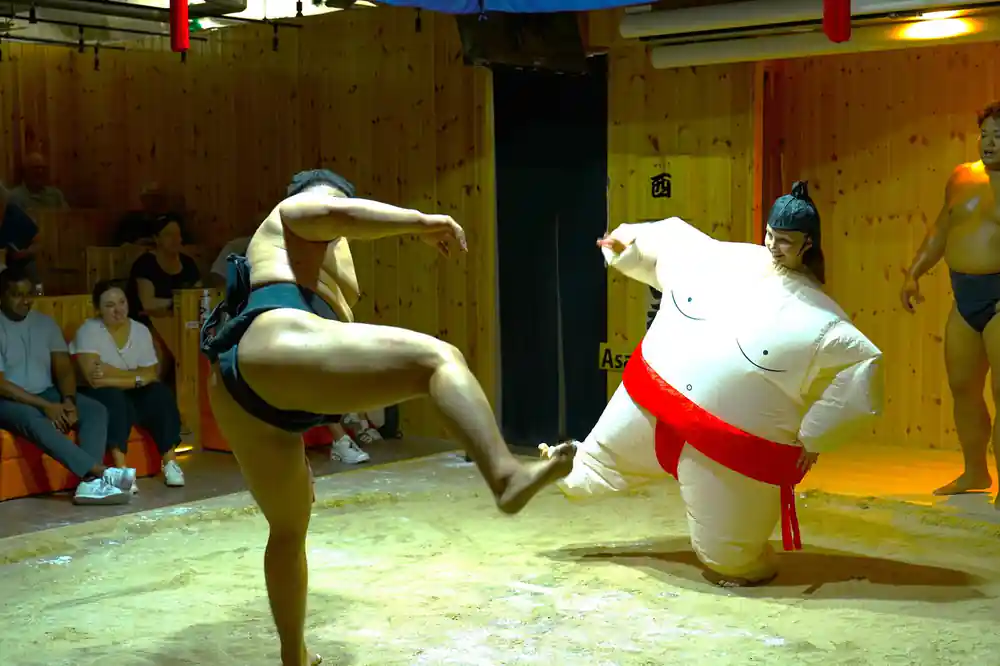
Away from the tournament calendar, sumo in Tokyo moves indoors. Dedicated show venues keep a sand ring on site and stage a programme of bouts with the ring rituals intact, and audience members are often drawn into the action. The show booked from this site is the Tokyo Sumo Entertainment Show with Chicken Hot Pot & Geisha, from US$102, rated 4.79 from 8,004 reviews and running 2 hours.[4]
Several other Tokyo shows compete for the same evening. The Shinjuku sumo show and experience with photo is from US$65, rated 4.84 from 7,180 reviews, and runs 1.5 hours with a live English-speaking guide.[15] A family sumo workshop with live wrestling and lunch is from US$62, rated 4.90 from 430 reviews, and runs 2 hours.[16] An authentic sumo experience with hot pot, photo and gift is from US$81 and rated 4.98 from 130 reviews.[17]
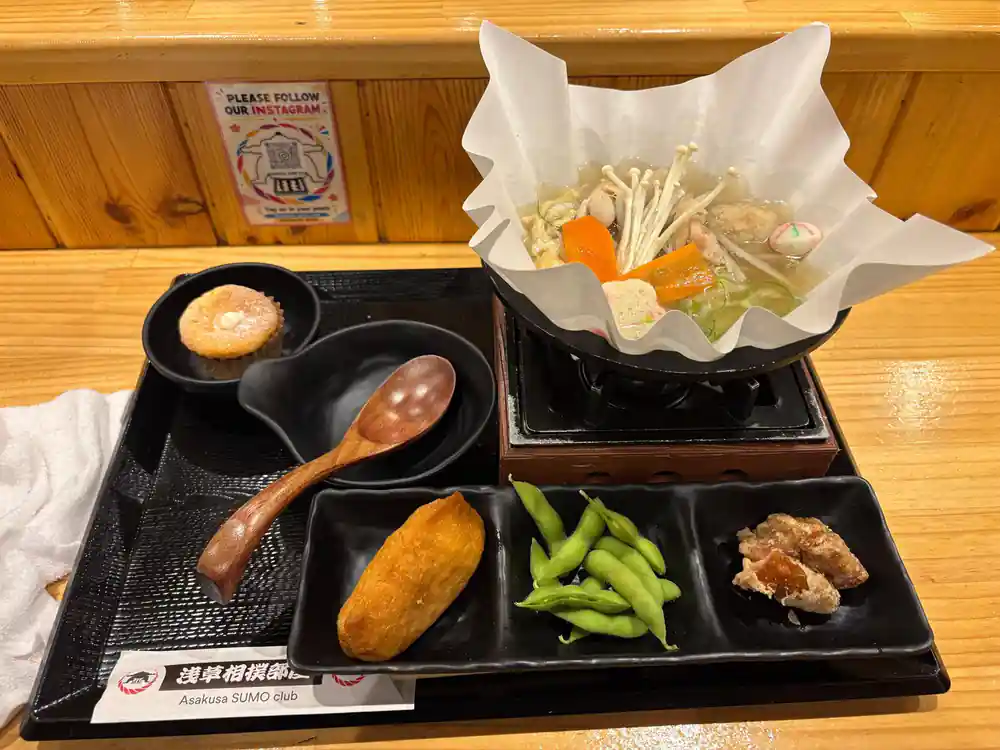
Food is part of the format. A rikishi's daily caloric intake ranges from approximately 5,000 to 8,000 kcal, and can sometimes exceed 10,000.[18] You will not be asked to match that, but chanko-nabe is a shared dish, so the meal usually stretches across the table while the bouts continue.
from US$102
The Tokyo Sumo Entertainment Show with Chicken Hot Pot & Geisha is the tour booked from this site, from US$102, running 2 hours.[4]
Morning practice: sumo before the crowds
Morning practice shows the sport at its least staged. Morning sumo practice typically begins between 5:00 and 7:30 AM and lasts 2 to 4 hours, though the exact start time varies by stable and season.[7] There is no commentary and no music, just repeated collisions, breathing and the occasional instruction from a coach. It is worth keeping your phone out of sight once you are inside, and bringing something quiet for the train.
Guided visits make the logistics simple. A sumo morning practice viewing tour is from US$102, rated 4.78 from 720 reviews with a Guide score of 4.7 and Value for money 4.5, and runs 1.5 to 2 hours.[5] A morning practice viewing tour at a real stable is from US$91, rated 4.91 from 70 reviews.[19] For more contact with the wrestlers, a morning practice with exclusive interaction is from US$92, rated 4.93 from 107 reviews.[20]
The tour booked from this site: sumo, hot pot and geisha
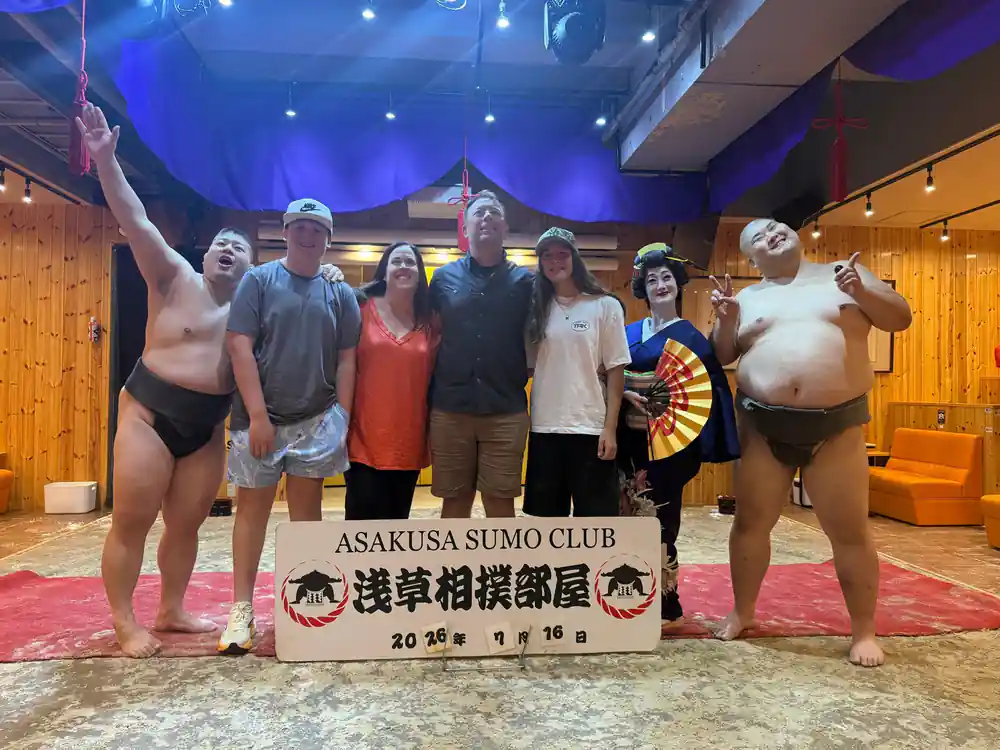
The Tokyo Sumo Entertainment Show with Chicken Hot Pot & Geisha is the tour booked from this site. It is from US$102, rated 4.79 from 8,004 reviews, and runs 2 hours.[4] Small group availability is listed, the venue is wheelchair accessible, you can reserve now and pay later, and free cancellation applies up to 24 hours in advance.[4]
An evening here runs like this: a sand ring under the lights, wrestlers warming up in full view, short explosive bouts, and the hot pot arriving midway through. The geisha performance shifts the mood from sport to something closer to theatre, which suits travellers who want a cultural night out rather than a sports lesson. A little vocabulary helps: the wrestlers are rikishi, the referee is the gyoji, and the ring itself is the dohyo.
Pair it with an afternoon in Asakusa or Ryogoku, where the streets around the stables are full of sumo signage, small shops and old restaurants. Eat lightly beforehand, since the hot pot is the main event of the evening.
Planning notes: seasons, etiquette and the wider sport
The sport you are watching has long roots. Professional sumo began in the Edo period (1603-1867), when matches were held to raise money to construct shrines and temples or to replace bridges.[21] As of November 2025, exactly 75 wrestlers have attained yokozuna status, sumo's highest rank.[22] The physical scale is different too: research from the Keio University Sports Medicine Research Center put the average weight of 25 makuuchi wrestlers at 161.2 kg (about 355 lbs), with an average height of 186.3 cm.[23]
The techniques are codified. There are 82 kimarite, or match-winning techniques, and 5 non-techniques or ways to lose, all defined by the Japan Sumo Association.[24] You will not learn them all in an evening, but knowing that a bout can be won by a grip, a twist or a simple push out makes the short contests much easier to follow. For comfort, wear loose clothing and shoes that slip off easily, since floor seating on a cushion is common at shows.
Seasons shape the day. Morning practice starts early, and winter mornings at a stable can be cold, so bring a warm layer and plan a proper breakfast afterwards. Summer in Tokyo is humid, and sitting still through a long arena session feels warmer than a walking tour of the same length. Whenever you go, book the sumo part early and let the rest of the day fill in around it.
From-prices for Tokyo sumo tours
From-prices in US dollars from GetYourGuide: US$62[16], US$65[15], US$89[6], US$102[4], US$102[5].
Compare from-prices for Tokyo sumo tours
US dollar from-prices from GetYourGuide: US$102[4], US$102[5], US$89[6], US$65[15]. Each listing gives one from-price, so the same amount appears in both columns.
When to plan around the sumo calendar
Planning your sumo day
Check the calendar
Japan holds six Grand Sumo Tournaments each year, and the January tournament is the first of them.[1]
Pick a format
Choose between an arena tournament, an evening show or a morning practice visit at a stable.
Book the sumo part first
Reserve the show or the practice visit before you plan the rest of the day; the entertainment show allows free cancellation up to 24 hours in advance.[4]
Get to Ryogoku early
The Kokugikan National Sumo Arena in Ryogoku, Sumida City, Tokyo, has a capacity of up to 10,000.[2]
Decide on your seat
Second-floor B or C arena seats at the Ryogoku arena cost between 3,500 and 5,500 yen.[3]
See the Tokyo sumo show that fits your dates
from US$102Reserve now & pay later