The essentials
- The Tokyo Sumo Entertainment Show with Chicken Hot Pot and Geisha runs 2 hours, with small group places available.[1]
- From US$102 per person, with reserve now and pay later and free cancellation up to 24 hours in advance for a full refund.[1]
- A contest usually lasts only a few seconds, and in rare cases can take a minute or more, so children never wait long for the action.[2]
- The show is rated 4.79 from 8,004 reviews.[1]
- The show is wheelchair accessible, and small group places are available if you want to book the family in together.[1]
- Top choice Sumo Show with Geisha from US$102 Duration2 hours[1]Rating4.79 from 8,004 reviews[1]IncludesChicken hot pot and geisha[1]CancellationFree cancellation up to 24 hours[1] Check availability
- Sumo Show & Dining from US$89 Duration1.5 - 2 hours[3]Rating4.80 from 3,454 reviews[3]IncludesShow and dining[3]CancellationFree cancellation up to 24 hours[3] See this tour
- Shinjuku Sumo Show from US$65 Duration1.5 hours[4]Rating4.84 from 7,180 reviews[4]IncludesShow and photo[4]CancellationFree cancellation up to 24 hours[4] See this tour
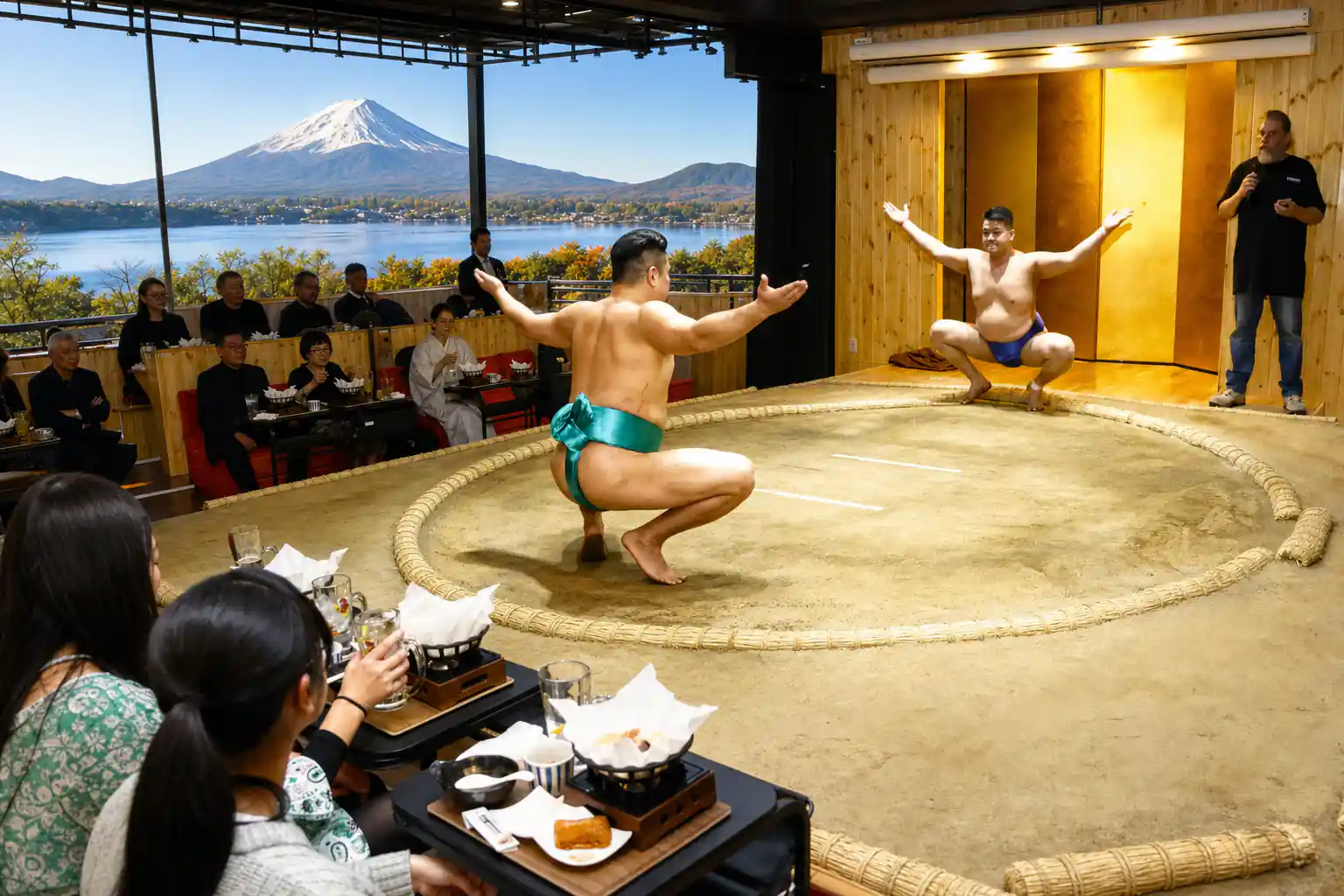
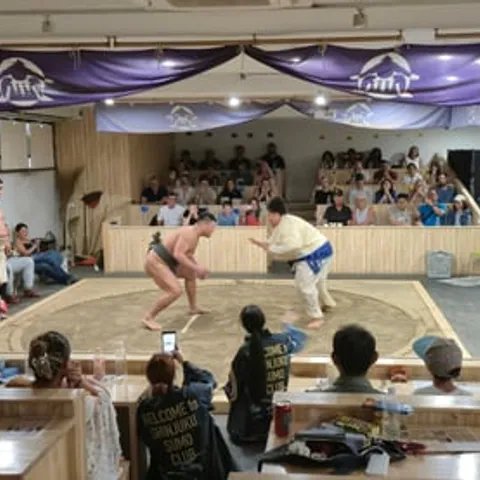
A contest usually lasts only a few seconds, but in rare cases can take a minute or more.
A sumo show that works with children
Booking notes
What the Tokyo sumo show is
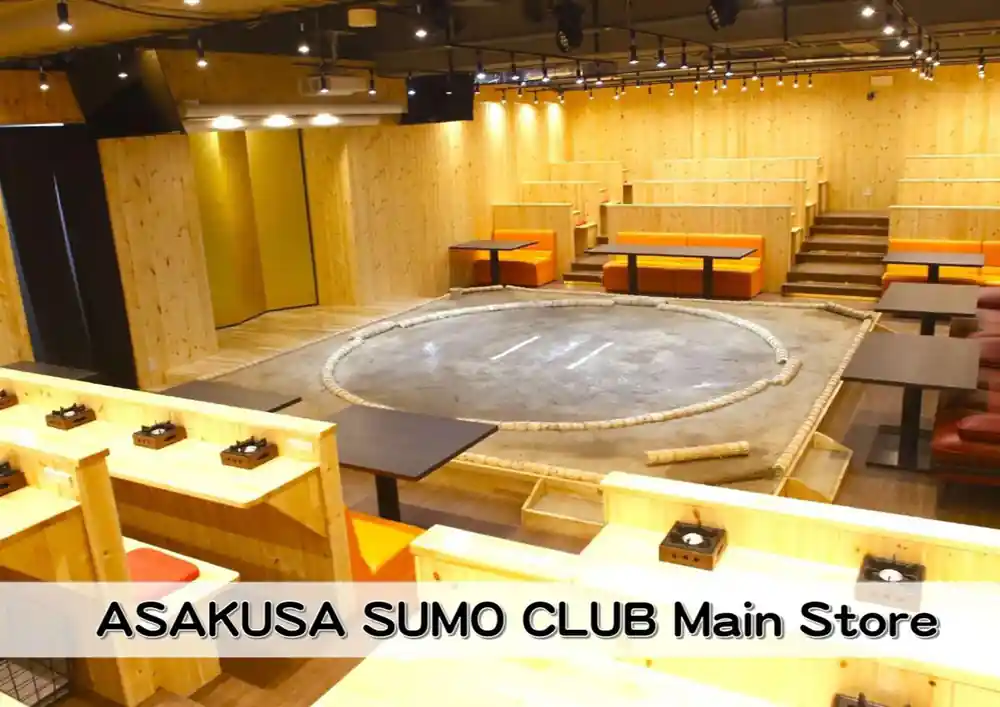
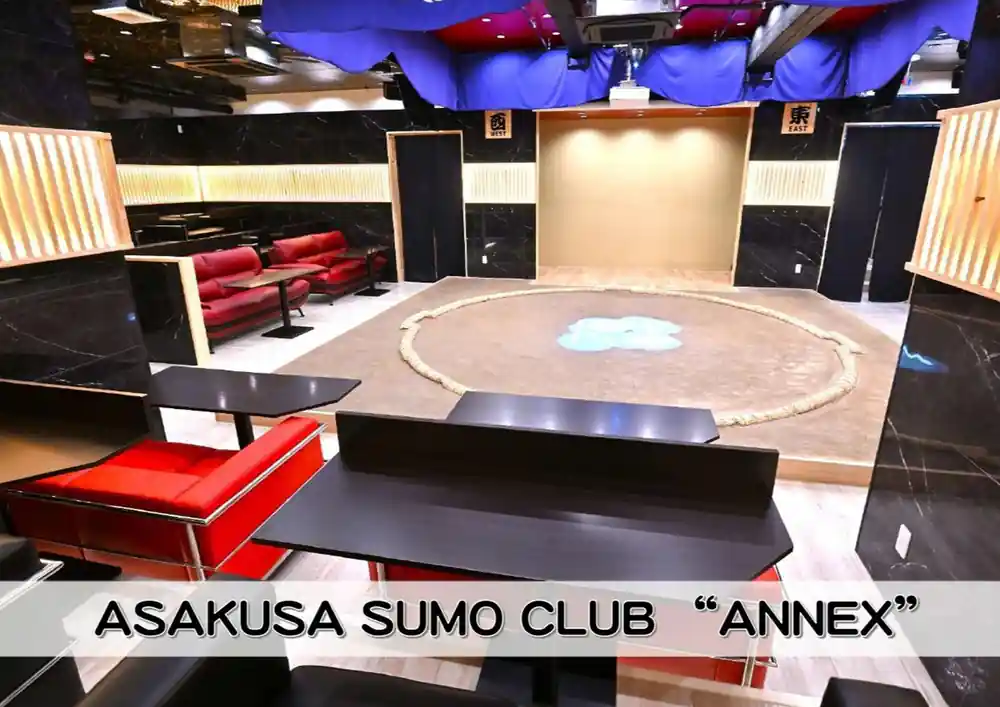
Professional sumo took its present form in the Edo period, between 1603 and 1867, when matches were held to raise money for building shrines and temples or replacing bridges, and professional wrestlers came out of that world.[5] The Tokyo Sumo Entertainment Show with Chicken Hot Pot and Geisha brings that world into a small arena: wrestlers in a sand ring, the rituals that frame each bout, chicken hot pot and geisha, all inside 2 hours.[1] It is rated 4.79 from 8,004 reviews, and small group places are available.[1]
Children need no background to enjoy it. A contest usually lasts only a few seconds, and in rare cases it can take a minute or more, so nobody waits long for something to happen.[2] There is a second layer for older children too: the sport has 82 kimarite, the winning techniques defined by the Japan Sumo Association, and the top rank is rare enough that as of November 2025 exactly 75 wrestlers have held it.[6][7] That mixture of speed and detail is what makes a sumo show easy to sell to a child who thinks museums are slow.
How the two hours run
The show runs 2 hours, and starting times vary by date, so check availability for the day you want before you plan around it.[1] If you can choose between an earlier and a later start, an earlier one is usually friendlier with young children, because the day ends before tiredness takes over. Book the slot that sits closest to your child's best hours rather than the one that fits neatly into a sightseeing list, and keep the hours either side of it light.
Build a buffer on both sides of the booking. A child who arrives flustered takes longer to settle, and a show that lands next to a missed meal leaves everyone grumpy. If your child still naps, protect the nap and let the rest of the day bend around it. Tokyo days fill quickly, and a two-hour performance is far easier to enjoy when it is not squeezed between three other stops. If you are coming as a group, agree a meeting point before you go in.
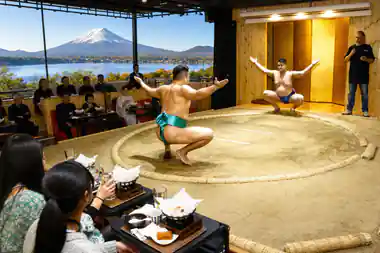
Two wrestlers lock up in the sand ring while the audience watches from close seats.
Chicken hot pot, geisha and fussy eaters
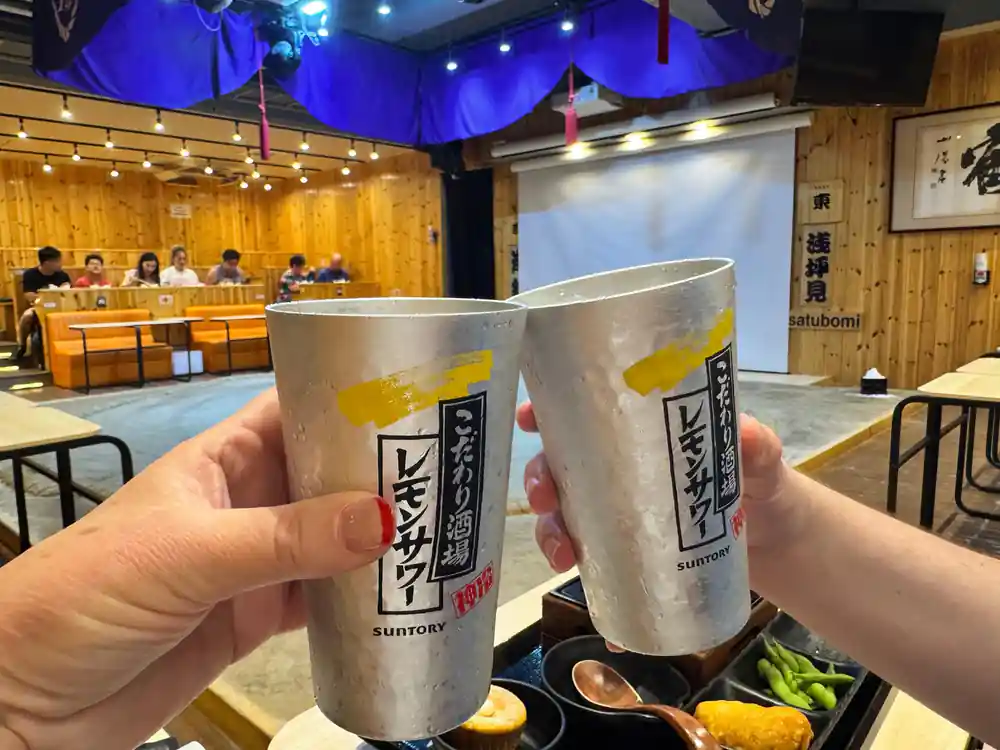
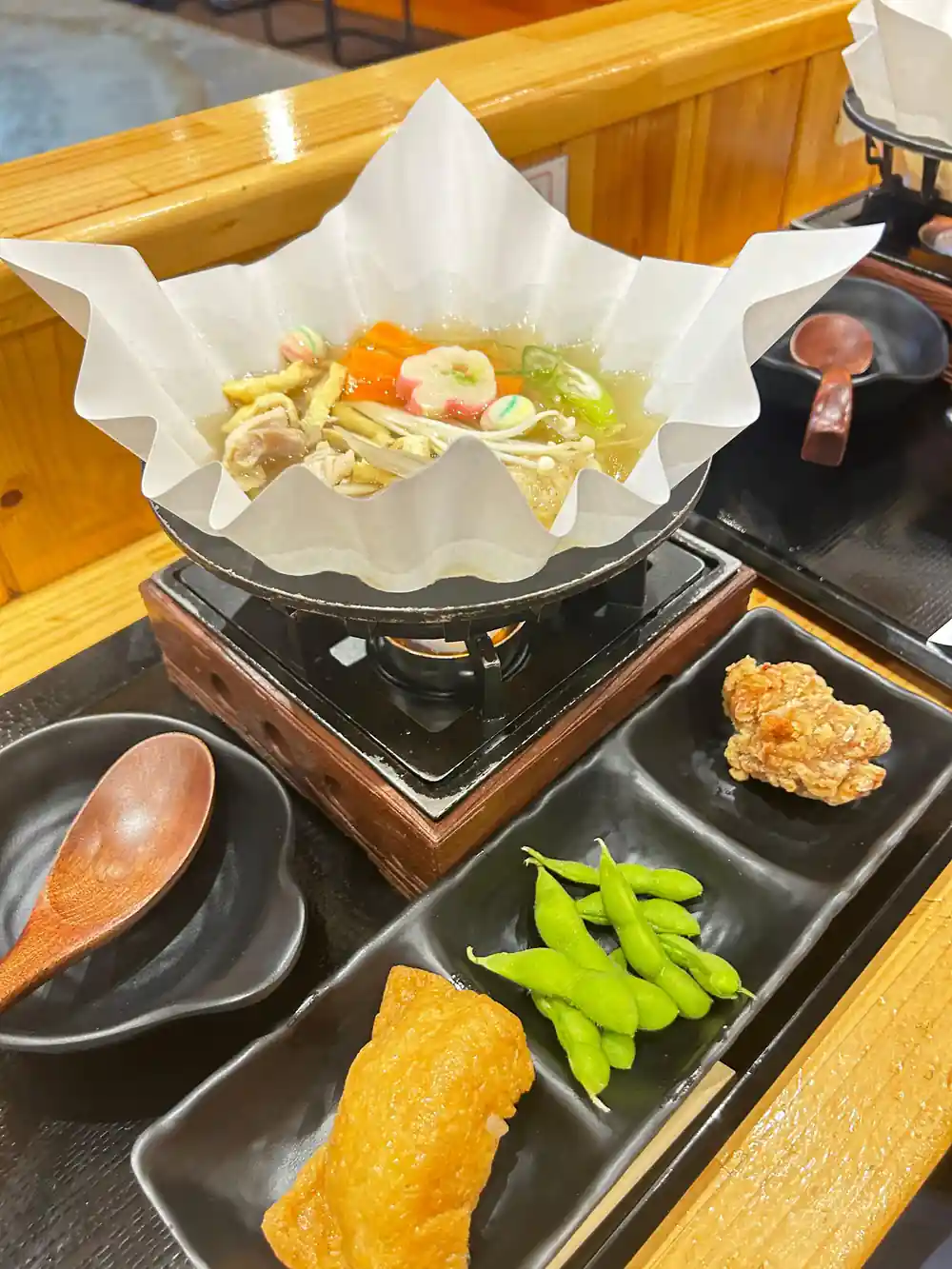
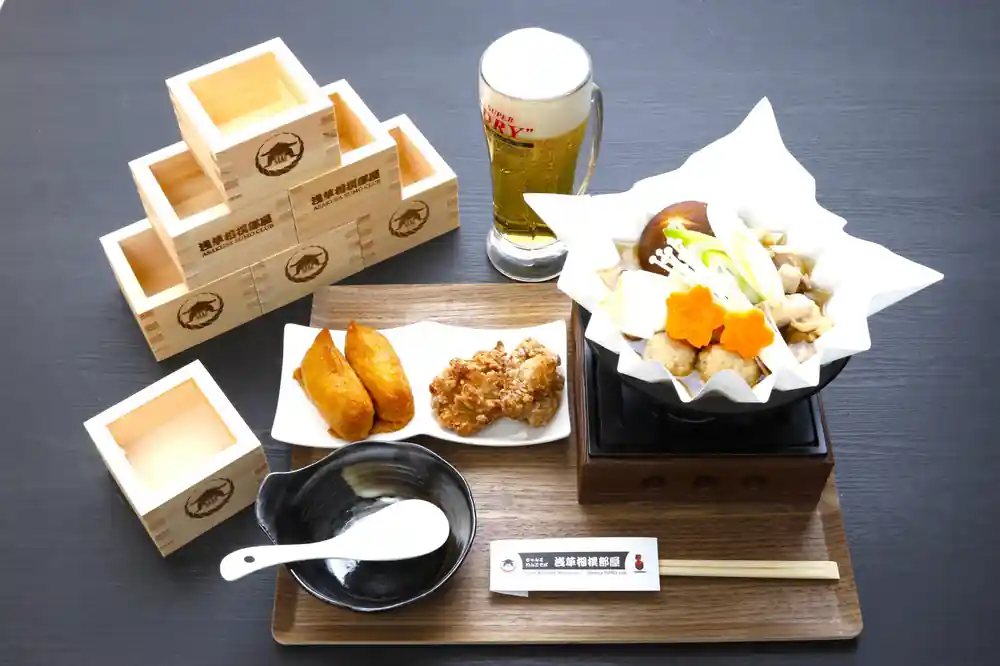
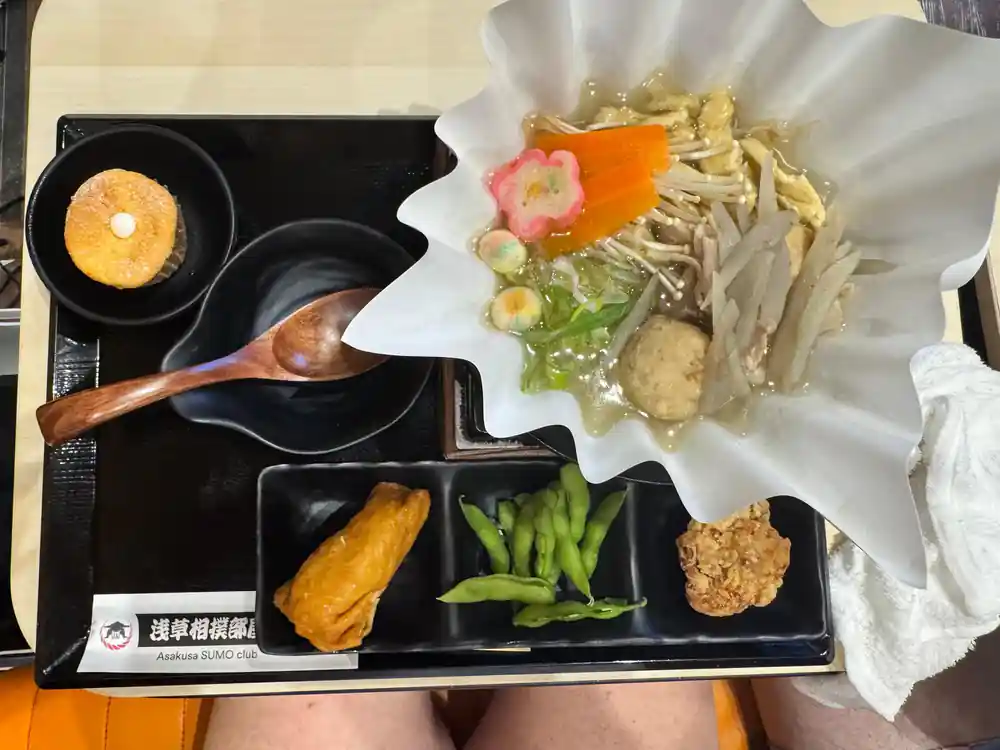
The Tokyo show comes with chicken hot pot and geisha, so the visit is a meal as well as a performance.[1] Hot pot is a shared pot that simmers at the table, which suits children who eat slowly and pick at pieces rather than working through a set menu. It is warm, plain and easy to share, which is often exactly what a tired child wants at the end of a long day on foot. Sitting down to eat in the same room as the ring also breaks the show into two halves, so attention gets a rest.
Wrestlers eat far more than the rest of us. A rikishi's daily intake ranges from approximately 5,000 to 8,000 kcal, and can sometimes exceed 10,000.[8] Tell the operator about allergies or a plain-rice request when you book, and ask ahead if your child will not eat from a shared pot. Staff answer these questions often, and it is much easier to sort out before the day than at the table with a hungry child beside you. If your child is a very hesitant eater, feed them something safe beforehand and treat the hot pot as a bonus.
Noise, pace and how intense the bouts look
The scale is what surprises children. In one research sample, the average weight of 25 makuuchi wrestlers was 161.2 kg, with an average height of 186.3 cm.[9] A contest usually lasts only a few seconds, and in rare cases can take a minute or more, so the sound is a burst of effort and crowd reaction rather than an hour of shouting.[2] Tell your child that the pushing is the whole point of the sport, and that it is over in a matter of seconds.
That shape of show is kind to young ears and short attention spans. If your child minds clapping crowds, sit a little further back, bring ear defenders as a comfort rather than a necessity, and talk through what will happen before you go in. Knowing the order of events, the crouch, the salt and then the clash, makes the first bout far less startling and gives a child something specific to watch for. A quiet word with staff on arrival about where to step out if needed is worth the two minutes.
from US$102
From US$102 per person for 2 hours of bouts, chicken hot pot and geisha, with small group places available.[1]
Access, space and strollers
The show is wheelchair accessible, so a parent or grandparent who uses a wheelchair can come along.[1] Small group places are available, which makes it simpler to keep the family seated in the same area.[1] If you need step-free access for more than one person, or you are bringing a buggy and a wheelchair together, say so when you reserve so staff can plan the arrival. It also helps to mention if anyone in the group would rather sit near a door.
Strollers are the question nobody thinks about until the door. Ask where to leave yours when you arrive, keep a carrier for a toddler who may want to be held during the bouts, and pack light so you are not juggling bags while everyone else is watching. A small backpack beats a large day bag at any seated performance, and a spare layer for a cool hall is never wasted. A slim folding stroller is easier to store than a full-size travel system.
Language, and what children actually follow
Very little of a sumo show depends on words. Before a bout the wrestler performs chiri-chozu, squatting low with both arms extended to the sides and palms turned upward to show that his hands hold no weapons, and then throws salt into the ring.[10] Children read that as spectacle, which is what it is. There is drama in the pause before the first contact, and even a small child can see that something is about to happen.
If you are travelling with grandparents or older children who want the history filled in, confirm the language of any commentary when you reserve, and read a little on the train. The rituals are simple enough to explain in two sentences, and once a child knows what to look for the whole show makes more sense. Talk about the ring, the salt and the referee before you go in, and the questions during the show will be about the wrestling rather than about what is going on.
Booking, changes and how it compares with a tournament
From US$102 per person, the show is sold with reserve now and pay later and free cancellation up to 24 hours in advance for a full refund.[1] That combination matters with children in the group, because plans move and you want the option to shift a date rather than lose the money. Book once your dates are firm, then check availability for the start time that suits the family best. If you are travelling with another family, book in one go so your places stay together.
If your dates line up with the professional calendar, the wider picture is worth knowing. Japan holds six Grand Sumo Tournaments each year, and the January tournament is the first of them.[11] The Kokugikan National Sumo Arena in Ryogoku, Sumida City, Tokyo, has a capacity of up to 10,000.[12] A show is the gentler introduction; a tournament afternoon is a longer commitment, so learn the ritual first if you are unsure how long your children will last. Either way, the ring does most of the work.
From prices for Tokyo sumo shows
Compare sumo shows for a family outing
From prices per person in US dollars on GetYourGuide:[1][3][4][13][14]
When to book for a family visit
Plan a family sumo show
Pick your date
Open the calendar and compare start times, because they vary from day to day.[1]
Book and hold places
Reserve now and pay later lets you lock in seats, and cancellation is free up to 24 hours before the start.[1]
Ask about family seating
Small group places are available, so ask for the family to be seated together when you reserve.[1]
Brief the children
Explain the salt throw and the short bouts, so the ritual makes sense before it starts.[2][10]
Plan the food
The show comes with chicken hot pot, so mention allergies or a plain-rice request when you book.[1]
Leave a buffer
Build in time before and after, because 2 hours is the show itself and not the whole outing.[1]
Take the family to a Tokyo sumo show
from US$102Reserve now & pay later