The essentials
- Runs 1.5 hours with a live tour guide in English and a photo, listed from US$32, with free cancellation up to 24 hours in advance.[1]
- Rated 4.82 from 112 reviews, runs 1.5 hours, skips the ticket line, is wheelchair accessible and is listed from US$41.[2]
- Runs 2 hours, is rated 4.79 from 8,004 reviews and is listed from US$102, with small group places available.[3]
- The Osaka show and the Asakusa show both list wheelchair access, and the Asakusa show has small group places available.[2][3]
- Free cancellation up to 24 hours in advance and reserve-now-pay-later booking are standard on these shows.[1][2][3]
| Shibuya show | Osaka show | Asakusa show (our pick) | |
|---|---|---|---|
| From | from US$32[1] | from US$41[2] | from US$102[3] |
| Rating | No reviews yet[1] | 4.82 from 112 reviews[2] | 4.79 from 8,004 reviews[3] |
| Duration | 1.5 hours[1] | 1.5 hours[2] | 2 hours[3] |
| Free cancellation | Cancel up to 24 hours in advance[1] | Cancel up to 24 hours in advance[2] | Cancel up to 24 hours in advance[3] |
| Pay later | Reserve now & pay later[1] | Reserve now & pay later[2] | Reserve now & pay later[3] |
A contest usually lasts only a few seconds, but in rare cases can take a minute or more.
Our verdict: which show suits your trip
Booking notes
- Decide the format: a show on its own, a show with a hot pot meal, or a morning training visit
- Small group places are limited on some listings, so book early if you are travelling as a group
- Free cancellation and pay-later terms sit on the listings, so read them before you commit
- Compare from prices across Shibuya, Osaka, Ginza, Shinjuku and Asakusa before you choose
On the day
- Arrive early enough to settle in before the first bout, since contests can be over in seconds
- Keep your booking confirmation and voucher handy on your phone
- Ask for step-free seating when you book if you need wheelchair access
- Bring a camera: photos with the wrestlers are part of the show format
Why sumo shows spread beyond Asakusa
Asakusa and neighbouring Ryogoku have been the addresses travellers associate with sumo for a long time. The Kokugikan National Sumo Arena sits in Ryogoku, in Sumida City, Tokyo, and has a capacity of up to 10,000.[4] That is where the sport's biggest occasions happen, and where the six annual Grand Sumo Tournaments come to Tokyo, the January tournament being the first of them.[5] Around that arena, the entertainment show grew up: a small hall, a ring, a handful of wrestlers and an audience sitting close enough to hear the breathing. The atmosphere is part of the draw: the slap of hands, the salt thrown into the ring, the sudden explosion of movement when the bout begins.
Those shows now turn up well away from the old sumo quarter. Shibuya, Ginza, Shinjuku and Osaka all host them, and each has its own flavour. Some are theatre with a live match and photos. Others stretch into a fuller evening with a hot pot dinner and a geisha performance. Ryogoku and Asakusa still hold most of Tokyo's staged shows, from the arena's tournament days to listings that trade under names such as the Sumoland Tokyo Ryogoku sumo show. This page covers the two headline alternatives outside Asakusa, then the show we book ourselves. The variety means you can match the show to your itinerary, your budget and whether you want a quick taster or a full night out.
The Shibuya sumo show: short, central, photo-friendly
The Shibuya sumo show is the lightest commitment of these options. It runs 1.5 hours and is listed from US$32, with a live tour guide working in English.[1] You watch the wrestling, you get the background explained, and you leave with a photograph with the wrestlers, which is the part most people talk about afterwards. There are no reviews posted yet, so you are choosing on the format rather than on a track record.[1] That is not necessarily a bad thing: it means the show is new enough to still be finding its audience, and you get in early.
Shibuya suits a packed itinerary. The show folds into a day of shopping and food, and you can walk to dinner afterwards without crossing the city. At a from price of US$32 it is an easy introduction to the sport.[1] Starting times are not fixed in the listing; you check availability to see them.[1] Free cancellation runs up to 24 hours in advance for a full refund, and you can reserve now and pay later.[1] The area around Shibuya Crossing is buzzing after dark, so you can keep the evening going with a meal in one of the nearby alleys.
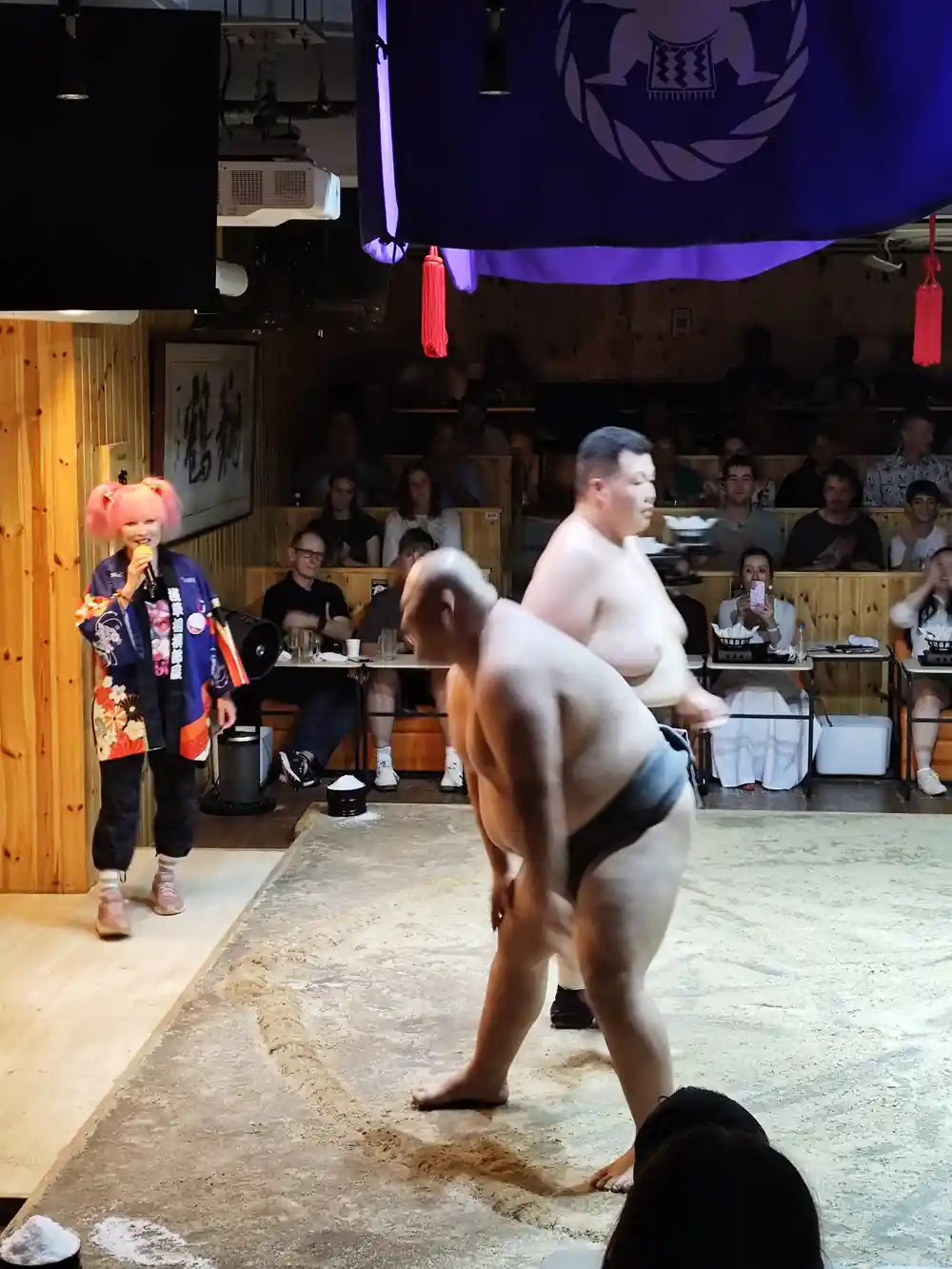
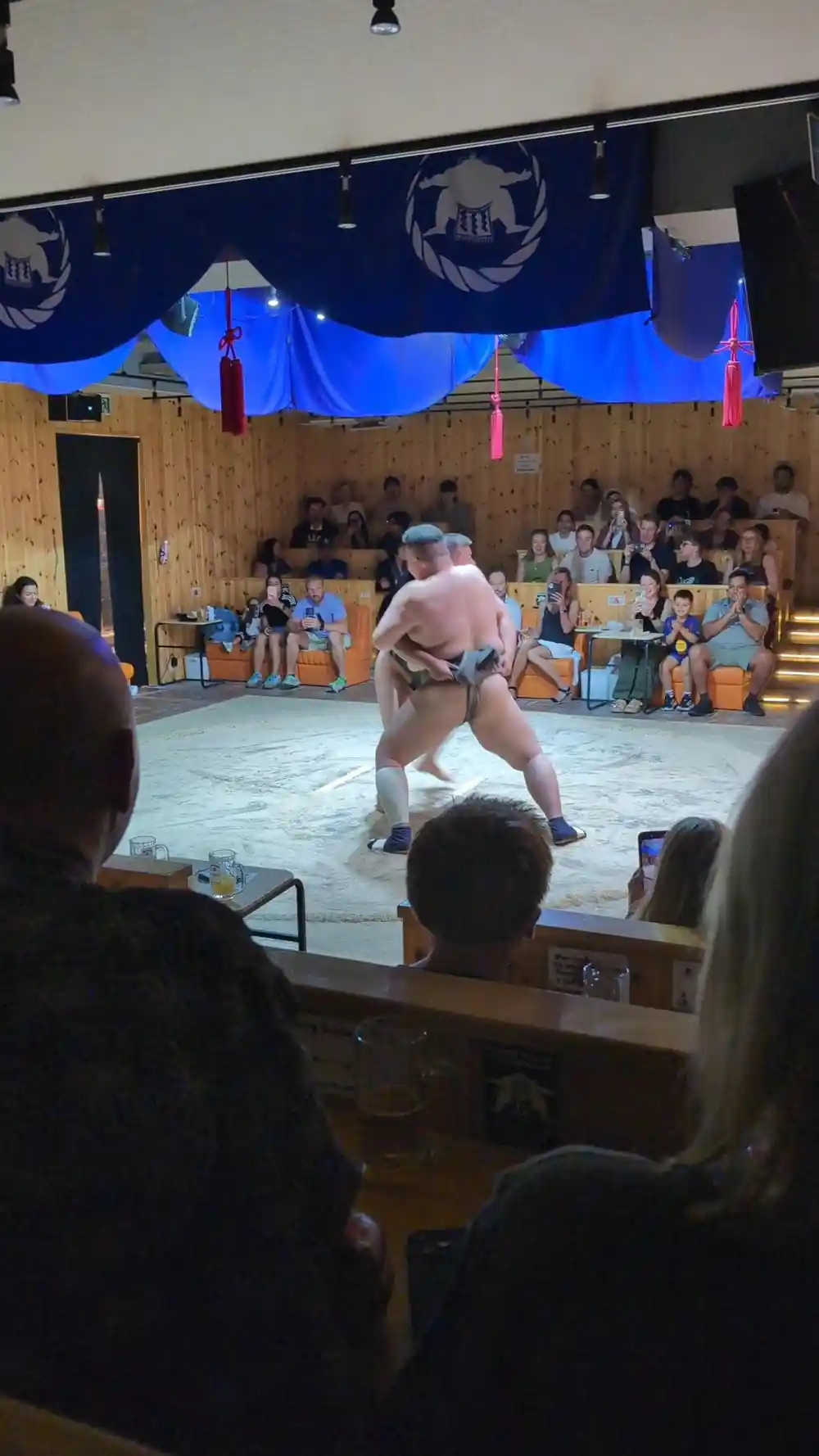
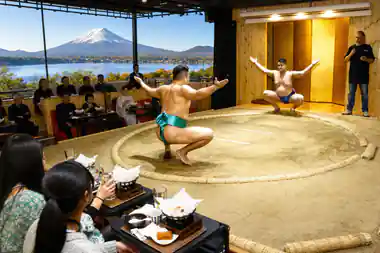
Wrestlers grapple in the sand ring while spectators watch from ringside cushions.
The Osaka sumo show: a live match and a rated guide
Osaka's version leans into the contest itself. The sumo show and live match runs 1.5 hours, is listed from US$41, and holds a rating of 4.82 from 112 reviews.[2] The breakdown gives the guide 4.9 and value for money 4.8.[2] A live tour guide works in English, entry skips the ticket line, and the venue is wheelchair accessible.[2] That combination is rare: you get a real bout, a guide who can explain the techniques, and easy access for anyone with mobility concerns.
That mix suits travellers who want the wrestling explained as it happens rather than played for laughs, and a photo with the wrestlers comes with it. Free cancellation applies up to 24 hours in advance, and you can reserve now and pay later.[2] If Osaka Castle, the Dotonbori food streets or a day trip out of the city are already on your list, the show takes 1.5 hours and slots in without taking over the evening.[2] The venue is close to public transport, so you can fit it between sightseeing and dinner without rushing.
The Asakusa show we book: chicken hot pot and a geisha
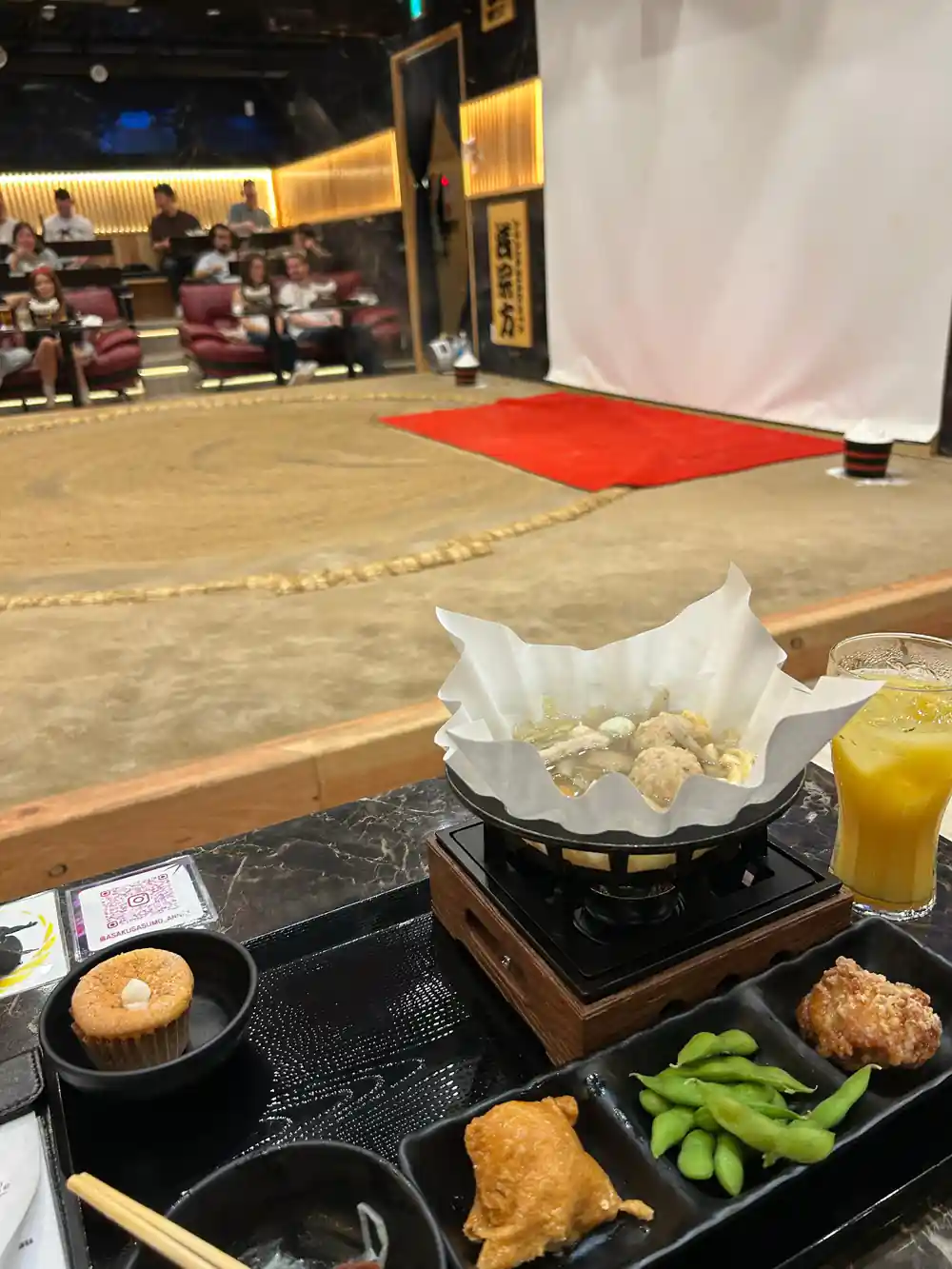
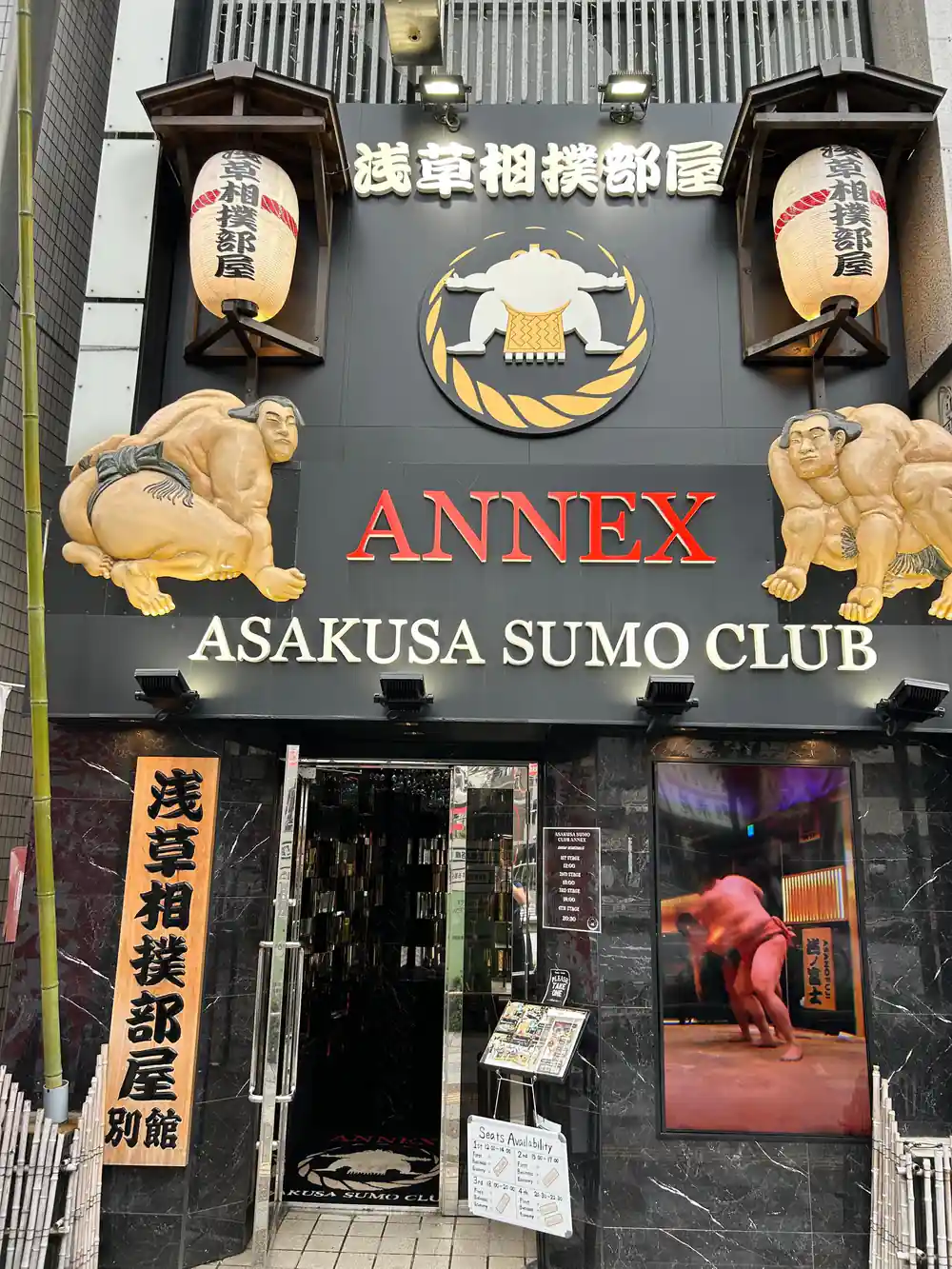
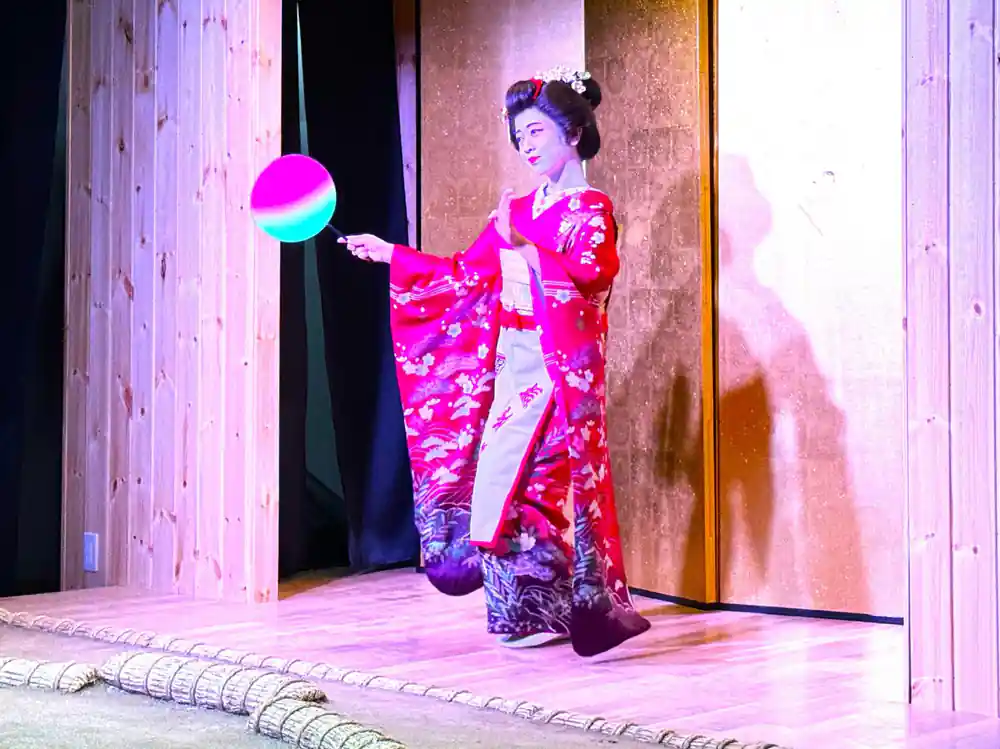
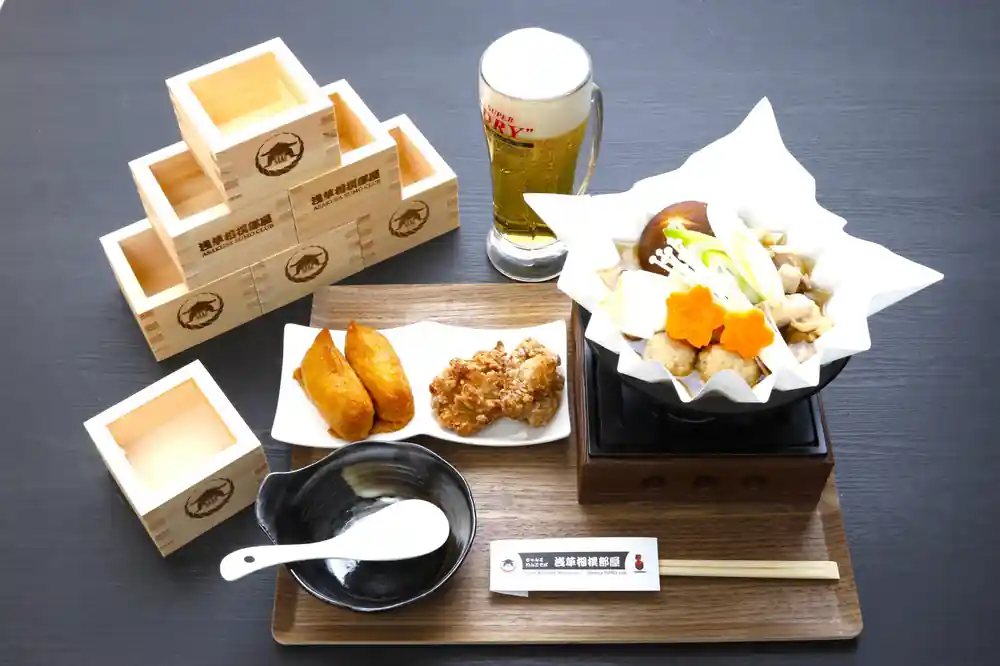
Our own booking sits in Asakusa: Tokyo: Sumo Entertainment Show with Chicken Hot Pot & Geisha. It runs 2 hours, is listed from US$102, and carries a rating of 4.79 from 8,004 reviews.[3] Small group places are available, and the venue is wheelchair accessible.[3] The scale of that review count tells you how well established it is, and the steady rating suggests consistent quality.
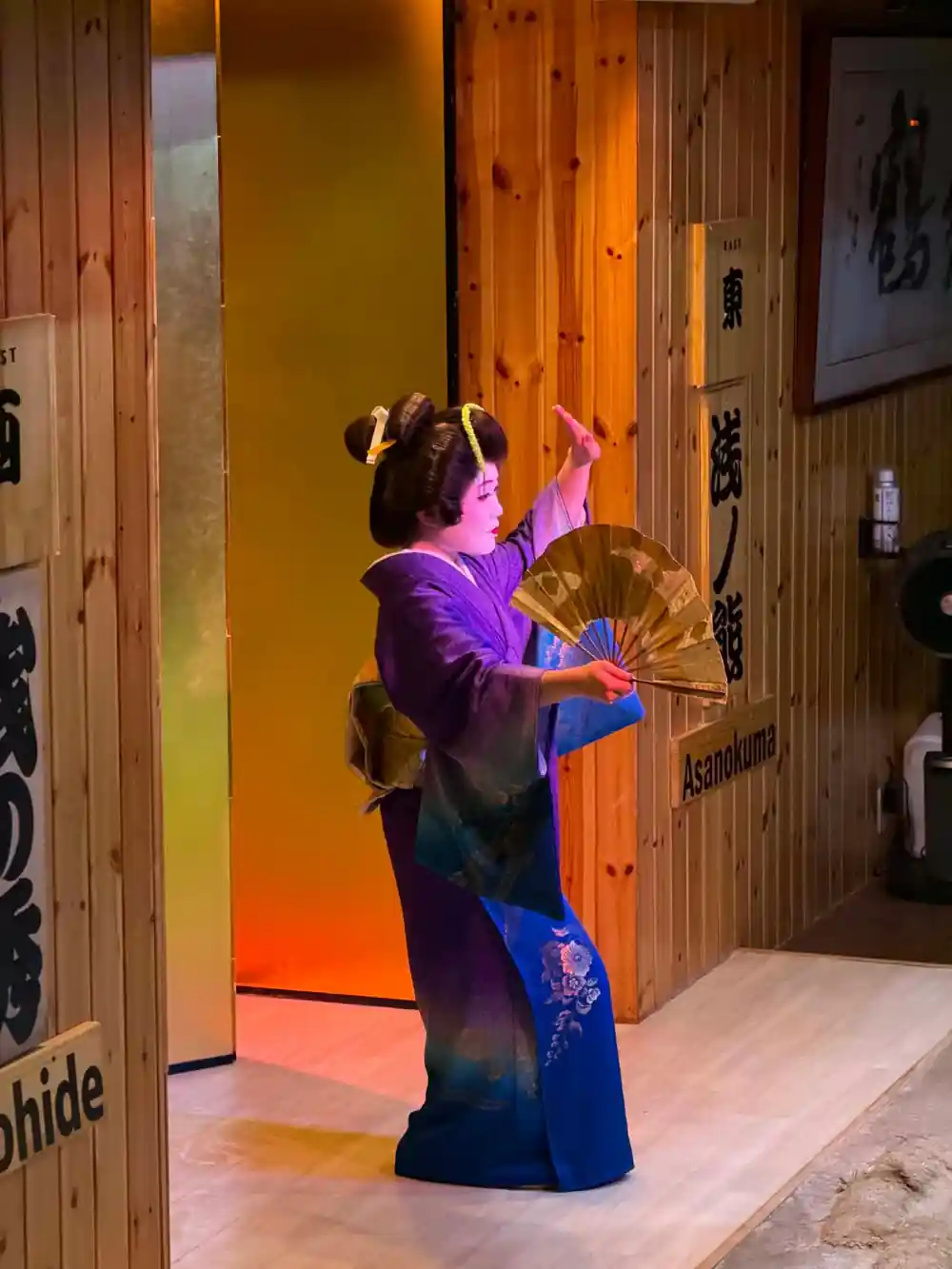
The draw is the combination. You get the wrestling, then a chicken hot pot meal, then a geisha performance, all in one sitting. The meal is part of the appeal, and sumo appetites are large: a rikishi's daily intake ranges from approximately 5,000 to 8,000 kcal, and can sometimes exceed 10,000.[6] Two hours covers the lot, and free cancellation runs to 24 hours before the start, with pay-later booking available.[3] The geisha adds a layer of traditional entertainment that you rarely see outside Kyoto, and the hot pot is hearty enough to count as dinner.
from US$102
The Asakusa show we book runs 2 hours with chicken hot pot and a geisha, and the listing offers free cancellation up to 24 hours in advance.[3]
Prices, running times and cancellation at a glance
All of these listings behave the same way on the booking side. Each offers free cancellation up to 24 hours in advance for a full refund, and each lets you reserve now and pay later.[1][2][3] Starting times are not printed on the listings; you check availability to see the slots for your date.[1][2][3] That flexibility is useful if you are still building your itinerary and do not want to commit to a fixed hour weeks ahead.
Prices rise with what is included. Shibuya is from US$32 for 1.5 hours.[1] Osaka is from US$41 for 1.5 hours with a live match.[2] The Asakusa show with hot pot and a geisha is from US$102 for 2 hours.[3] If you would rather watch a training session than a staged show, Tokyo morning practice viewings are another route: one runs 3 hours and is listed from US$92.[7] The morning practices are a different experience, quieter and more intimate, but they start early, so plan accordingly.
What you are actually watching in the ring
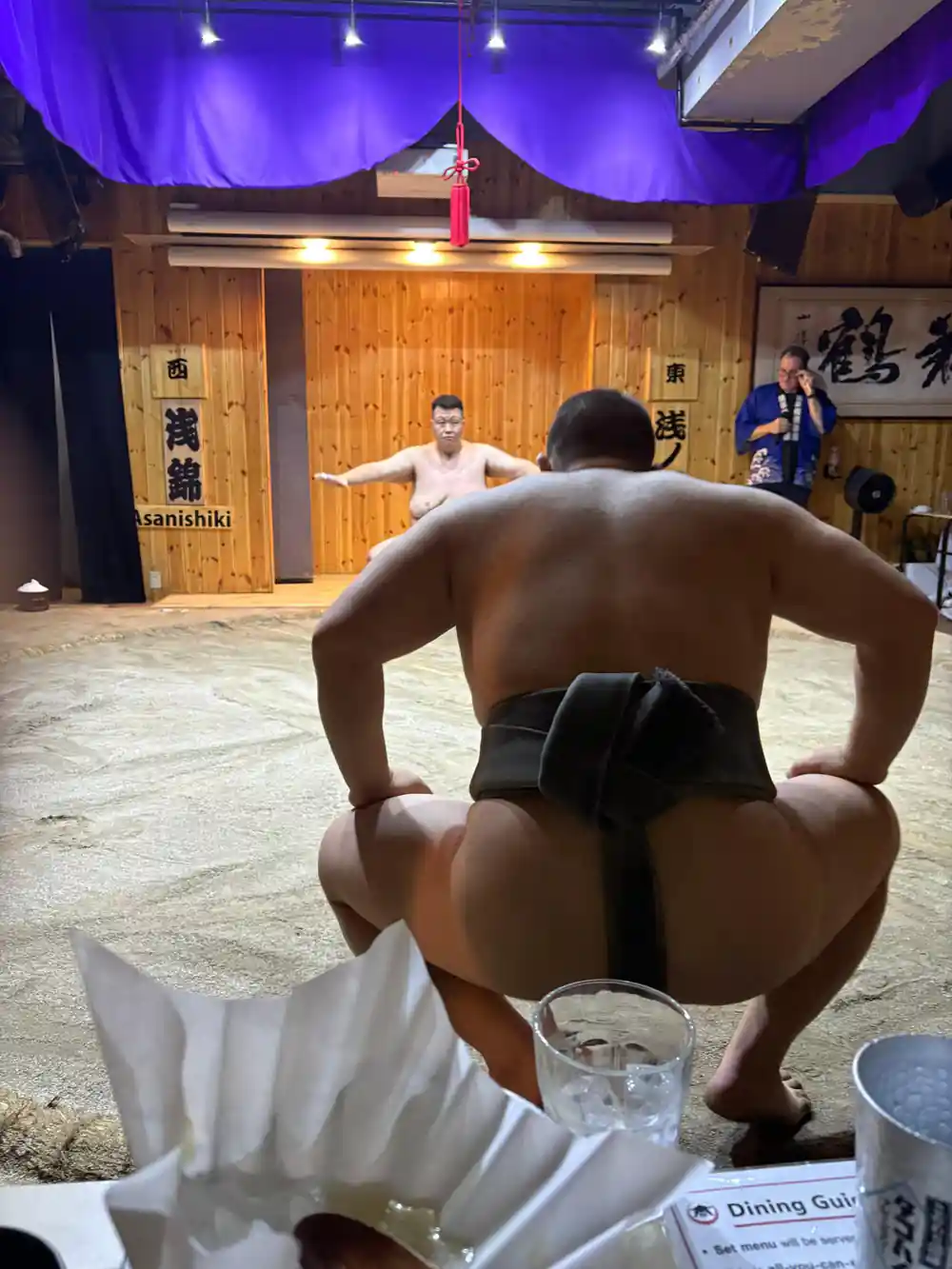
A sumo bout is short. A contest usually lasts only a few seconds, though in rare cases it can take a minute or more.[8] That is why a good show needs a guide: the action is over before you have settled into your seat. Before each bout, a wrestler performs chiri-chozu, squatting low with both arms extended to the sides and palms turned upward, showing the gods and his opponent that his hands hold no weapons, and then throws salt.[9] These rituals are as much a part of the spectacle as the contest itself.
The rest is context. There are 82 kimarite, or match-winning techniques, defined by the Japan Sumo Association, plus 5 non-techniques or ways to lose.[10] The sport sorts wrestlers into six divisions covering ten ranks, and only the top division, Makuuchi, is split further, into five ranks.[11] Wrestlers at that level are big: research on 25 makuuchi wrestlers found an average weight of 161.2 kg, about 355 lbs, and an average height of 186.3 cm.[12] Professional sumo took its present shape in the Edo period, between 1603 and 1867.[13] Knowing a little of this makes the show far more absorbing, and the guides are there to fill in the details.
How to choose between Shibuya, Osaka and Asakusa
Take the Shibuya show if you want something short, central and inexpensive, and you are happy with photos rather than a meal.[1] Take the Osaka show if you want the contest itself, a highly rated guide and a wheelchair-accessible venue.[2] Take the Asakusa show if you want the full evening, at 2 hours, with hot pot, a geisha and a large body of reviews behind it.[3] Think about your energy levels too: a two-hour evening built around a meal[3] asks more of you than a shorter show you can slot between other plans.[1]
Ryogoku remains the place for the sport at full scale. Six Grand Sumo Tournaments are held each year, and second-floor B or C arena seats at the Kokugikan cost between 3,500 and 5,500 yen.[5][14] When your dates do not line up with a tournament, a staged show is the practical answer, and it asks far less of your planning. Book the date you want, check the start time, and leave the rest of the day free. With free cancellation on most listings, you can lock in a seat now and adjust later if your plans change.
From prices for Tokyo and Osaka sumo shows
All are from prices from GetYourGuide listings: Shibuya US$32[1], Osaka US$41[2], Ginza US$48[15], Shinjuku US$65[16], Asakusa US$102[3].
From prices in US dollars, per person
From prices in USD per person from listings: US$32[1], US$41[2], US$48[15], US$65[16], US$102[3]. Each listing has one from price, so child mirrors adult.
When to book your sumo show
Plan your sumo show
Pick your city
Shibuya and Osaka are the two headline options, while Ginza, Shinjuku and Asakusa all host shows within easy reach of the main rail lines.
Match the length to your day
A short show fits between dinner plans, while a longer evening with a hot pot meal takes up most of the night.
Check the start time
Start times appear when you check availability, so choose your date first and then build the rest of the day around the slot.
Use the pay-later option
Reserve now and pay later holds your seat while you sort flights and hotels, and free cancellation leaves room to change plans.
Note the access details
Wheelchair access and small group places are listed per show, so read the one you want before you commit.
Book the Asakusa sumo, chanko nabe and geisha show
from US$102Reserve now & pay later