The essentials
- A Grand Sumo Tournament is real competition in a big arena, while a sumo show is a short staged performance with rituals, food and photos.
- The Tokyo show with chicken hot pot and geisha starts from US$102, runs 2 hours, and lists small group availability.[1]
- Japan holds six Grand Sumo Tournaments each year and January is the first; guided tournament days start from US$159.[2][3]
- Second floor B or C seats at the Kokugikan cost between 3,500 and 5,500 yen, and the arena holds up to 10,000 people.[4][5]
- Practice usually begins between 5:00 and 7:30 AM and lasts 2 to 4 hours; guided viewing starts from US$92.[6][7]
- Top choice Sumo Show, Hot Pot & Geisha from US$102 Length2 hours[1]Rating4.79 from 8,004 reviews[1]CancellationFree cancellation up to 24 hours[1] Check availability
- Sumo Morning Practice Tour from US$102 Length1.5 - 2 hours[8]Rating4.78 from 720 reviews[8]CancellationFree cancellation up to 24 hours[8] See this tour
- Sumo Show & Dining from US$89 Length1.5 - 2 hours[9]Rating4.80 from 3,454 reviews[9]CancellationFree cancellation up to 24 hours[9] See this tour
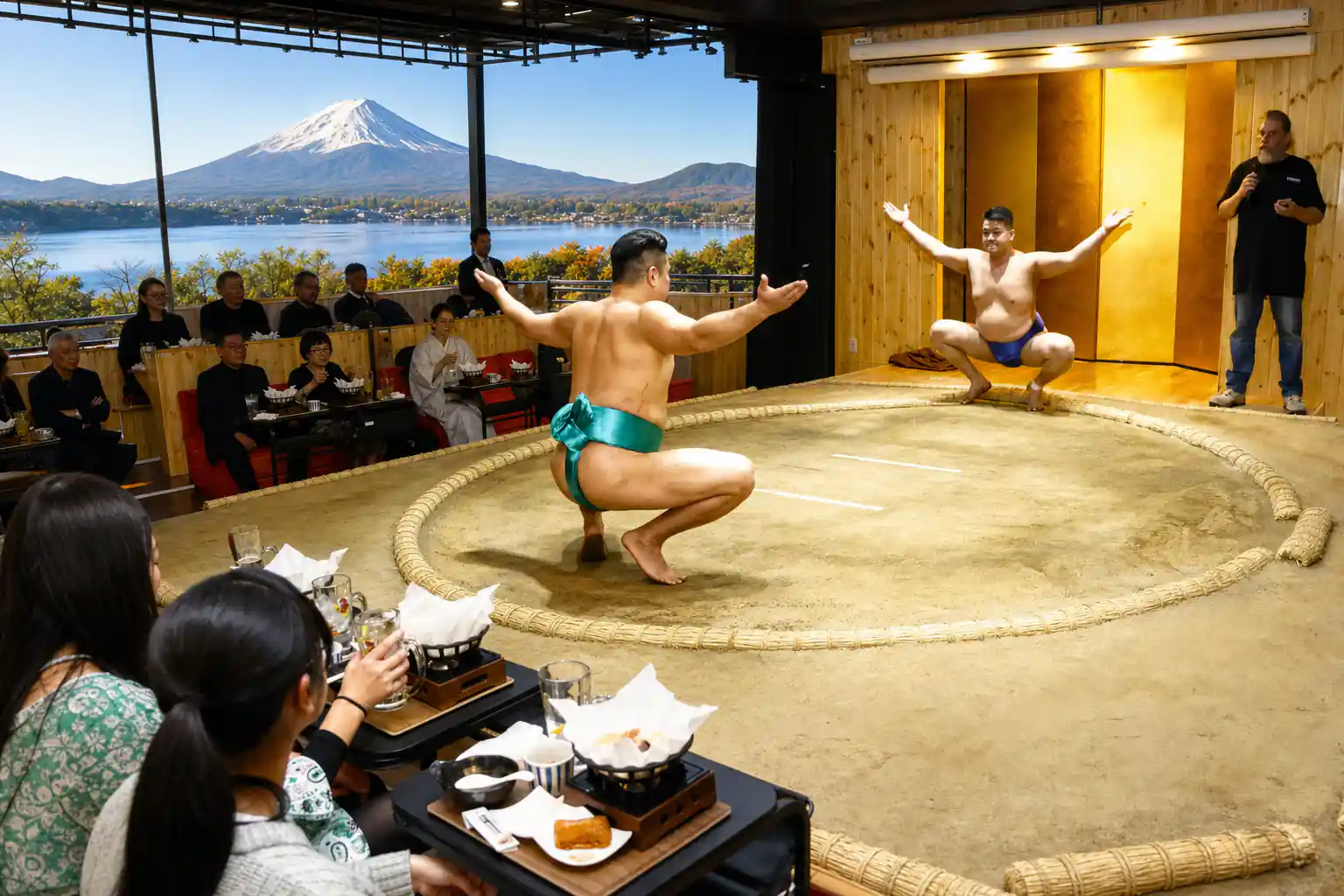
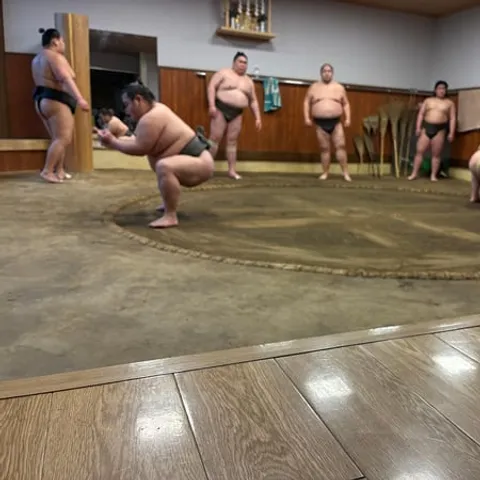
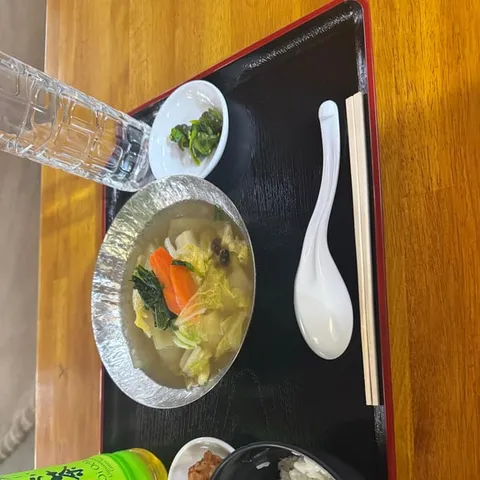
The Kokugikan National Sumo Arena located in Ryogoku (Sumida City, Tokyo) boasts a capacity of up to 10,000.
Our verdict: book the show, plan for a tournament
Know before you book
On the day
- Morning practice typically begins between 5:00 and 7:30 AM and lasts 2 to 4 hours.[6]
- The Tokyo show booked here is listed as wheelchair accessible.[1]
- Free cancellation up to 24 hours in advance for a full refund on the show booked here.[1]
- Reserve now and pay later is offered on the Tokyo show booked here.[1]
Show or tournament: the short answer
Sumo in Tokyo comes in two main shapes, and the one you pick decides what kind of day you have. A Grand Sumo Tournament is real competition, fought at the Kokugikan National Sumo Arena in Ryogoku, Sumida City, Tokyo, a hall with space for up to 10,000 people.[5] A sumo show is a staged performance in a smaller venue, written for visitors who want the ring entry, the salt, the comedy and a hot meal without sitting through a full afternoon of bouts.
Both are easy to book online. The show booked here, the Tokyo Sumo Entertainment Show with Chicken Hot Pot & Geisha, runs 2 hours and starts from US$102.[1] Grand Sumo Tournaments are held six times a year, and the January tournament is the first of them.[2] The real question is timing: if your dates are fixed, take the show; if they are flexible, build the trip around a tournament and use a show or a morning practice visit as the warm-up.
For most travellers the sensible move is to book the show on a normal evening and, if you happen to be in Tokyo during a tournament, treat that as a bonus. A show needs no early start, no ticket strategy and no knowledge of the sport. You simply turn up, eat, watch and leave with photographs.
What a Tokyo sumo show actually is
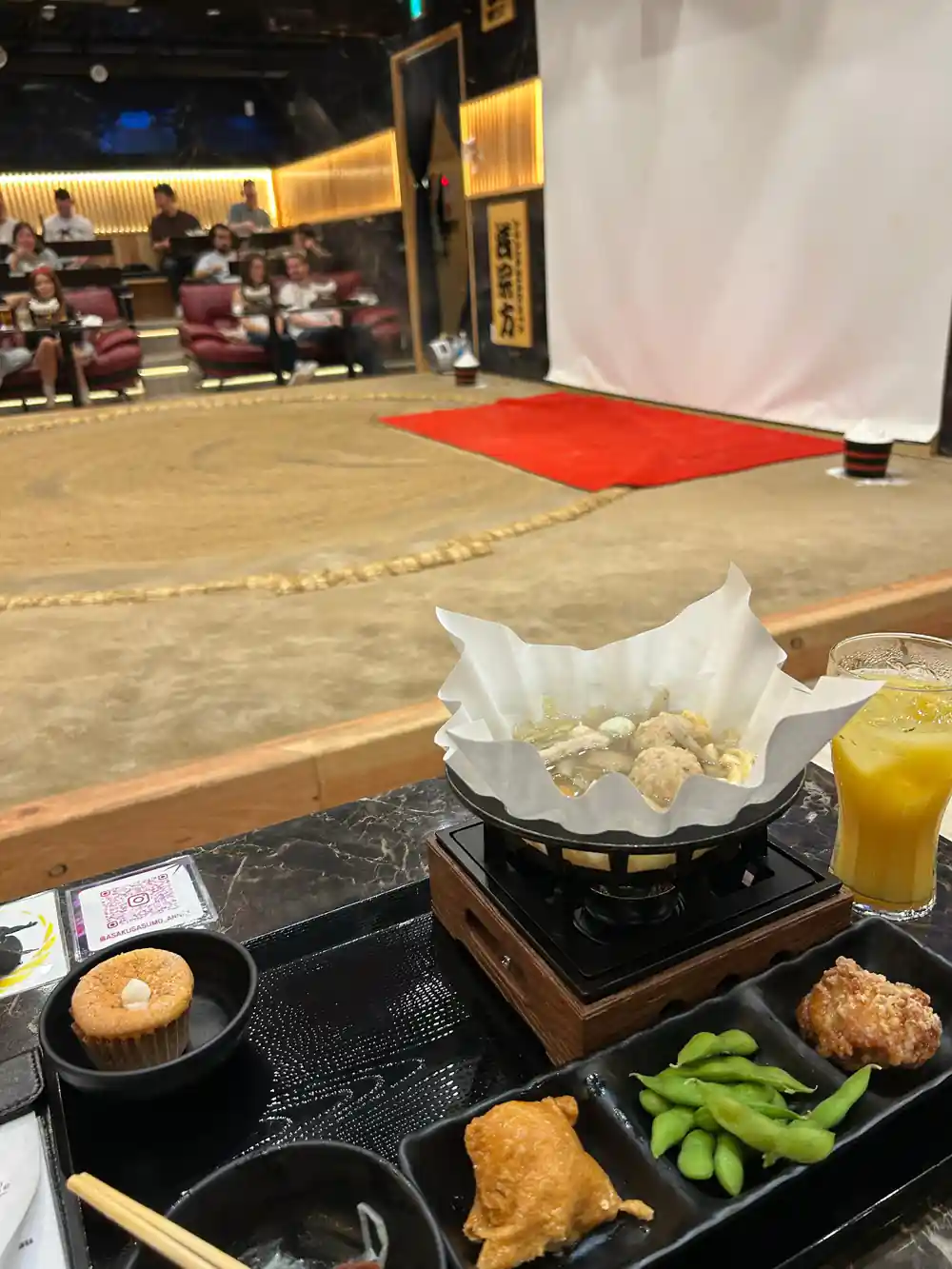
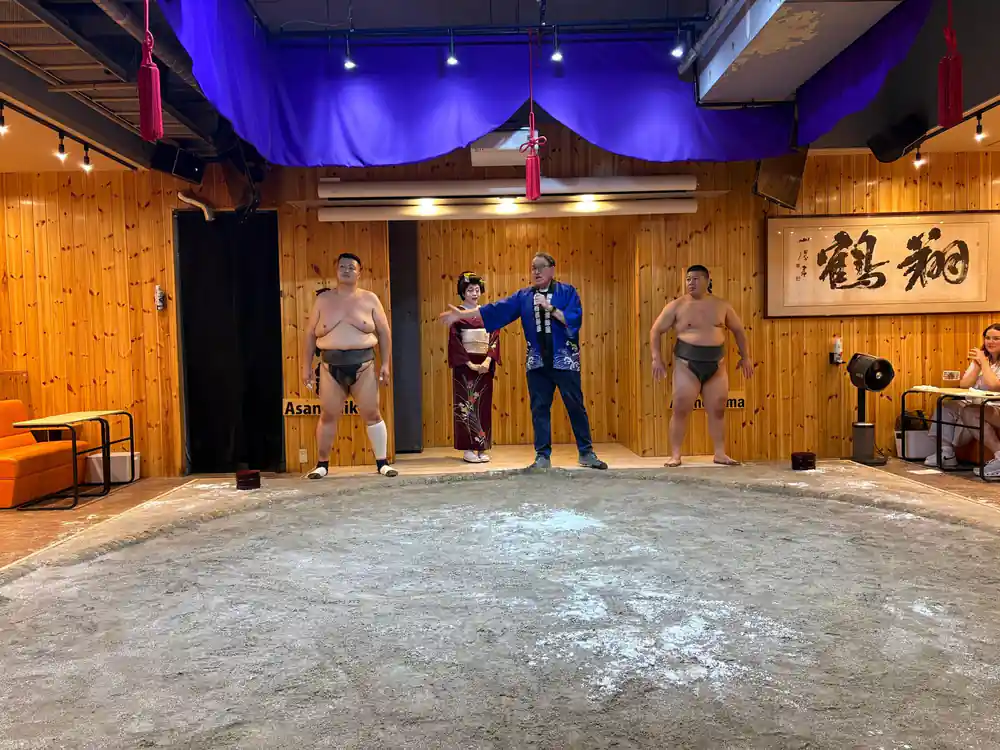
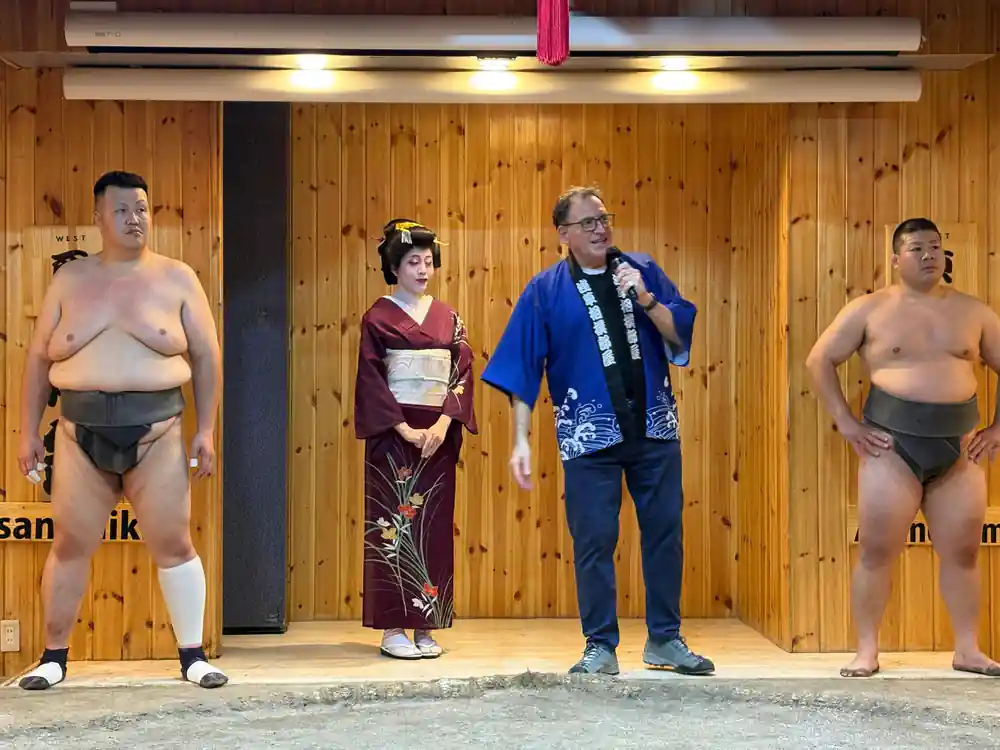
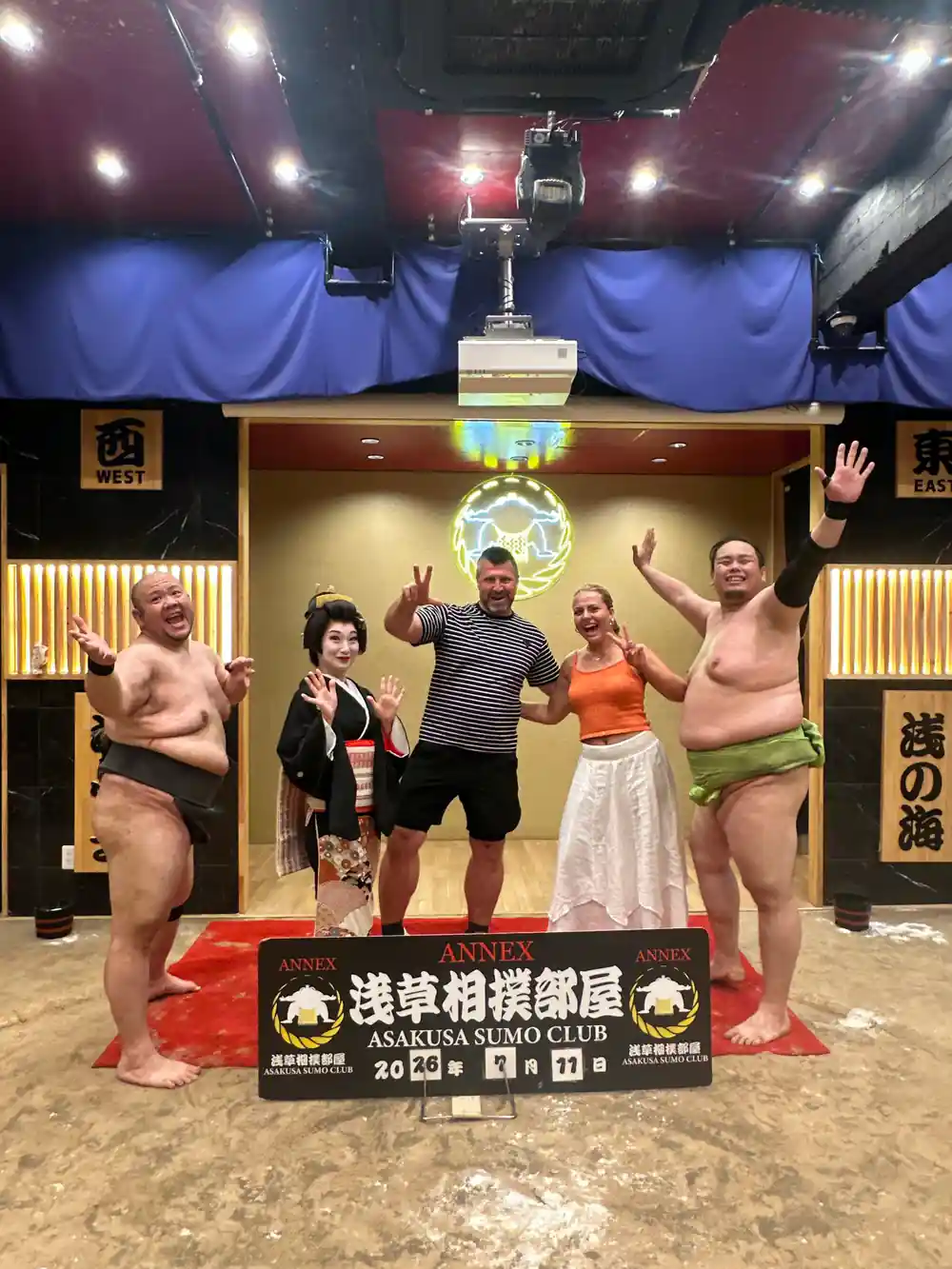
A show is theatre with real wrestlers. Retired professionals take a small ring, perform the ring entry with its bowing and stamping, then wrestle short exhibition bouts that usually end fast. Between bouts there is talking, laughter and translation, and volunteers are often invited up to try their balance against a professional. You sit close, cameras are welcome, and nobody expects you to know the names of the techniques before you arrive.
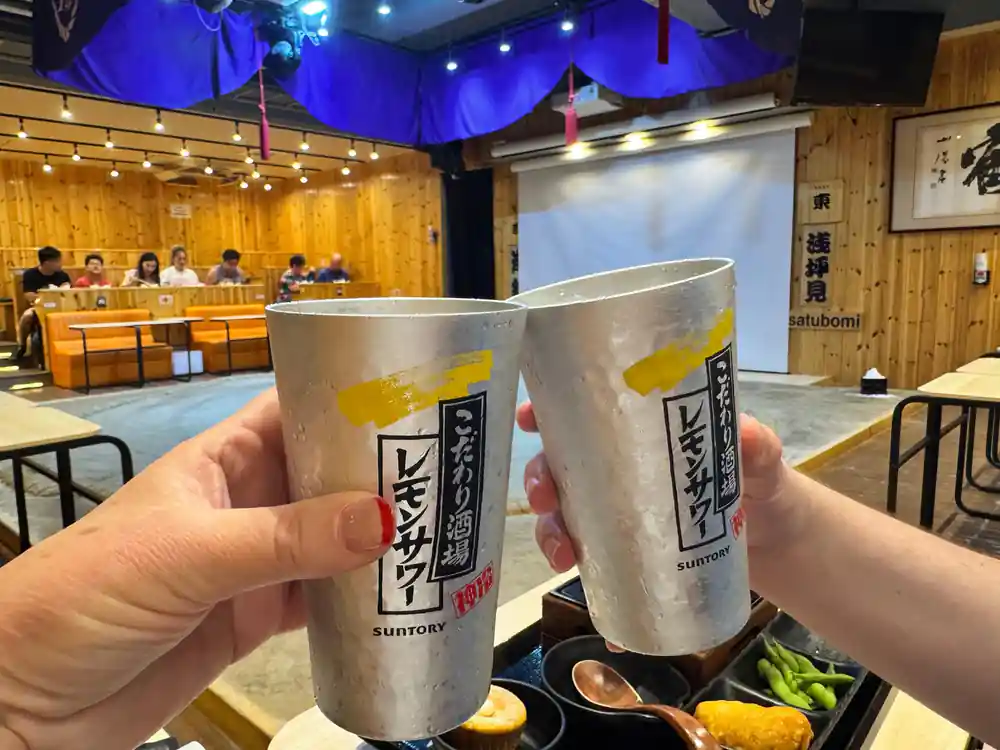
The show booked here is rated 4.79 from 8,004 reviews, with small group availability and wheelchair access listed.[1] It runs 2 hours, pairs the ring with chicken hot pot and a geisha performance, and lets you reserve now and pay later, with free cancellation up to 24 hours in advance for a full refund.[1] Other Tokyo shows cost less: a Shinjuku show with photos starts from US$65,[10] and a Ginza performance starts from US$48.[11]
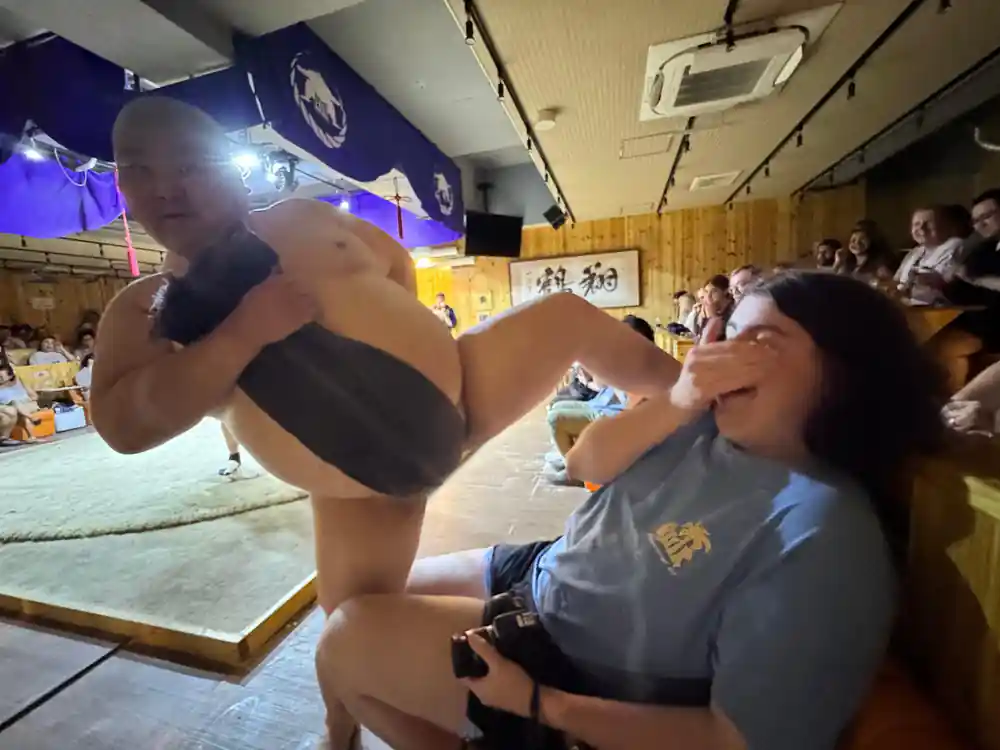
Salt, clay and a bout that lasts seconds: ringside at a Tokyo sumo show.
Inside the Tokyo sumo stadium
The Kokugikan National Sumo Arena in Ryogoku, Sumida City, Tokyo, holds up to 10,000 people.[5] On a tournament day the short walk from the station turns into a slow procession past food stalls and souvenir stands, and inside the hall the ring sits under a suspended roof with seats rising steeply on all sides. It is a working sports venue rather than a theatre, and the mood reflects that: clay dust, salt scattered on the ring, full rows, and a crowd that knows when to shout.
Watch the pre-bout routine once and you will recognise it everywhere. The wrestler performs chiri-chozu, squatting low with both arms extended to the sides and palms turned upward to show that his hands hold no weapons, then throws salt.[12] Then comes the long crouch, the first clash, and usually a few seconds later it is over.[13] The rulebook lists 82 match-winning techniques, and that brief scramble is never quite the same twice.[14]
Grand Sumo Tournaments: the real thing
Japan holds six Grand Sumo Tournaments each year, and the January tournament is the first of them.[2] The men at the top of the sport are genuinely huge: research on 25 makuuchi wrestlers found an average weight of 161.2 kg (about 355 lbs) and an average height of 186.3 cm.[15] Sumo sorts its wrestlers into six divisions covering ten ranks in total, and only the top division, Makuuchi, is subdivided further, into five ranks.[16] The training diet is part of the picture: a wrestler's daily caloric intake ranges from approximately 5,000 to 8,000 kcal and can sometimes exceed 10,000.[17]
Getting tournament seats is the hard part, and guided packages are the usual workaround for visitors. A Tokyo and Nagoya Grand Sumo Tournament day with a licensed guide runs 4 hours and starts from US$159.[3] A grand tournament viewing tour runs 5 hours and starts from US$111, and it is listed as non-refundable.[18] A ticket-included sumo match tour runs 4.5 hours and starts from US$95.[19]
If the tournament calendar does not line up with your dates, you still have a way to see serious wrestlers doing real work. The morning practice tours are shorter than a tournament day and far less formal than a show. A quiet hour beside a clay ring can stay in your memory longer than a stadium full of strangers.
from US$102
The sumo show booked here runs 2 hours, is rated 4.79 from 8,004 reviews, and lists small group availability.[1]
Costs, seats and the Tokyo sumo schedule
Prices tell the story of the two formats. At the arena, second-floor B or C seats cost between 3,500 and 5,500 yen.[4] Shows, meanwhile, are priced per person and bundled with entertainment: from US$48 for a Ginza performance,[11] from US$65 for a Shinjuku show,[10] and from US$102 for the two-hour show with chicken hot pot and geisha.[1]
Timing matters more than price. If you want to plan around the Tokyo sumo schedule, keep January in mind, since the first of Japan's six annual Grand Sumo Tournaments is held then.[2] A show is the fallback for every other week of the year: 2 hours, evening, small group availability and free cancellation up to 24 hours in advance for a full refund.[1] Guided tournament tours are a different commitment, running 4 hours.[3]
Morning practice: the third option
Between the stage and the stadium sits the stable. Sumo wrestlers train in the morning, and practice typically begins between 5:00 and 7:30 AM and lasts 2 to 4 hours, though the exact start varies by stable and season.[6] Watching is closer to visiting a workshop than a performance: no music, no announcements, just heavy bodies hitting a clay ring, stopping, adjusting and going again. It rewards early risers and quiet attention.
Several Tokyo operators run morning viewing. A 3-hour guided visit starts from US$92.[7] A viewing tour of a real stable that runs 1.5 to 2 hours starts from US$102 and is rated 4.78 from 720 reviews.[8] A stable visit that lasts 1 hour starts from US$76 and offers free cancellation up to 11 days in advance.[20]
Planning your Ryogoku sumo day
In Ryogoku, Tokyo sumo is the local trade. The arena, the stables and the chanko hot pot restaurants sit within a few streets of each other, and the district is easy to reach by train. On a tournament day, arrive early, eat before the top division begins, and stay for the last bouts when the hall is at its loudest. On other days the same streets are quiet enough to walk at your own pace.
It pairs well with the rest of eastern Tokyo. A Ryogoku sumo town walking tour with lunch runs 3.5 hours and starts from US$121.[21] A 2-hour practice tour with a ring-side seat and a photoshoot starts from US$95.[22] And for a completely different hour of the day, the 2-hour entertainment show with chicken hot pot and geisha starts from US$102.[1]
Finally, leave room for the neighbourhood. Ryogoku rewards people who wander between the arena, the stables and the small museums that explain the sport's history. You will see wrestlers in daily life, families out for lunch and the quiet side streets that the crowds miss.
From prices of Tokyo sumo experiences
US dollar from-prices as listed for these GetYourGuide tours:[1][7][9][11]
From prices in US dollars
From prices for these listings:[1][7][9][11]
When to book what
Choosing your sumo day
Decide sport or show
A tournament is real competition in a large arena. A show is a shorter, staged performance with rituals, comedy and food.[1]
Check the calendar
Japan holds six Grand Sumo Tournaments each year and January is the first, so tournament weeks decide your dates.[2]
Choose your seats
Second floor B or C arena seats at the Kokugikan cost between 3,500 and 5,500 yen.[4]
Add a morning
Practice begins between 5:00 and 7:30 AM and lasts 2 to 4 hours, and guided viewing starts from US$92.[6][7]
Book with free cancellation
The show booked here offers reserve now and pay later, plus free cancellation up to 24 hours in advance.[1]
See live sumo, eat chicken hot pot and watch a geisha perform
from US$102Reserve now & pay later