The essentials
- A sand ring, a small audience and bouts that usually last seconds, wrapped in a ritual of salt, stamping and a long, level stare before the collision.
- Floor cushions are traditional and hard on the knees; ask for a chair with a back when you book if you need one.
- The tour booked from this site is listed as wheelchair accessible, and so are several other Tokyo sumo shows.[1]
- Travel light. One small bag that sits on your lap beats a suitcase you have to guard through dinner and the show.
- Check availability for start times, and note free cancellation up to 24 hours in advance on the show booked here.[1]
| Evening show and hot pot | Show and dining house | Morning practice viewing | |
|---|---|---|---|
| From | from US$102[1] | from US$89[2] | from US$102[3] |
| Duration | 2 hours[1] | 1.5 - 2 hours[2] | 1.5 - 2 hours[3] |
| Rating | Rated 4.79[1] | Rated 4.80[2] | Rated 4.78[3] |
| Wheelchair access | Wheelchair accessible[1] | Wheelchair accessible[2] | Check on booking |
| Well suited to | Hot pot, geisha acts, a night out | Dining in a historic sumo house | An early start and real training |
A contest usually lasts only a few seconds, but in rare cases can take a minute or more.
Is the evening show worth your night?
Booking notes
- Ask for step-free entry if you use a wheelchair or bring a pushchair
- Say if you need a chair with a back rather than a floor cushion
- Confirm how many adults and children are coming so seats can be planned
- Compare from prices, and remember the cheapest seat is not always the closest
On the night
- Arrive before the doors open so staff can settle you into your seat
- Keep phone, wallet and passport on you rather than in a coat pocket
- Take a layer off before you sit, since hot pot steam warms a small room quickly
- Sit near the exit if loud noise or tight crowds bother you or your children
Two venues: which one will you visit
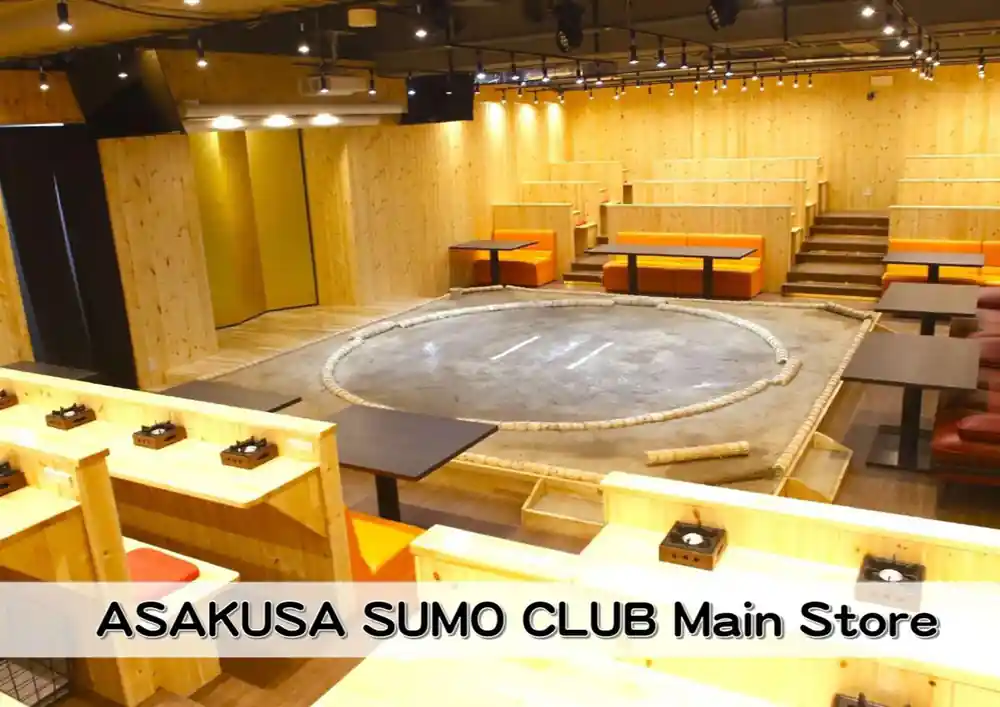
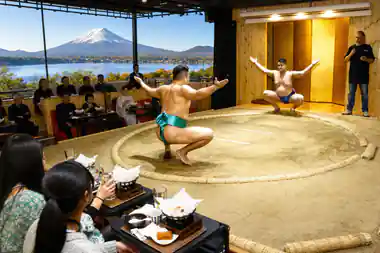
Tokyo offers two very different kinds of sumo evening. The first is the tournament arena, the Kokugikan National Sumo Arena in Ryogoku, Sumida City, Tokyo, which has a capacity of up to 10,000.[4] There, the seating rises in tiers around a sacred ring, the crowd knows the rituals, and the atmosphere is closer to a serious sporting occasion. The second is the smaller show venue, where the sand ring sits at floor level, the audience wraps around it, and you are near enough to hear the impact of a body landing. The arena is where the sport is played for keeps. The show venue is where you get close enough to feel it, and where the evening is built to entertain first.
Which one you visit depends mostly on your dates. Japan holds six Grand Sumo Tournaments each year, and the January tournament is the first of them.[5] If your trip does not line up with a tournament date, an evening show is the practical way to see sumo up close, and it fits easily into a day of sightseeing. Start times vary by date, so every listing asks you to check availability to see starting times, and the Sumo Entertainment Show with Chicken Hot Pot & Geisha works the same way.[1] Book the time that leaves your afternoon free, and plan dinner around the show rather than the other way round.
Floor seating or chairs: what to expect for your knees and back
Japanese-style seating often means a cushion on a raised floor platform rather than a chair, with shoes left at the edge of the room. You kneel, sit cross-legged or tuck your legs to one side, and an evening can pass very pleasantly that way, especially with a low table in front of you. It can also leave your knees stiff and your back sore, particularly if you are not used to sitting low for two hours. If you know a floor cushion will hurt, sort out a chair before you commit, and do not assume you can swap seats on the night.
The Sumo Entertainment Show with Chicken Hot Pot & Geisha runs for 2 hours and is listed as wheelchair accessible, with small group places available.[1] Two hours is long enough to want comfort and short enough that a cushion stays manageable for most people. Tell the operator what you need when you book: a chair with a back, room to stretch a leg, or an aisle seat so you can stand up quietly mid-show. If you are travelling with older parents, mention it. Seating staff see these requests all the time, and a clear note at booking is far easier than a fix on the night.
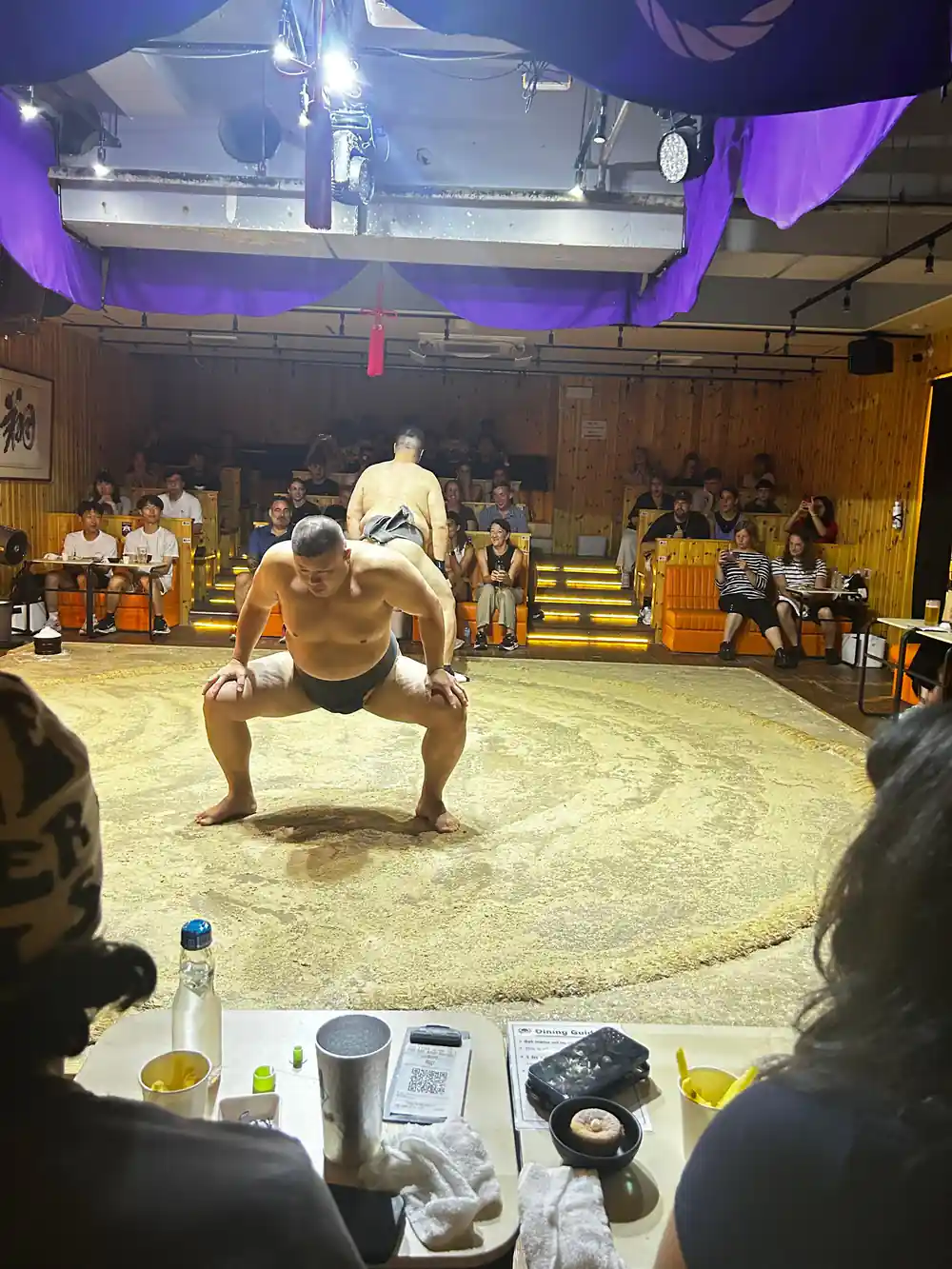
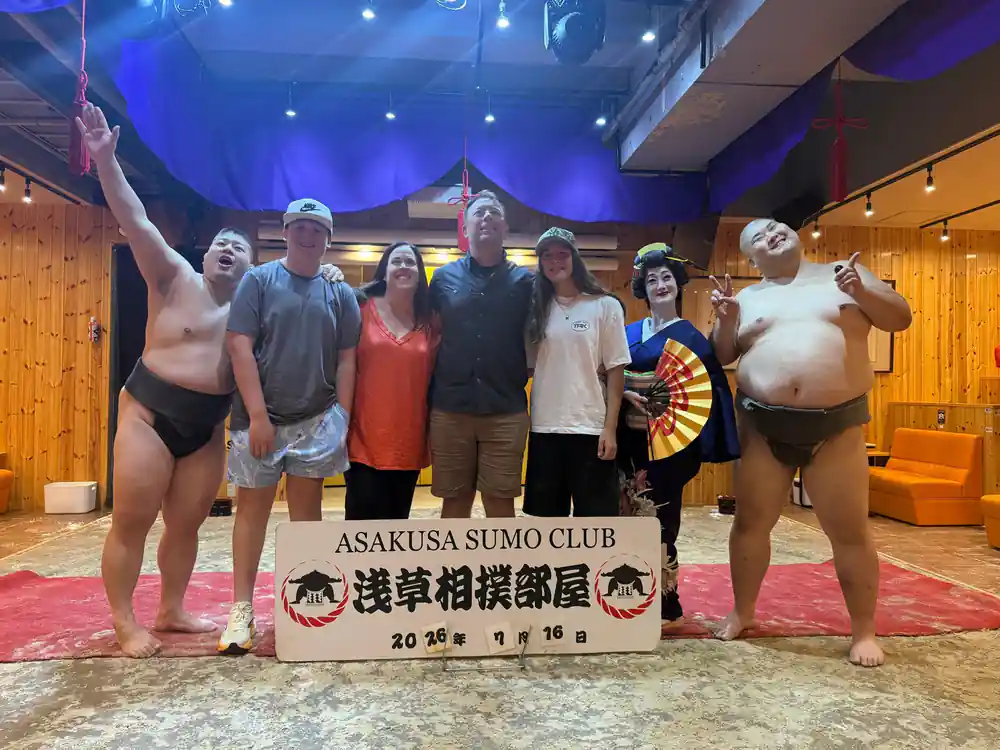
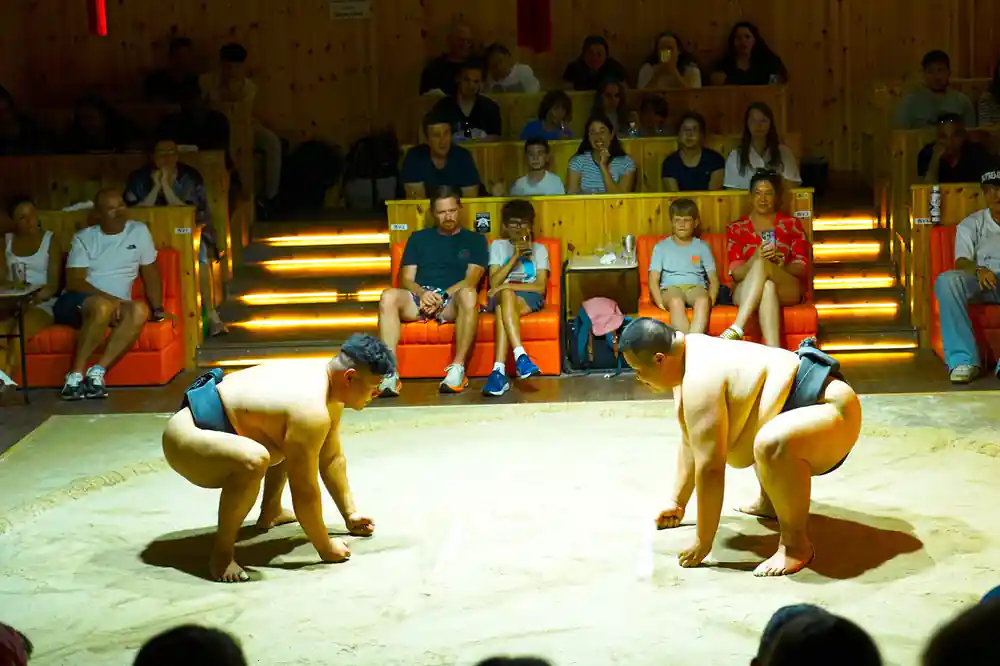
Two wrestlers lock up in the sand ring while the front rows watch from a few steps away.
Sightlines from standard seats and view of the ring
Sightlines at a sumo show are usually good, because the ring is small and the audience wraps around it. The action is fast and short: a contest usually lasts only a few seconds, though in rare cases it can take a minute or more.[6] Blink at the wrong moment and you miss the finish, so sit as close as you comfortably can and keep your camera down for the opening seconds of each bout. Watch the feet and the first push rather than the faces. If you are tall, an aisle seat at the side gives your legs somewhere to go and still keeps the ring in view.
Half the pleasure is the ceremony that comes before the wrestling. Each bout opens with the chiri-chozu, a low squat with both arms extended to the sides and palms turned upward, showing empty hands, followed by the salt throw.[7] From a standard seat you can follow the whole ritual: the stamping, the crouch, the long stare, then the sudden collision. A seat slightly to the side often gives a better view of the lean and the footwork than one directly in line with the ring, and the front rows are close enough that you may catch a little sand.
Wheelchair access and how to arrange it
The Sumo Entertainment Show with Chicken Hot Pot & Geisha, the tour booked from this site, is listed as wheelchair accessible.[1] Other Tokyo options carry the same label, including the Sumo Show & Dining Experience at a historic sumo house[2] and the Family Sumo Workshop & Live Wrestling Show with Lunch.[8] That means access need not decide which show you see, so choose on food, timing and the atmosphere you want instead. If you use a wheelchair, travel with someone who does, or simply need to avoid steps, you have several evenings to pick from.
Arrange it early. Describe what you need in plain terms: step-free entry, a space for a wheelchair beside a companion, a chair rather than a cushion, or a seat near the exit. Ask where the accessible toilet is and whether it is on the same level as the seating, and ask how far it is from your seat. Confirm it in writing before you pay, and arrive a little before the doors so staff can settle you in without a rush. If your needs change, message again; booking messages are easy to update before the show.
from US$102
The Sumo Entertainment Show with Chicken Hot Pot & Geisha runs 2 hours, is wheelchair accessible and has small group places.[1]
Luggage, coats and personal belongings storage
Plan as if there will be nowhere to park a big bag. Seating is close, space is tight, and a large backpack beside you will annoy your neighbours more than you expect. Bring one small bag that sits on your lap or under your cushion, and leave the suitcase at your hotel. If you are checking out that day, ask the hotel to hold your luggage while you are out and collect it after the show, or plan your day so the bag never comes with you in the first place. A folded tote in your pocket is useful for souvenirs picked up along the way.
Ask the operator when you book whether there is anywhere to leave coats and bags at the venue, and where they will be kept during the show. Keep the valuables on you: phone, wallet, passport, camera. In low floor seating you may be sitting on a cushion with your shoes off, which makes a quick exit harder, so a small crossbody bag that leaves both hands free is the easiest thing to manage. Slip your shoes together under the edge of the platform where you can find them again in the dark. For coats, a packable jacket that folds into your bag beats a heavy one you have to hold.
Noise levels and atmosphere for sensitive guests
A sumo show is loud in bursts rather than constantly. There is an announcer, music between bouts, applause, laughter, and the sharp sound of two large bodies meeting. In between, the room can go quiet, and that is part of the drama: the crowd holds its breath through the crouch and the stare. If sudden noise bothers you or someone in your group, sit further back and away from the speakers, and pack earplugs. A seat against a wall is usually calmer than one in the middle of a row, and everyone benefits from a quiet minute to settle before the first bout.
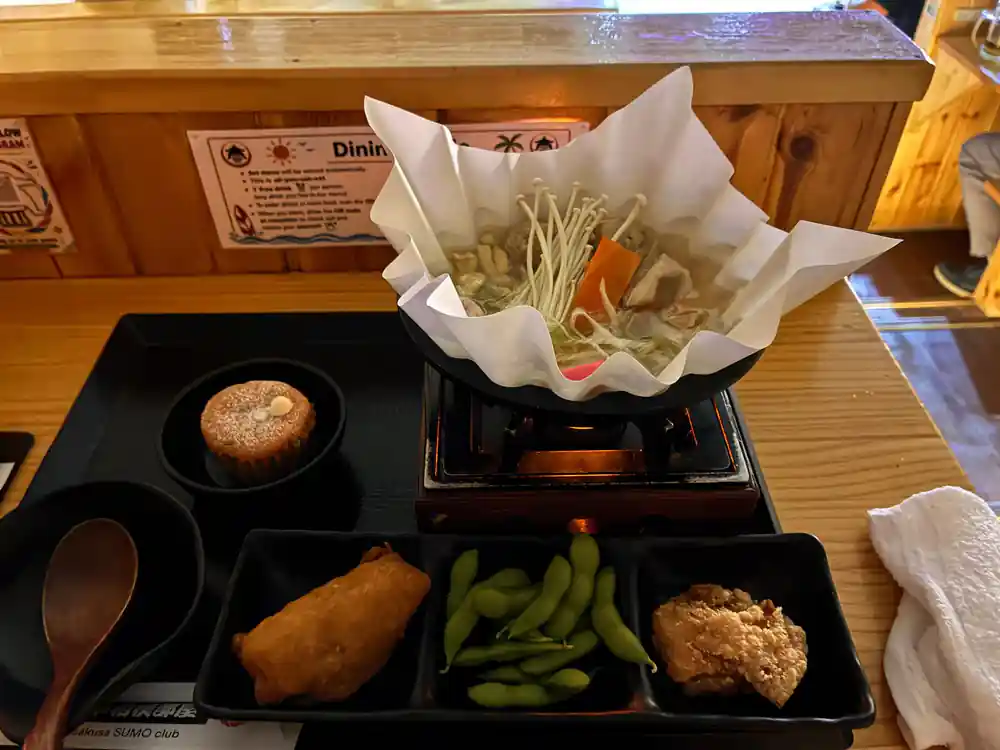
The room also smells of food, because chicken hot pot gives this show its name.[1] Steamy and savoury, which is welcome on a cold night and heavy if you are tired or prone to headaches. If strong cooking smells bother you, ask for a seat near the edge of the room and eat lightly beforehand. Travelling with a child who dislikes crowds or noise? Choose an aisle seat so you can step out for a minute without disturbing the show, and keep a drink and a snack within reach.
Facilities: toilets and baby-changing amenities
Toilets are the one facility worth checking before you book, especially with children or older parents in the group. Ask whether the toilets are on the same level as the seating and whether there is a step to negotiate on the way. In a compact show venue, a mid-performance trip means squeezing past other guests, so go before the start and again at any break in the running order. Knowing where the toilets are also helps if you need to leave quickly at the end. If you are unsure, ask for a seat on the aisle nearest the door.
Baby changing is not something to count on at a traditional sumo venue. If you are travelling with a baby, ask the operator directly whether there is a changing space, and if there is not, plan to change your baby before you arrive or somewhere nearby. Ask about pushchair storage as well, since floor seating leaves very little room, and check whether a pushchair can come into the room at all. A short, clear message when you book answers most of these questions and leaves you free to enjoy the evening.
From price of selected Tokyo sumo listings
What a night costs, from
From prices in US dollars.[1][2][3][9]
When to book your seat
Sort your seat and access
Pick your night
Decide between a tournament session and an evening show, and check start times before you book.
Say what you need
Tell the operator about wheelchairs, walking sticks, bad knees, babies, or a need for a chair rather than a floor cushion.
Confirm the seat type
Ask whether your seat is a cushion on the floor, a low chair or a standard chair, and how close it sits to the ring.
Plan your bag
Leave suitcases at the hotel and bring one small bag for phone, wallet, passport and camera.
Arrive unhurried
Turn up before the doors open, use the toilet first, and let staff settle you into your seat.
See the Tokyo sumo show with chicken hot pot and geisha
from US$102Reserve now & pay later