The essentials
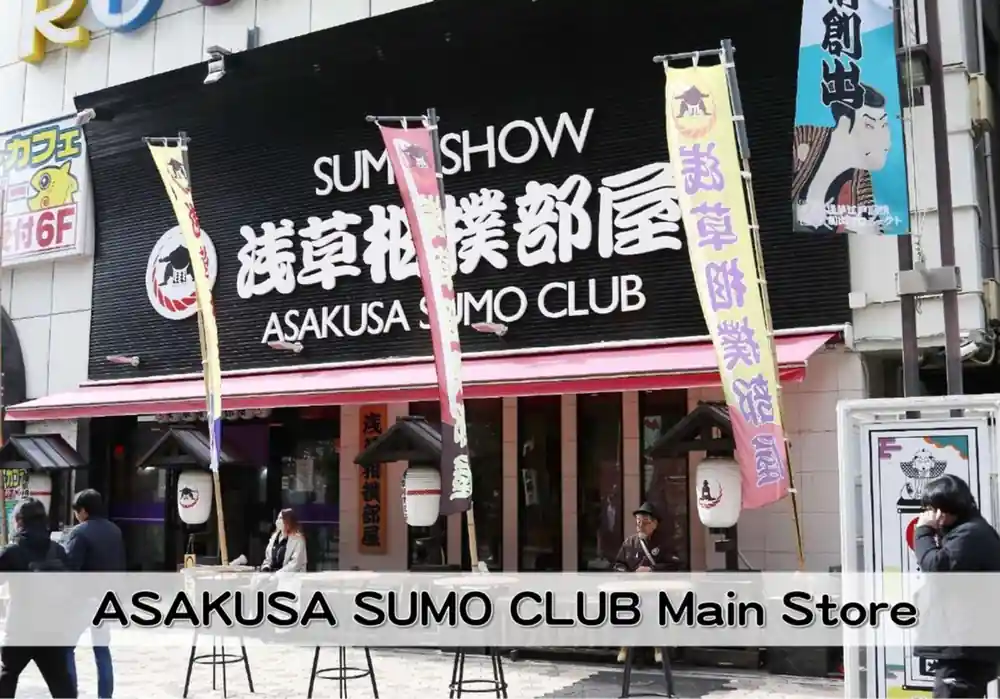
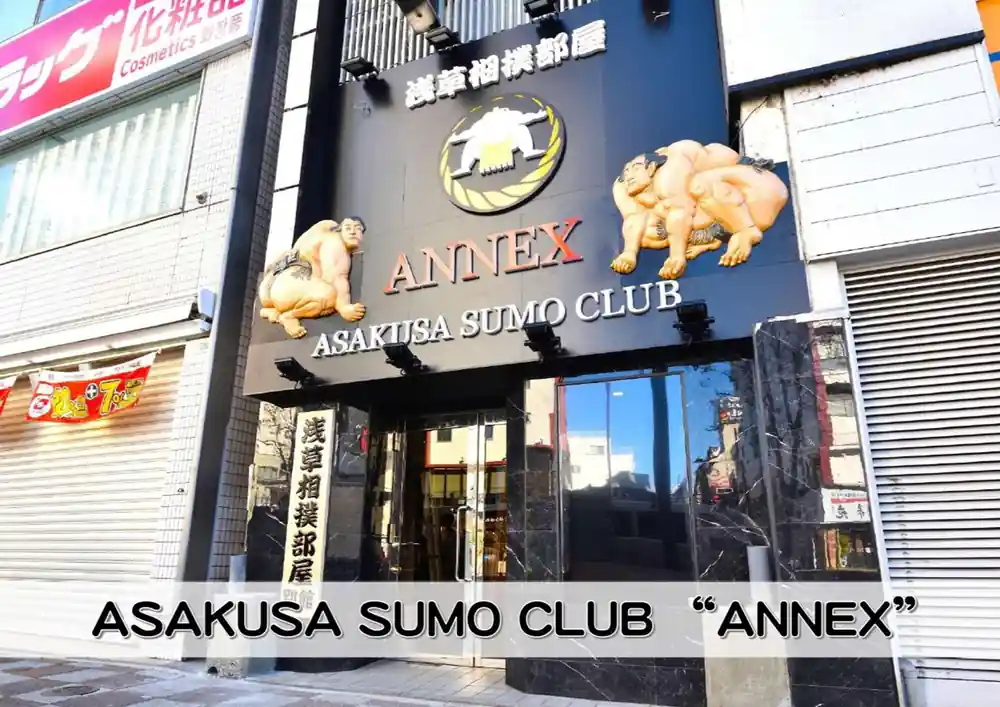
- The Asakusa Sumo Club sits in Asakusa, east Tokyo, a short walk from Senso-ji, with pink signage on the main venue and blue on the Annex.
- Asakusa Station covers the Ginza, Toei Asakusa and Tobu Skytree lines, with Tsukuba Express a little further west.
- The show runs 2 hours[1] and starting times appear when you check availability[1].
- Asakusa lanes are narrow, so come by train; taxis can drop you near Kaminarimon and station lockers take the big bags.
- The tour booked from this site is from US$102[1], wheelchair accessible[1] and rated 4.79 from 8,004 reviews[1].
- Top choice Sumo Show & Chicken Hot Pot from US$102 Duration2 hours[1]Rating4.79 from 8,004 reviews[1]BookingReserve now & pay later[1]CancellationFree cancellation up to 24 hours[1] Check availability
- Sumo Show & Dining from US$89 Duration1.5 - 2 hours[2]Rating4.80 from 3,454 reviews[2]BookingReserve now & pay later[2]CancellationFree cancellation up to 24 hours[2] See this tour
- Shinjuku Sumo Show & Photo from US$65 Duration1.5 hours[3]Rating4.84 from 7,180 reviews[3]BookingReserve now & pay later[3]CancellationFree cancellation up to 24 hours[3] See this tour
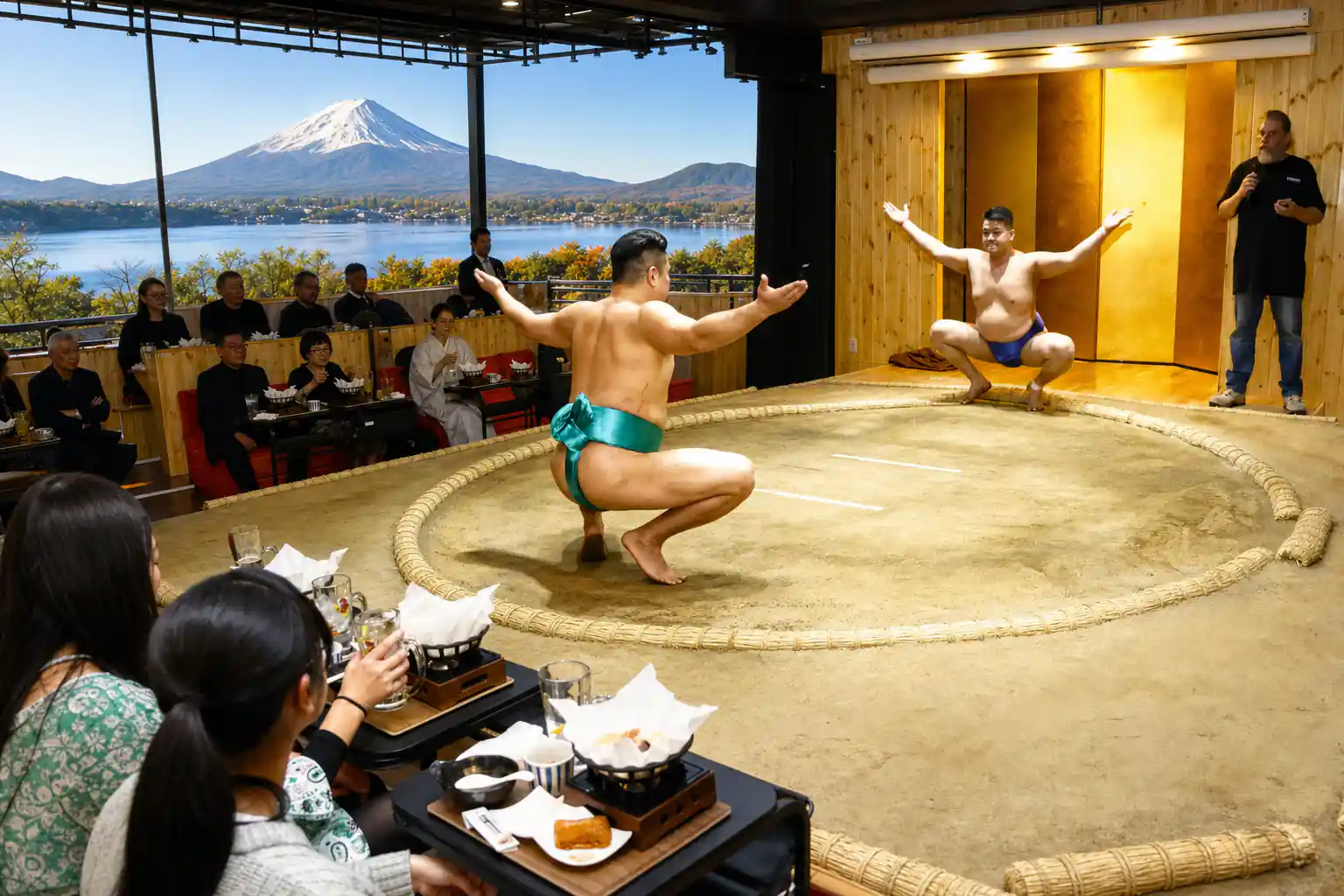
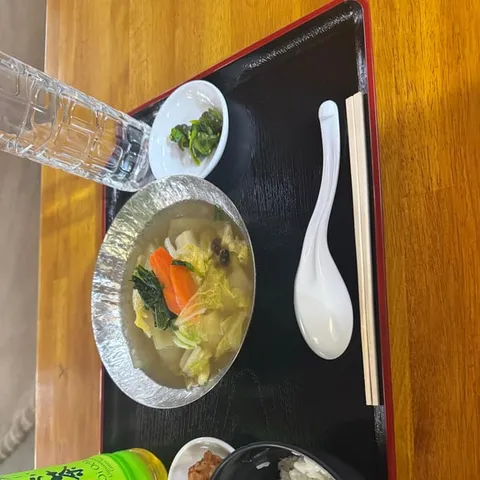
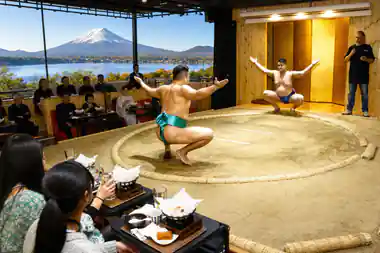
squatting low, extending both arms to the sides with palms turned upward, demonstrating to the gods and his opponent alike that his hands hold no weapons. He throws salt.
Getting to the Asakusa sumo venue: the verdict
Getting to Asakusa
- Asakusa Station is served by the Ginza, Toei Asakusa and Tobu Skytree lines
- Leave slack for the last stretch on foot through the temple streets
- Keep your booking details handy to tell the main venue from the Annex
- Wheelchair accessible[1]
Sumo Wrestling Tokyo Address: The Asakusa Venue
Asakusa sits in the north east of central Tokyo, on the west bank of the Sumida River, and it is one of the few districts where the older city still feels close to the surface. The Sumo Club here puts you a short walk from Senso-ji temple and its Kaminarimon gate, with Tokyo Skytree rising on the far bank and the temple's shopping streets running between you and the ring. It is a district of low buildings, paper lanterns and narrow lanes, so everything stays on a human scale.
Because the venue sits inside a built-up neighbourhood rather than a stadium complex, the entrance is what you look for, not a gate number. The main club frontage carries pink signage and the Annex nearby is marked in blue. Your booking details give the exact meeting point, and the signs do the rest once you are standing on the right block. Signage sits at street level, so scan along the shopfronts rather than up at the buildings.
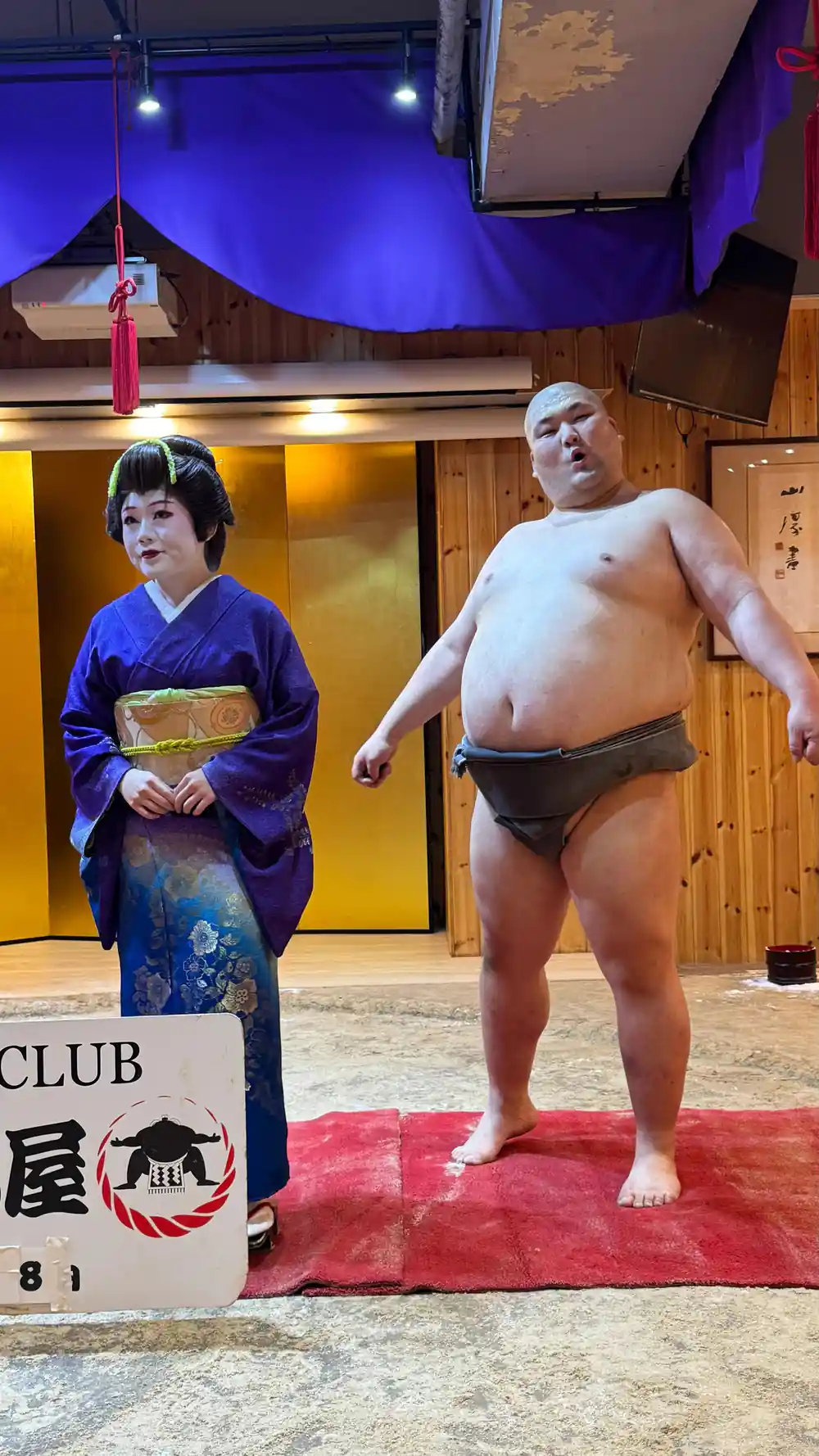
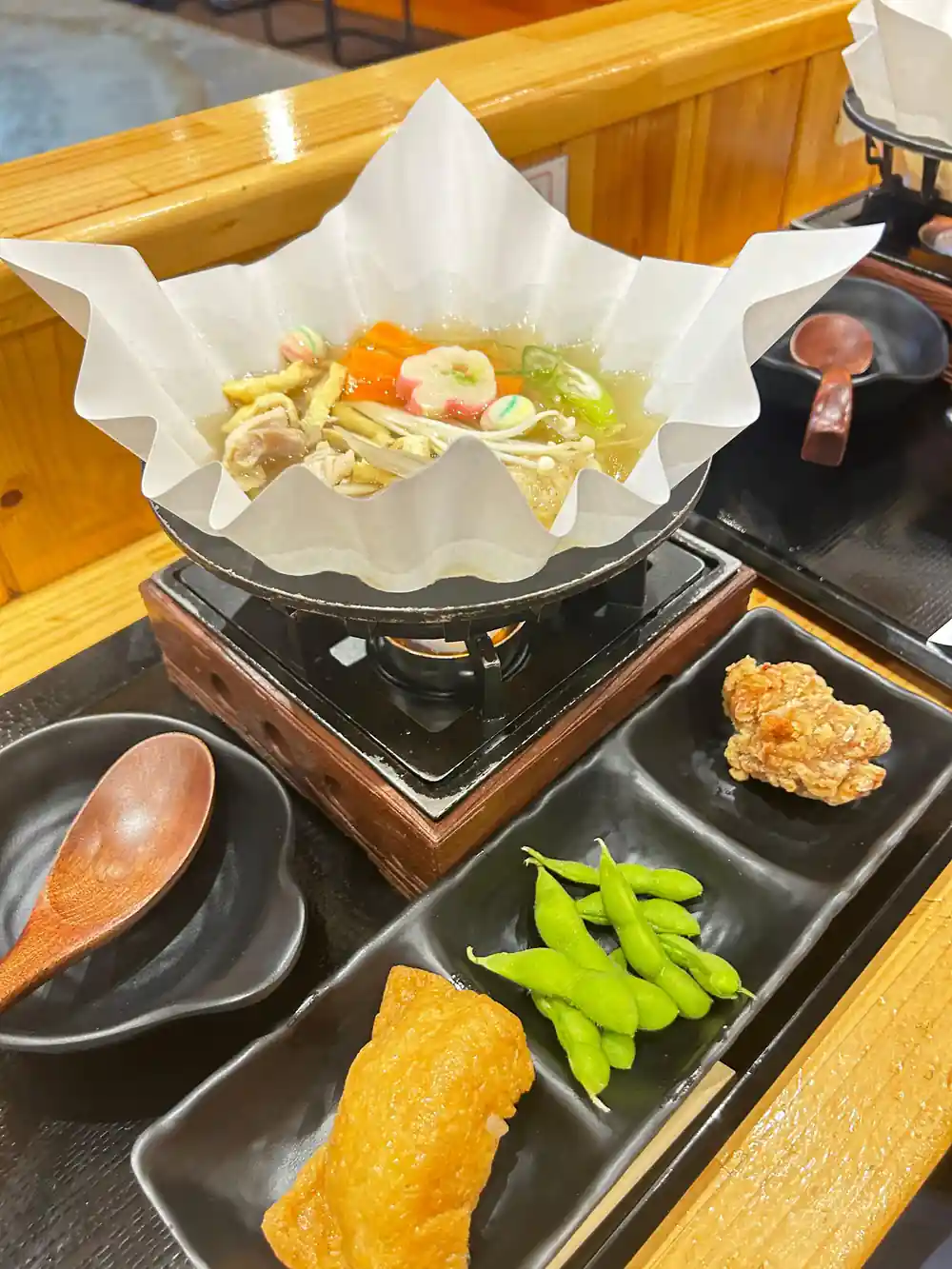
The Sumo Entertainment Show with Chicken Hot Pot and Geisha runs 2 hours[1] at this address, and it fits easily into an Asakusa afternoon or evening. It is from US$102[1], it is wheelchair accessible[1], and a small group is available[1]. Professional sumo took shape in the Edo period, when matches were staged to raise money for shrines, temples and bridges[4].
Nearest Train Stations to the Asakusa Sumo Club
Asakusa Station is the hub you want, and it is shared by several operators. The Tokyo Metro Ginza Line, the Toei Asakusa Line and the Tobu Skytree Line all stop there, so you can arrive from Ueno, Shibuya, Nihombashi or Oshiage with few changes. The lines are colour coded, the exits are numbered, and the signs point toward Kaminarimon and Senso-ji. Announcements are usually made in English as well as Japanese, and station staff will point you to the right exit if you ask.
Tsukuba Express Asakusa Station is a separate building a little further west, and it is handy if you are coming from Akihabara or from the north. From either station the venue is a walk through the streets around the temple, past shops selling senbei, knives and souvenirs. The area is flat, so the walk stays easy even with a day bag.
If you would rather not navigate, a taxi from central Tokyo drops you near the temple, and the river buses along the Sumida stop within the district too. Whichever way you come, keep your booking details handy and check whether your show is in the main venue or the Annex before you start walking. Allow a little extra time at weekends, when the temple approach is at its busiest.
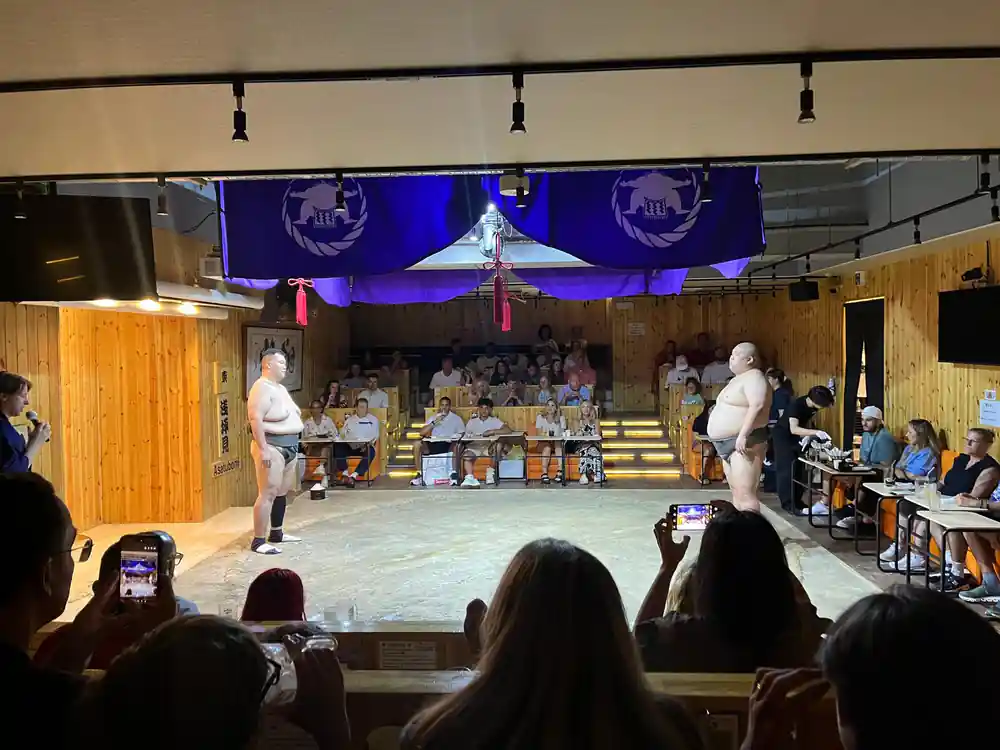
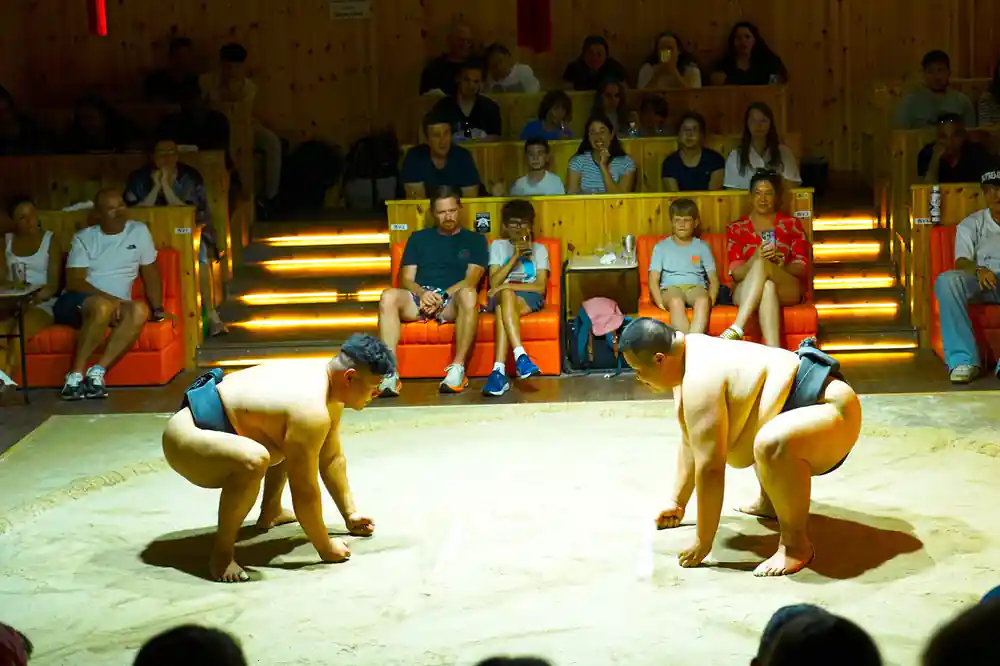
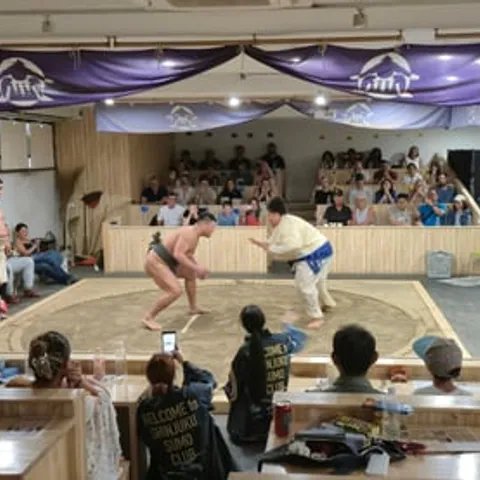
Wrestlers take the sand ring at the Asakusa Sumo Club while the audience watches from ringside.
Walking from Asakusa Station to the Venue
The walk is flat and short, and it runs through the busiest part of the district. Head for Kaminarimon, the big red gate with the lantern, then let the crowds carry you toward the temple and turn off the main approach into the smaller streets where the club sits. There is no need for a taxi over this distance.
Pavements in Asakusa are narrow and shared with bicycles, delivery carts and plenty of other visitors, so a small bag beats a large suitcase. Wear shoes that cope with cobbles and the odd stretch of uneven paving, and leave the airport suitcase behind before you set out for the evening. Convenience stores and cafes line the route if you want a drink before the show.
After dark the district quietens once the shops close, and the venue signage stands out more clearly against the shutters. If you are walking in the evening, keep the map open and look for the storefront itself rather than a number on a wall. Asakusa addresses can be hard to follow at street level, and the main approach is well lit, so the side streets are quiet rather than daunting.
Main Venue versus the Annex Location
The club operates across two frontages: the main venue with its pink sign and the Annex with its blue sign. They are close to each other, but they are not the same room, so it is worth knowing which one your show uses before you set off. A wrong turn costs you a detour when you are watching the clock. Save the venue details offline so you can check them without signal.
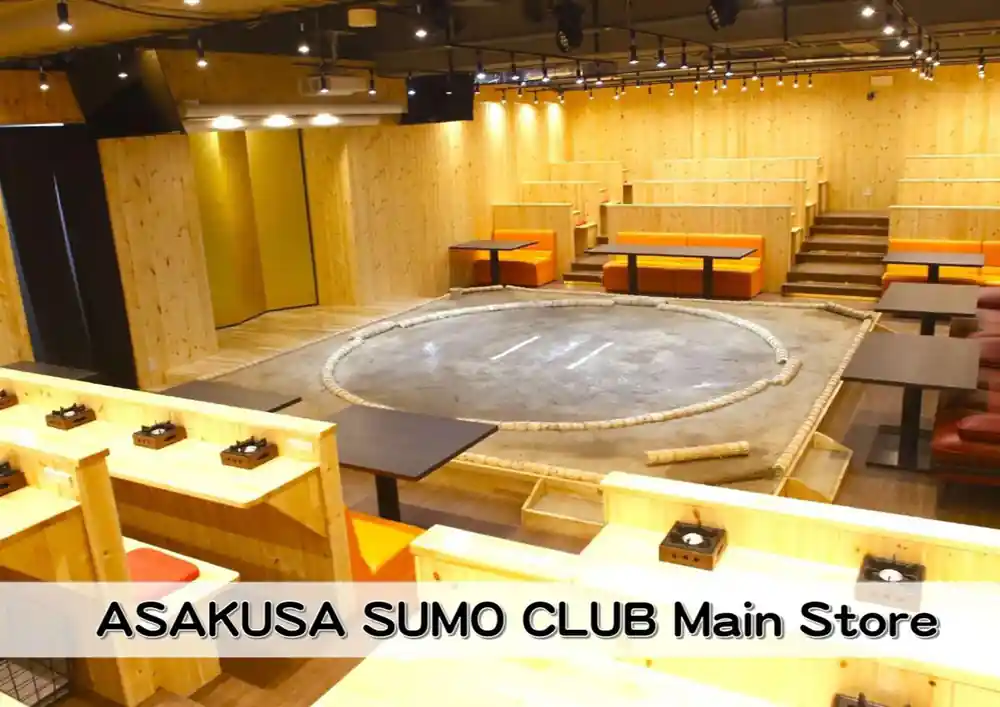
The main venue is the one most people picture, a purpose-built room with a sand ring and seating that wraps around it. The Annex is the smaller sibling, used for some sessions and extra capacity. Both sit in the same tangle of Asakusa streets, and the walk between the two is short enough to fix a mistake calmly.
For scale, sumo's home arena is the Kokugikan National Sumo Arena in Ryogoku, Sumida City, Tokyo, with a capacity of up to 10,000[5], and Japan holds six Grand Sumo Tournaments each year, with the January tournament being the first of them[6]. The Asakusa rooms are a different experience: a small group, a clay ring at eye level and a hot pot on the table.
from US$102
Sumo Entertainment Show with Chicken Hot Pot and Geisha runs 2 hours and is wheelchair accessible, rated 4.79 from 8,004 reviews.[1]
How Early Should You Arrive Before the Show
Starting times appear when you check availability[1], so fix the address first and work back from the slot you choose. Aim to be in the district with time in hand for the last stretch on foot, for reading the signs at the two frontages and for finding your seat without shuffling past other guests. Asakusa is full of distractions, so treat the walk as part of the timetable.
If you are pairing the show with a morning at a sumo stable, plan the stable first. Morning practice typically begins between 5:00 and 7:30 AM and lasts 2 to 4 hours, though the exact start time varies by stable and season[7]. A later show then fits neatly after a rest and a meal.
Arriving with slack also lets you watch the ring being swept and the seats filling, which is a pleasure in itself. It matters more than it sounds: a contest usually lasts only a few seconds, but in rare cases it can take a minute or more[8], so the build-up is a large part of what you came for. The quiet minutes before the wrestling begins are also the easiest time to take in the room.
Parking, Taxi Drop-Off and Luggage Storage
Asakusa was laid out for carts and pedestrians rather than cars, and parking around the temple is scarce. Unless you have a particular reason to drive, the train is the smoother option, and drivers often leave the car further out and walk the last stretch. Buses also run through the district, with stops close to the temple gates.
Taxis can set you down near Kaminarimon or on one of the wider roads that skirt the district, which keeps the final walk short. Station lockers and hotel left luggage are the usual answer for big bags, so carry your valuables with you and travel light on show day. Booking a taxi in advance helps the driver find the drop-off point in the lanes.
Inside, floor space is tight, and that is part of the charm. Keep bags small and close to your feet, and think twice about a hard-shell suitcase in a room where people sit around a clay ring. The food is part of the draw, too: a rikishi's daily intake ranges from about 5,000 to 8,000 kcal, and can sometimes exceed 10,000[9].
What Happens If You Arrive Late
Shows run to a timetable and the room is small, so a late entrance is noticed. If you are running behind, message the operator through your booking and walk in quietly when you arrive. Staff are used to helping visitors find a place without disturbing the performance.
There is good news on flexibility. Free cancellation up to 24 hours in advance for a full refund[1] covers a change of plan inside that window, and you can reserve now and pay later[1]. If you do miss a show, a later session on another day is often the simplest fix.
Once you are seated, the format rewards patience. The pre-bout ritual comes first: a wrestler performs chiri-chozu by squatting low with both arms extended to the sides and palms turned upward, showing the gods and his opponent that his hands hold no weapons, and then throws salt[10]. After that, everything happens quickly, and the compact room keeps you close to the ring even if you slip in after everyone else.
A rikishi's daily calorie intake
Daily intake of a sumo wrestler, as stated in[9].
Tokyo sumo experiences: from prices per person
From prices for the listings[1],[2],[3] and[11].
When to book and when to cancel
Getting to the venue
Ride to Asakusa Station
The Ginza, Toei Asakusa and Tobu Skytree lines all stop here, and Tsukuba Express is a short walk west.
Follow the pink or blue sign
The main club frontage is pink and the Annex is blue. Both sit in the lanes around Senso-ji, close to each other.
Stash the big bag
Station lockers beat hauling a suitcase through narrow lanes, and the rooms themselves have limited floor space.
Arrive with time in hand
The show runs 2 hours[1] and starting times appear when you check availability[1].
Settle in before the first bout
Watch the pre-bout ritual, the salt throw and the crouch, before the first clash of the session.
Book the Tokyo sumo entertainment show with hot pot and geisha
from US$102Reserve now & pay later