The essentials
- Recruits live, eat and sleep in the stable. Morning practice typically begins between 5:00 and 7:30 AM and lasts 2 to 4 hours.[1]
- Wrestlers are sorted into six divisions covering ten ranks in total, and only the top division, Makuuchi, is subdivided further, into five separate ranks.[2]
- A rikishi's daily caloric intake ranges from approximately 5,000 to 8,000 kcal, and can sometimes exceed 10,000.[3]
- Morning practice viewings start from US$102, and a Tokyo sumo entertainment show with chicken hot pot and geisha starts from US$102.[4][5]
- Japan holds six Grand Sumo Tournaments each year, with the January tournament being the first of them.[6]
- Top choice Sumo Show with Geisha from US$102 Duration2 hours[5]Rating4.79 from 8,004 reviews[5]PaymentReserve now & pay later[5]CancellationFree cancellation: 24 hours in advance[5] Check availability
- Morning Practice Viewing from US$102 Duration1.5 - 2 hours[4]Rating4.78 from 720 reviews[4]PaymentReserve now & pay later[4]CancellationFree cancellation: 24 hours in advance[4] See this tour
- Sumo Show & Dining from US$89 Duration1.5 - 2 hours[7]Rating4.80 from 3,454 reviews[7]PaymentReserve now & pay later[7]CancellationFree cancellation: 24 hours in advance[7] See this tour
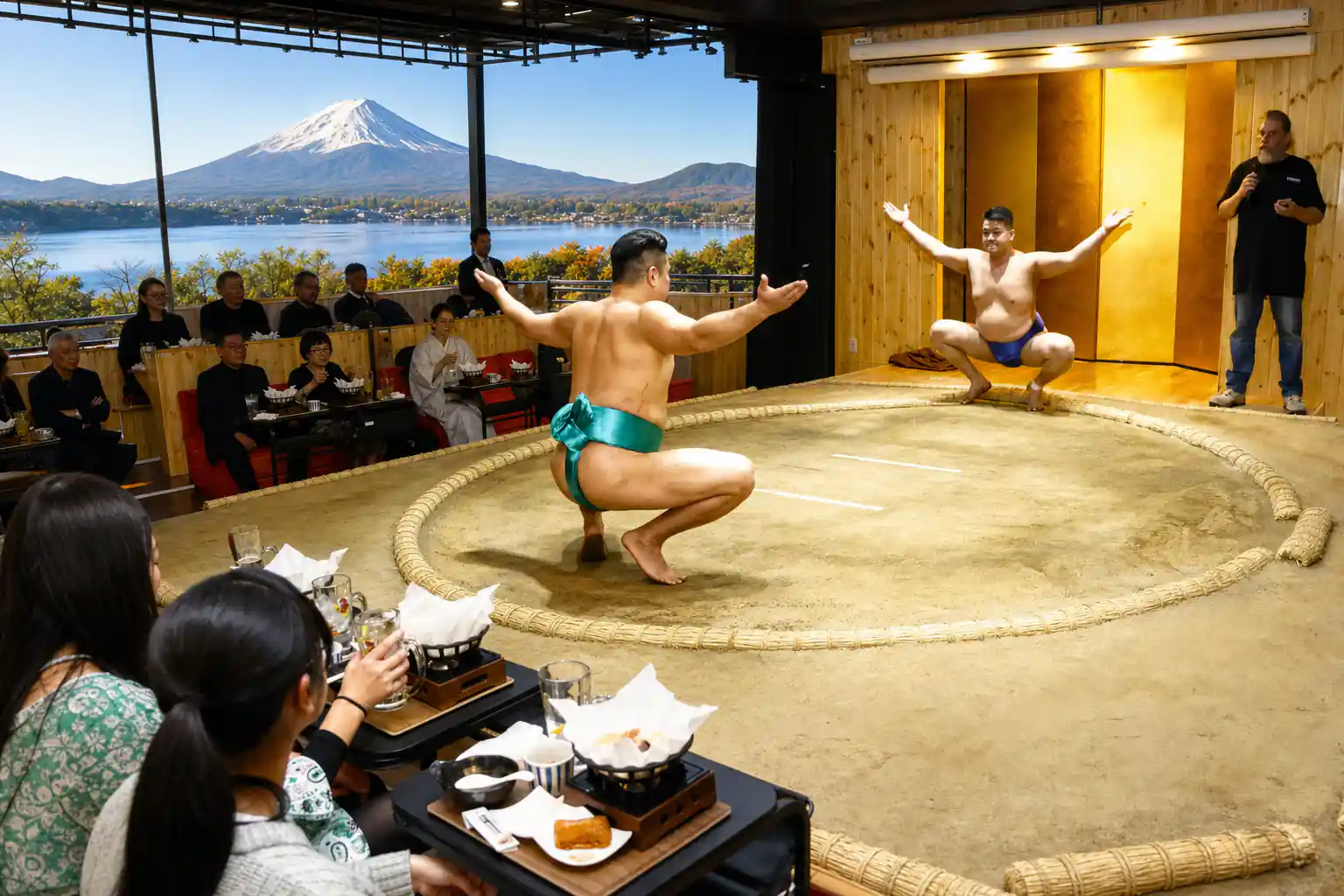
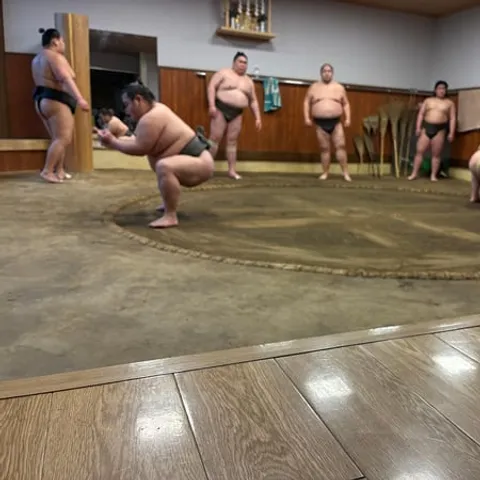
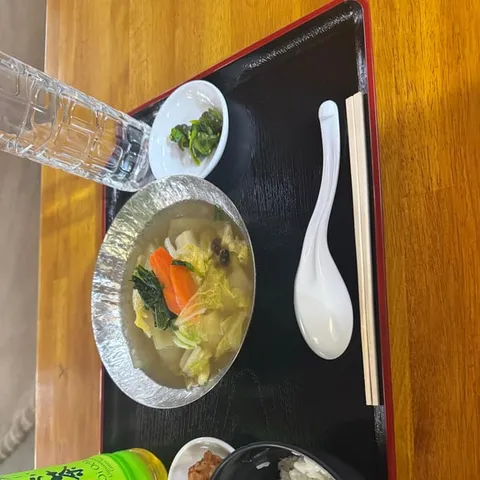
Morning practice typically begins between 5:00-7:30 AM and continues for 2-4 hours . The exact start time varies by stable and season.
Is the Tokyo sumo entertainment show the right choice?
Booking notes
- Book your date early and check the meeting point on your confirmation.
- Check wheelchair access and step-free routes before you book.
- Morning practice means an early start, so plan a light dinner the night before.
- Budget for snacks, drinks and souvenirs at the venue.
On the day
- Small groups fill quickly, so arrive a few minutes early to settle in.
- Indoor venues are warm, so wear layers you can take off.
- Pair a morning visit with an afternoon around Ryogoku or Asakusa.
- Stay in your seat during bouts and keep the aisles clear.
Entering a Sumo Stable
Most wrestlers join a stable in their teens, often straight from school, and move into a shared dormitory built around the training ring. A Tokyo sumo room is not a private bedroom but a communal space where futons are rolled out at night and stacked away by day, with the newest recruits sleeping nearest the door. Cooking, cleaning, laundry and the walk to the bathhouse all happen inside the same building, and the day is mapped out for you from the first morning.
Professional sumo took its present form in the Edo period, between 1603 and 1867, when matches were held to raise money to construct shrines and temples or to replace bridges, and professional sumo wrestlers were born from that.[8] The structure they joined has barely changed in outline. The association sorts its wrestlers into six divisions covering ten ranks in total, and only the top division, Makuuchi, is subdivided further, into five separate ranks.[2]
Reaching the very top is rare. As of November 2025, exactly 75 wrestlers have attained yokozuna status in sumo history.[9] Below that summit sit men who will never fight on a tournament's final day, and the stable expects each of them to train as though they might.
The Pre-Dawn Training Routine
Training starts long before the city wakes. Morning sumo practice typically begins between 5:00 and 7:30 AM and continues for 2 to 4 hours, and the exact start time varies by stable and season.[1] The lowest-ranked wrestlers arrive first to sweep the ring, heat the bath and warm up. Senior men appear later, and the hardest bouts are saved for the end, when juniors are expected to keep charging into their elders until they can barely stand.
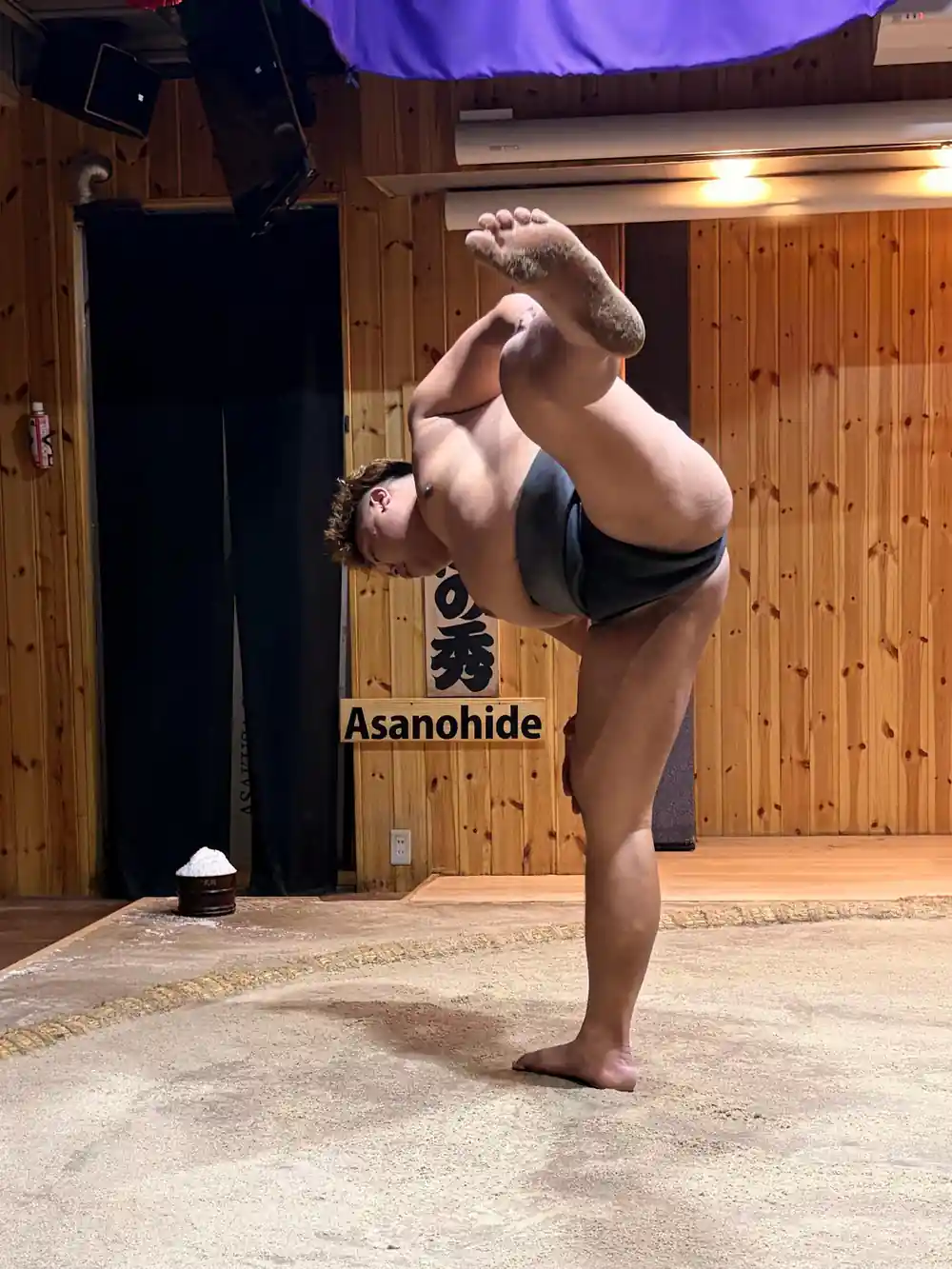
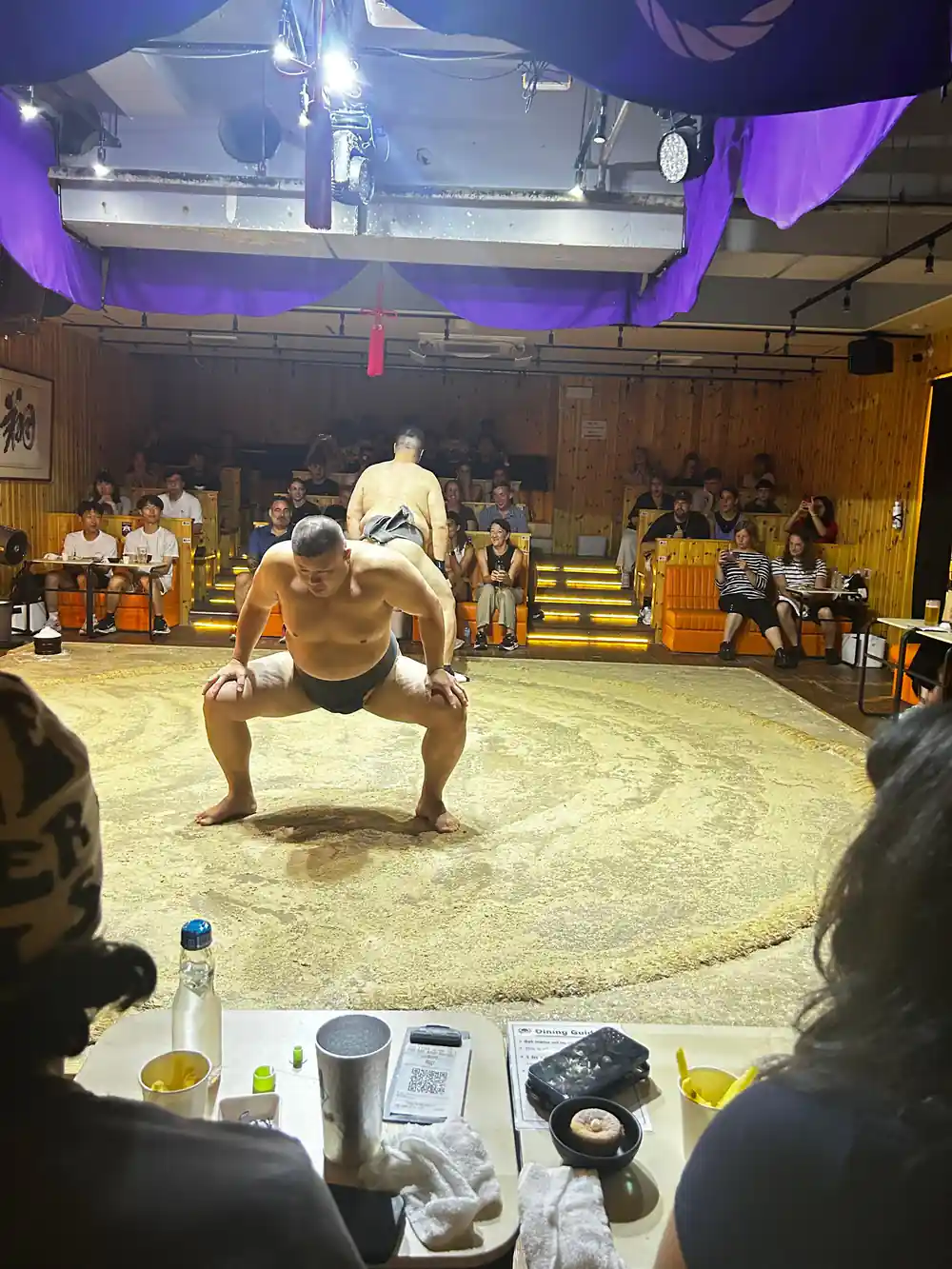
The work is repetitive by design. Wrestlers stamp and slide through shiko, strike the wooden post in teppo drills, and take turns absorbing butsukari, the exercise in which one man drives another across the ring. Sparring can run well past the point of exhaustion. All of it funnels into a contest that usually lasts only a few seconds, though in rare cases it can take a minute or more.[10]
Watching a morning session is quiet, focused and, for many travellers, more compelling than a staged show. Phones go away, voices drop, and very little is said out loud.
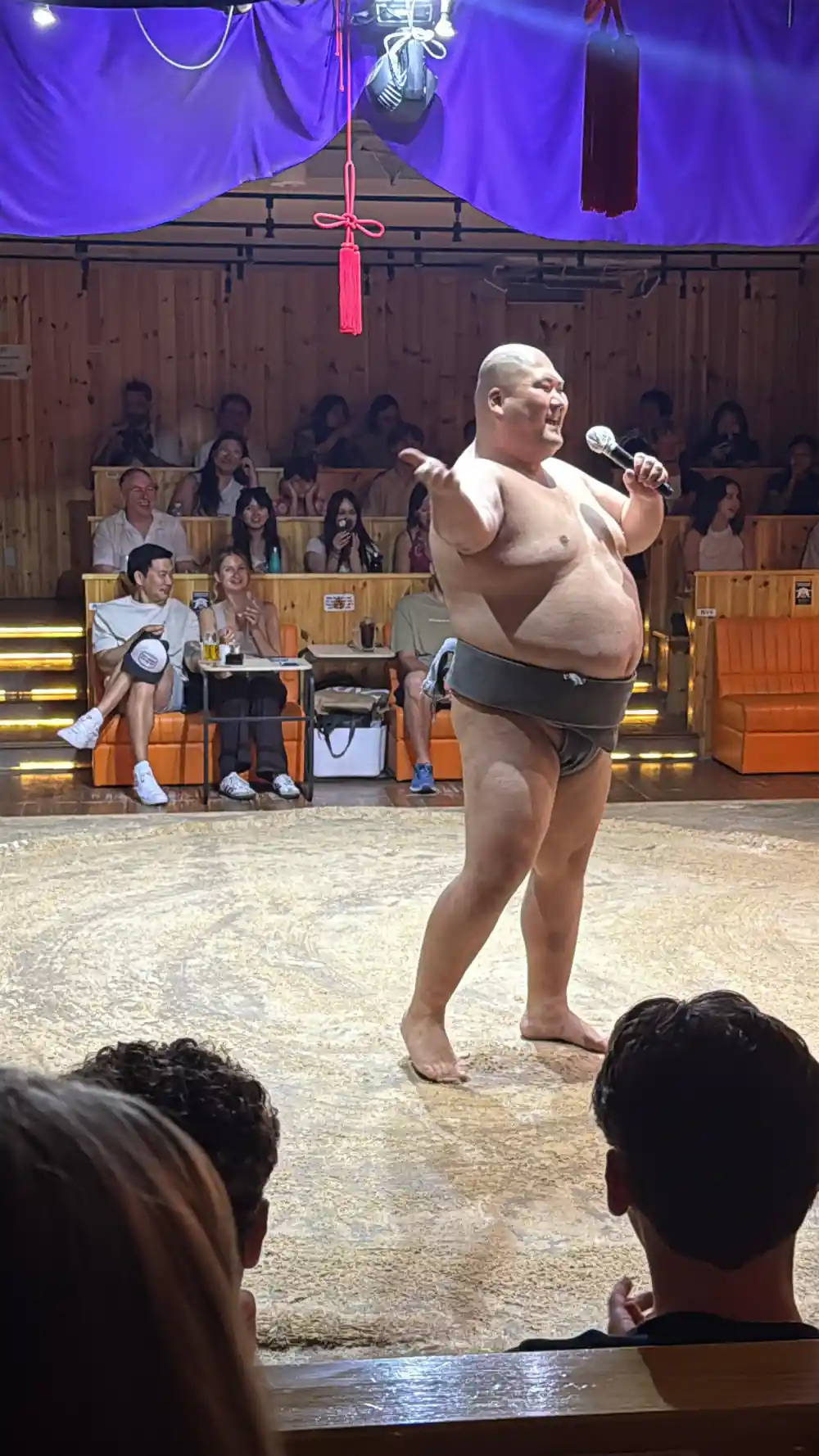
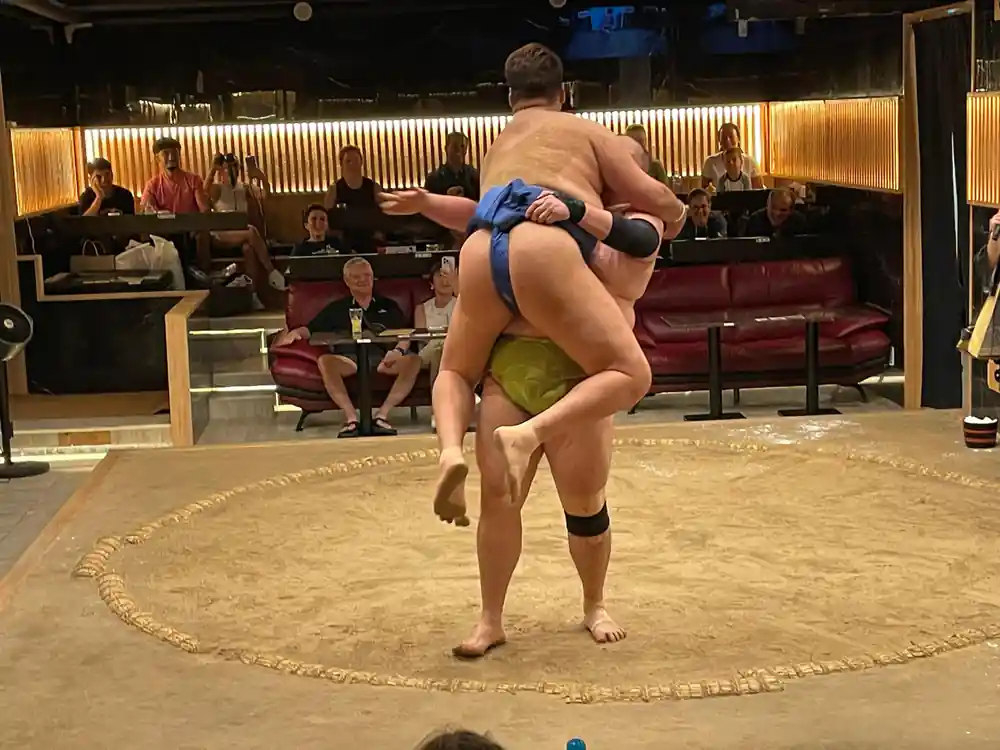
Wrestlers take the ring while the audience watches from floor level.
Building Weight Through Chanko and Rest
The other half of the job is eating. A rikishi's daily caloric intake ranges from approximately 5,000 to 8,000 kcal, and can sometimes exceed 10,000.[3] The main meal is chanko-nabe, a stew of chicken, vegetables, tofu and stock, cooked in a huge pot by the lowest-ranked men and eaten in relays. The routine is to eat hard and then sleep straight afterwards, and the weight follows.
The results are visible in the ring. According to research by the Keio University Sports Medicine Research Center, the average weight of 25 makuuchi wrestlers was 161.2 kg (about 355 lbs), with an average height of 186.3 cm.[11] That mass is carried on legs built by thousands of squats, and it is used as much for leverage and balance as for pushing.
Chanko is also the part of stable life that visitors can taste. The same dish appears on the menu at Tokyo sumo shows, so a hot pot dinner is an easy introduction to the sport's daily habits.
The Rigid Hierarchy of Daily Life
Rank decides almost everything: who eats first, who sits where, who carries the bags and who bathes first. The newest and lowest-ranked wrestlers do the chores and serve the senior men, and they are the ones sent into the ring when a senior needs a body to push against. Promotion comes from results, and a run of losing records can drop a wrestler down the rankings as quickly as a good run lifts him up.
The year is built around the basho. Japan holds six Grand Sumo Tournaments each year, with the January tournament being the first of them.[6] Between tournaments come regional exhibition tours and a short break, when some wrestlers manage a visit home. Otherwise the rhythm is fixed: train, eat, sleep, repeat, with the bath and the evening meal marking the end of the working day.
For spectators, the hierarchy shows in small things: the order of entry, the bow to the referee and the ring, and the stillness before the first charge.
from US$102
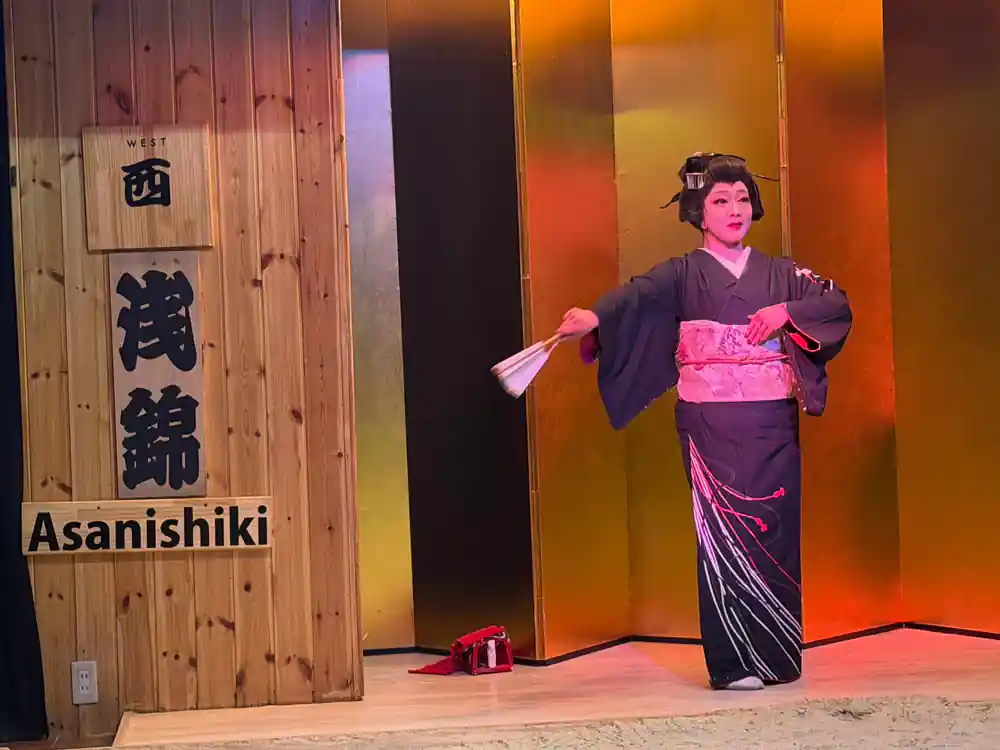
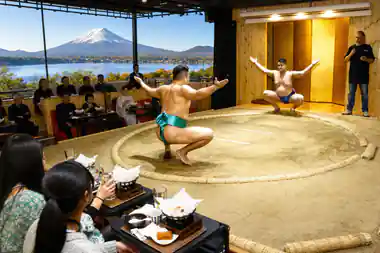
From US$102, the Tokyo sumo entertainment show with chicken hot pot and geisha runs 2 hours, with small group availability and wheelchair access.[5]
Injury and Early Retirement
Sumo is punishing on knees, ankles, shoulders and lower backs. Wrestlers carry heavy weight, fall from height and collide with men of similar mass, and they train through pain rather than sit out a tournament that matters. Careers are short, and a wrestler's body usually sets the date. A serious injury can end a career in a single afternoon.
When a wrestler decides to retire, the news travels through the stable rather than a press conference, and the departure is marked months later with a formal ceremony. Leaving the ring rarely means leaving the sport. Most men stay close to the stables, the association or the restaurants that feed the sumo world.
The unavoidable truth is that the body which makes a wrestler competitive is also the body that ends his career. The men who last longest tend to be the ones who learn to rest, treat injuries early and keep their weight in a range their joints can carry.
The Danpatsu-shiki Topknot Cutting Ceremony
The danpatsu-shiki is the send-off given to a retiring wrestler. He sits in the ring in his ceremonial apron while a long line of guests, former stablemates, sponsors, family and friends, step up one at a time and take a snip at his topknot with ceremonial scissors. The final cut goes to the person closest to him, and by the end the hair he has grown and oiled for years is gone.
Travellers occasionally get the chance to see one. A sumo retirement ceremony at Ryogoku Kokugikan on 2026 Oct 3rd is listed as a 4-hour event from US$135.[12] For most visitors, the practical choices are a morning practice viewing or an evening entertainment show, with the ceremony as a rare extra.
The ceremony is a reminder that sumo careers are measured in years rather than decades. Wrestlers who reach the top division may stay for a long stretch, and others cut their topknot while they are still young enough to start something else, often with the help of the stable that raised them.
Life After Sumo Wrestling
Few wrestlers walk away from the sport entirely. Some become stable masters or coaches, some stay on as referees, ushers or association staff, and some open chanko restaurants that keep the stable's name above the door. Others move into commentary, television or the restaurant trade. The sumo world is small, and the men who leave it are rarely far from it.
If you want to see any of this for yourself, Tokyo is a straightforward place to start. The Kokugikan National Sumo Arena, in Ryogoku in Sumida City, has a capacity of up to 10,000.[13] Seats on the second floor, B or C arena seats, cost between 3,500 and 5,500 yen.[14] Those tickets only exist during a tournament, so plan the rest of your sumo viewing around the calendar.
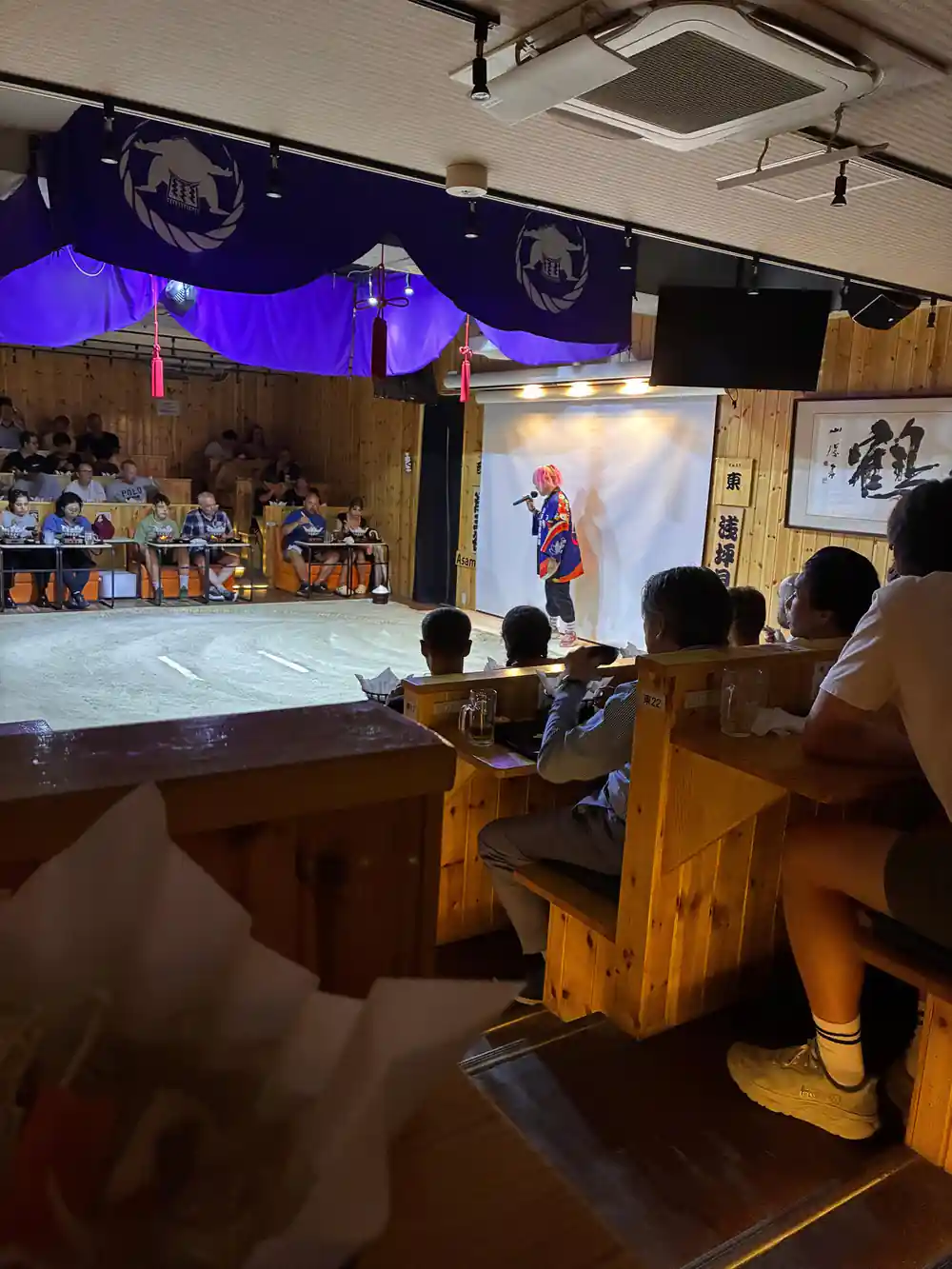
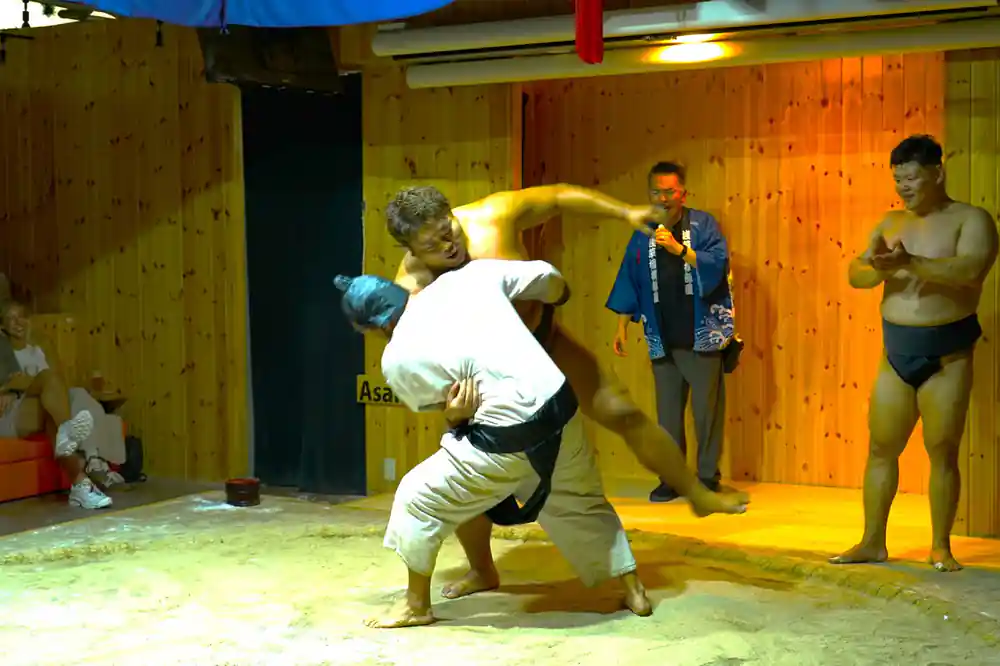
Outside the basho, a Tokyo sumo morning practice viewing tour starts from US$102.[4] An evening Tokyo sumo entertainment show with chicken hot pot and geisha also starts from US$102, and runs 2 hours.[5] Both put you in a room with people who have lived the routine described above.
How much a rikishi eats in a day
A rikishi's daily caloric intake ranges from approximately 5,000 to 8,000 kcal, and can sometimes exceed 10,000.[3]
What a sumo experience costs
From-prices per person in US dollars from GetYourGuide listings.[4][5][7]
When to book your sumo experience
How to plan a sumo trip
Choose show or practice
Evening shows are easy to fit into a city break. Morning practice means an early start and a quieter room.
Decide where
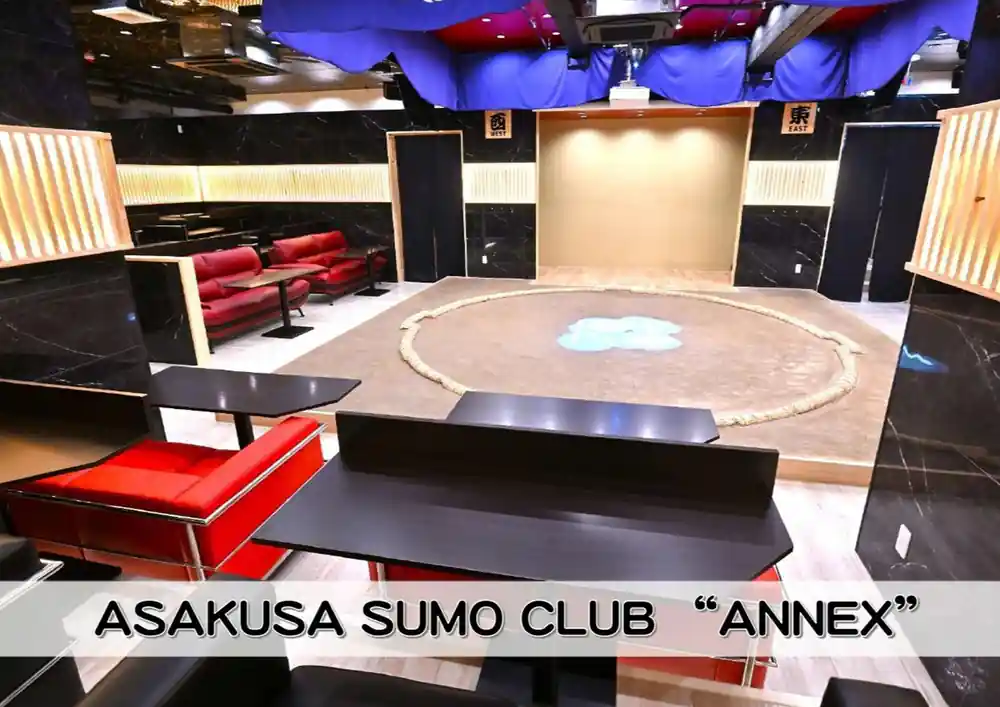
Ryogoku is the sumo district, but Tokyo shows also run in Asakusa and Shinjuku, so check the meeting point.
Book ahead
Once your dates are fixed, reserve a place. Many listings let you reserve now and pay later.
Eat before or after
Chanko-nabe is heavy. If you book a hot pot show, keep lunch light and skip the big afternoon snack.
Respect the ring
Sit where you are shown, keep phones low during bouts, and wait for an invitation before taking part.
Book the Tokyo sumo show with chicken hot pot and geisha
from US$102Reserve now & pay later