The essentials
- Professional sumo sorts its wrestlers into six divisions covering ten ranks in total, and the top division, Makuuchi, is divided into five separate ranks.[1]
- The ranking sheet is the spine of the sport: Japan holds six Grand Sumo Tournaments each year, with the January tournament the first of them.[2]
- Before a bout the wrestler performs chiri-chozu, showing that his hands hold no weapons, and then throws salt.[3]
- The oiled topknot sits at the crown of the head, tied from long hair, and it takes steady care with oil and a comb to keep its shape.
- The Tokyo: Sumo Entertainment Show with Chicken Hot Pot & Geisha runs 2 hours and is listed from US$102.[4]
- Top choice Sumo Entertainment Show from US$102 Duration2 hours[4]Rating4.79 from 8,004 reviews[4]GuideLive tour guide: English[4]CancellationFree cancellation up to 24 hours[4] Check availability
- Morning Practice Viewing from US$102 Duration1.5 - 2 hours[5]Rating4.78 from 720 reviews[5]GuideLive tour guide: English[5]CancellationFree cancellation up to 24 hours[5] See this tour
- Sumo Show & Dining from US$89 Duration1.5 - 2 hours[6]Rating4.80 from 3,454 reviews[6]GuideInstructor: English[6]CancellationFree cancellation up to 24 hours[6] See this tour
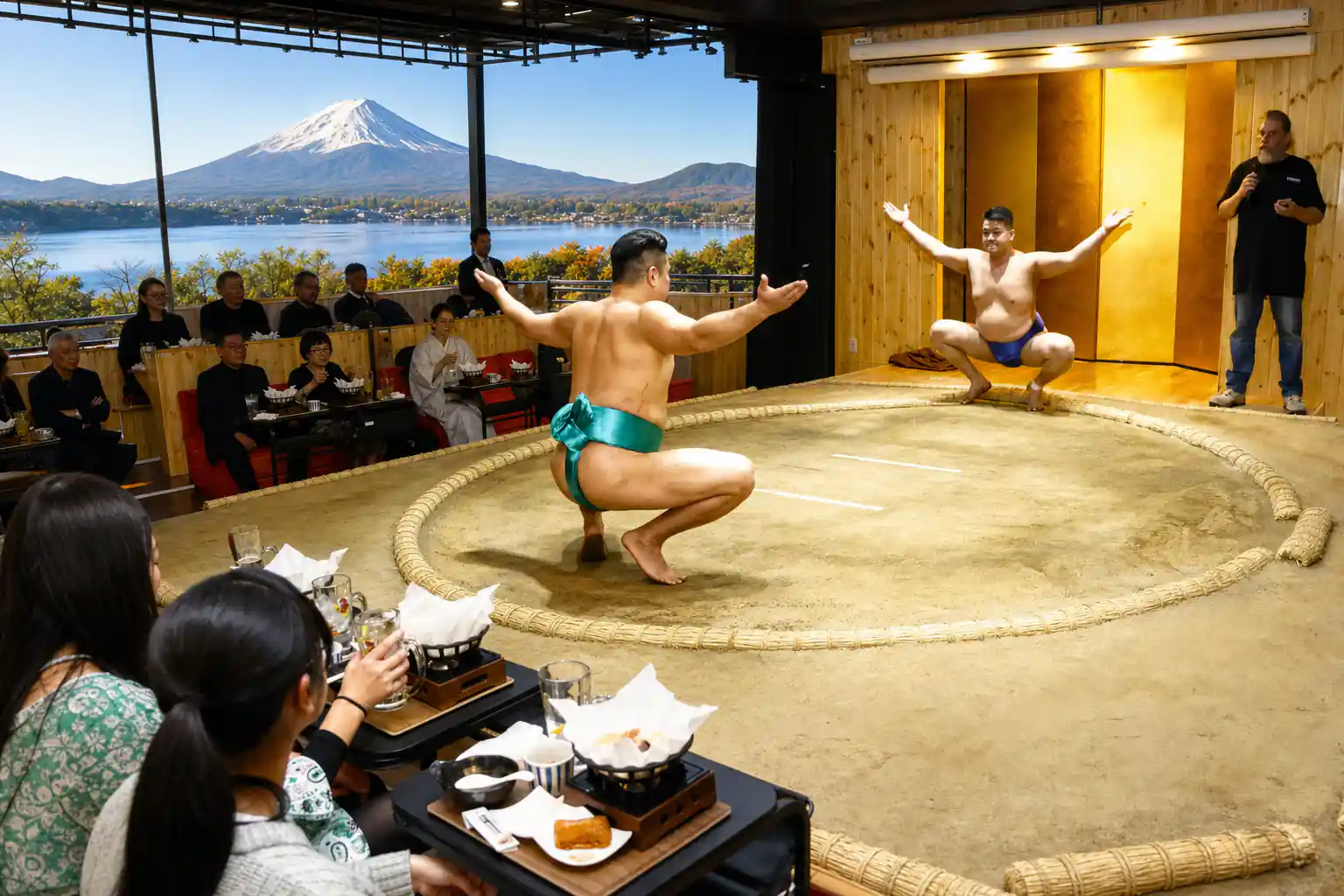
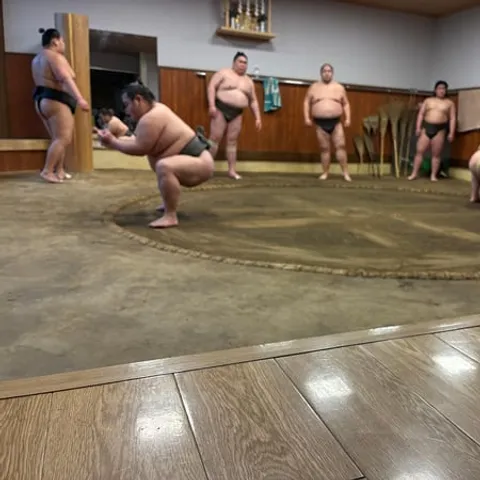
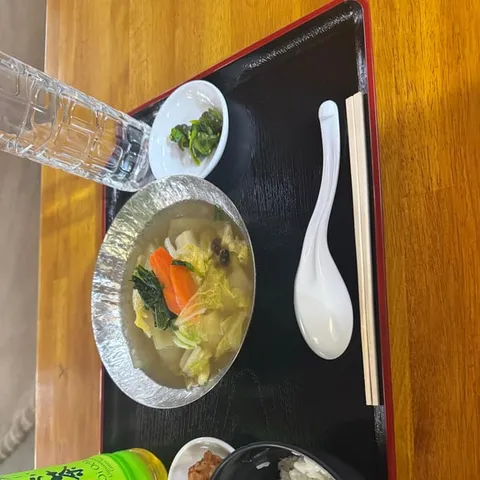
Held every January, this is the first of Japan's six annual Grand Sumo Tournaments
Worth planning your Tokyo days around
Booking notes
- Check the start time listed for your chosen date
- Small group options appear on several Tokyo shows
- Wheelchair access is listed for some of the venues
- Shows run to a set schedule rather than all day
On the day
- Keep your booking confirmation ready on your phone
- Arrive early enough to settle before the first bout
- Know the cancellation window before you commit
- Prices are listed in US dollars on GetYourGuide
The Six Divisions of Professional Sumo
Professional sumo sorts its wrestlers into six divisions covering ten ranks in total, and only the top division, Makuuchi, is subdivided further, into five separate ranks.[1] That ladder is the sport's whole geography. It shapes who a wrestler meets, where his name sits on the sheet and how the crowd reacts when he steps onto the clay. Nothing about it is fixed: a strong tournament can lift a man several places, a poor one can push him back down, and the sheet is rewritten from top to bottom each time.
The divisions sit inside a calendar built on tournaments rather than a weekly league. Japan holds six Grand Sumo Tournaments each year, with the January tournament being the first of them.[2] Between those events the sport keeps moving: stables train through the morning, retired wrestlers tour regional venues, and staged shows in Tokyo and elsewhere run for visitors who want to see the rituals up close rather than from the back of a big arena. For a traveller, that variety is useful, because a sumo night does not have to line up with a tournament week.
The Banzuke: How Rankings Are Recorded
The banzuke is the ranking sheet, printed in a flowing brush style that looks closer to calligraphy than to a sports table. It is the document fans photograph in the lobby and study on the train home. On it, the sport sets out all six divisions covering ten ranks, with Makuuchi alone subdivided into five separate ranks.[1] Names climb and slide down the sheet after each tournament, and a single line can change a wrestler's year.
If you want to see the top of that sheet in person, the Kokugikan National Sumo Arena in Ryogoku, Sumida City, Tokyo, has a capacity of up to 10,000.[7] Second-floor B or C arena seats cost between 3,500 and 5,500 yen.[8] A full house is its own spectacle: the calls from the ring, the salt being thrown, the sudden hush before two large men collide. That rhythm is worth catching at least once on a trip to Tokyo.
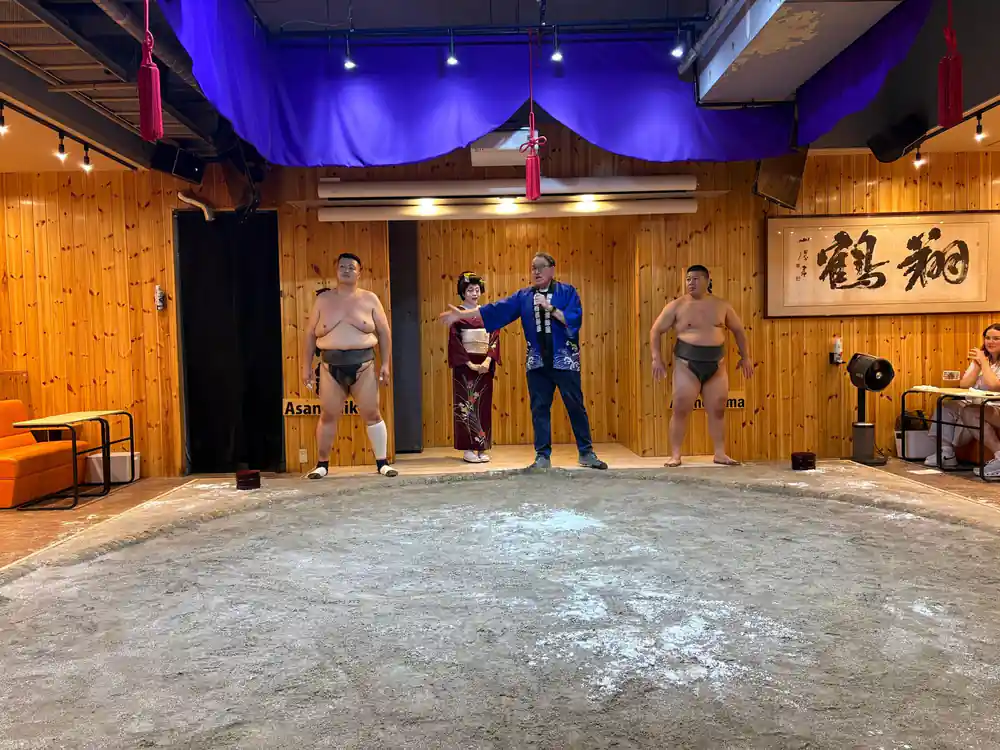
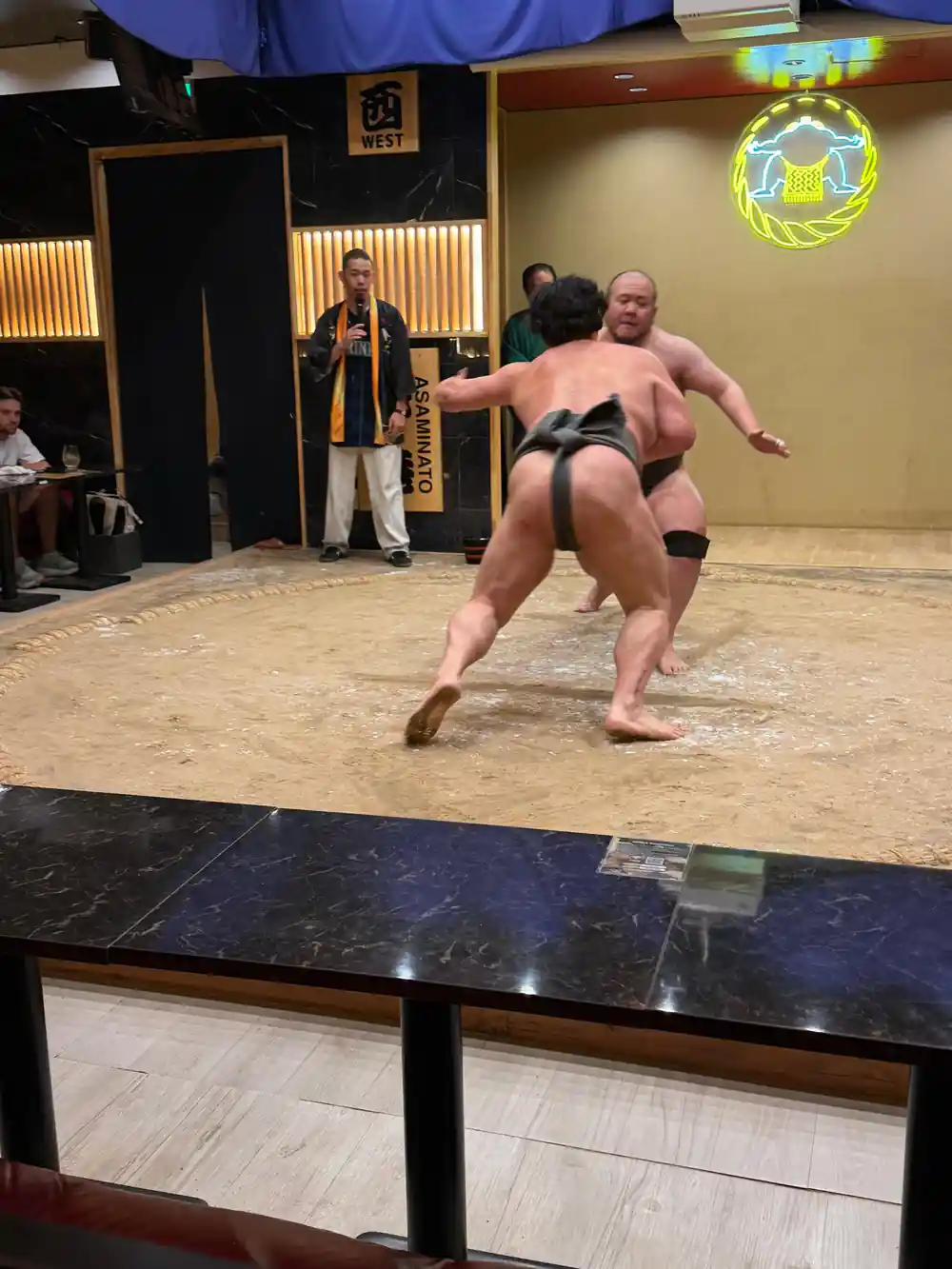
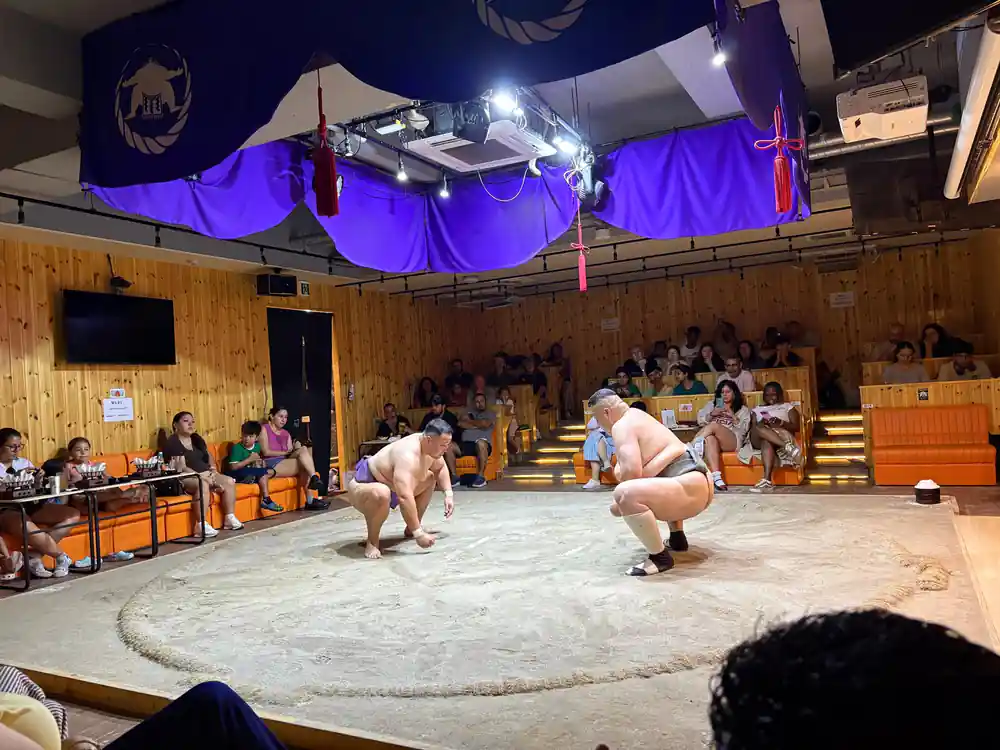
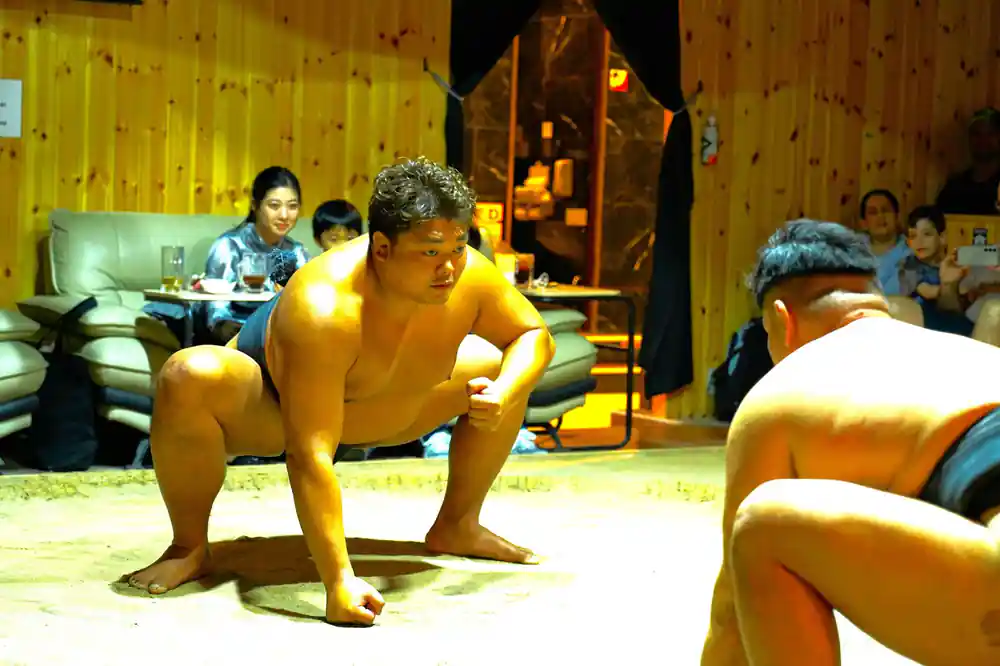
Two wrestlers meet in the sand ring while the audience leans in.
The Mawashi: Tradition and Purpose
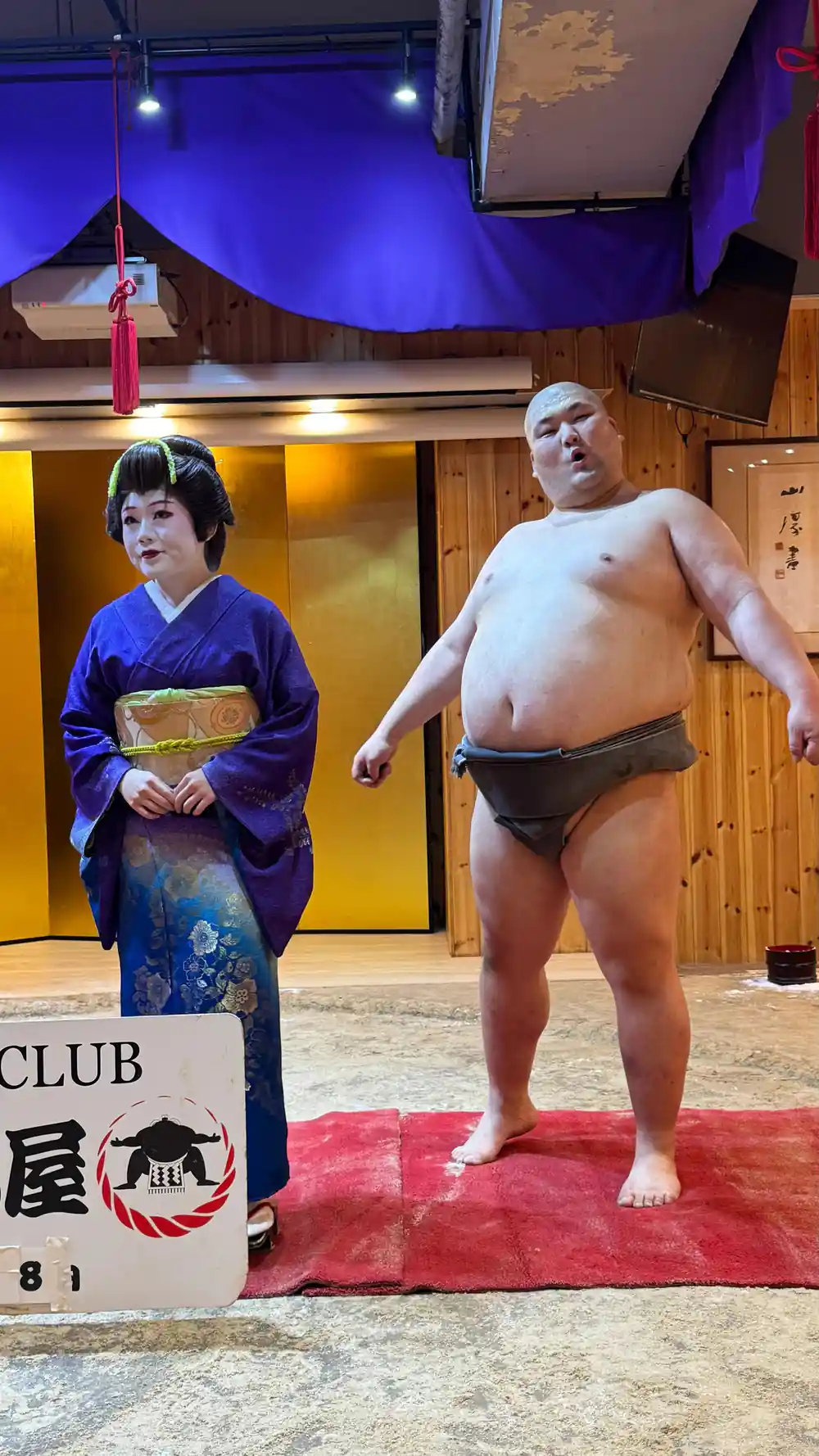
The mawashi is the belt, a long band of heavy cloth wound several times around the waist and knotted at the back. It is what a wrestler wears in the ring, and it is what an opponent holds on to. Colour marks the occasion: plain dark cloth in competition, brighter silks in training and in staged shows, where the ring can look more like a small theatre than a sports venue.
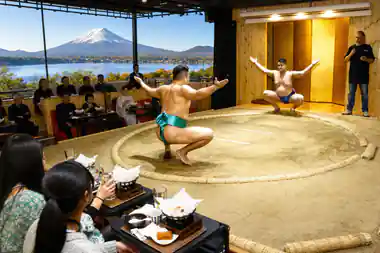
Bouts are short. A contest usually lasts only a few seconds, but in rare cases it can take a minute or more.[9] The build-up, by contrast, is drawn out and full of small signals. Before a bout the wrestler performs chiri-chozu, squatting low with both arms extended to the sides and palms turned upward, showing the gods and his opponent that his hands hold no weapons, and then throws salt.[3] Learn those two moments and you will know when the action is about to start.
The belt has a lot of cloth to cover. According to research by the Keio University Sports Medicine Research Center, the average weight of 25 makuuchi wrestlers was 161.2 kg (about 355 lbs), with an average height of 186.3 cm.[10] Wrap that around a waist a few times and the heavy knot at the back becomes as practical as it is traditional.
The Chonmage: Topknot and Status
The chonmage is the topknot: hair grown long, oiled, folded back and tied so that it sits on the crown of the head. It is one of the details people picture first when they think of sumo, and it is not a wig or a stage prop. Wrestlers grow it, comb it daily and have it re-tied by people who do that work for a living. In a ring, under lights, it catches the eye long before you can read anybody's rank.
The topknot belongs to a long history. Professional sumo began in the Edo period (1603-1867), when matches were held to raise money for constructing shrines and temples or for replacing bridges, leading to the birth of professional sumo wrestlers.[11] Watch a bout today and you are watching a very old format: a small clay ring, two men, one belt, and a crowd that knows exactly when to shout.
from US$102
Tokyo: Sumo Entertainment Show with Chicken Hot Pot & Geisha runs 2 hours and holds a 4.79 rating from 8,004 reviews.[4]
Foreign-Born Wrestlers at the Top
The ranking sheet does not record where a wrestler was born. It shows a name, a division and a rank, and that is what the crowd reads when the next pair steps onto the clay. Wrestlers who grew up outside Japan train in the same stables, eat from the same pot and climb the same ladder as everyone else, and fans follow the ladder rather than the passport.
The top of that ladder is genuinely rare. As of November 2025, exactly 75 wrestlers have attained yokozuna status in sumo history, a count that reflects how seldom the rank comes around.[12] Reaching the top division at all is a long project, and the men who get there carry the results of years of training, travel and small improvements. On the sheet, all of it compresses into one line: a name and a rank.
The Referee's Robes and Authority
The referee, known as the gyoji, is the other figure in the ring, and he is easy to spot. He wears a long robe cut in a style borrowed from older court dress, with wide sleeves and a fan held out toward the wrestlers, and he calls the bout from start to finish. Where a wrestler's outfit is stripped back to a belt, the referee's is layered, formal and unmistakably ceremonial.
That clothing matches the weight of the job. In sumo there are 82 kimarite, or match winning techniques, and 5 non-techniques or ways to lose, all defined by the Japan Sumo Association.[13] When two wrestlers go down in a heap, it is the referee who names which of those techniques decided it, and the announcement is what the arena waits for.
For a visitor, the referee is the easiest person in the ring to follow. He stands at the edge, steps in when the wrestlers drift, and gives the verdict. Once you can spot him, the whole contest becomes easier to read, and the noise of the crowd starts to make sense.
The Path to Yokozuna Status
The climb starts in the morning. Morning sumo practice typically begins between 5:00 and 7:30 AM and lasts 2 to 4 hours, though the exact start time varies by stable and season.[14] Training that early shapes the rest of the day: meals, naps and recovery fill the hours before the next session. A rikishi's daily caloric intake ranges from approximately 5,000 to 8,000 kcal, and can sometimes exceed 10,000.[15]
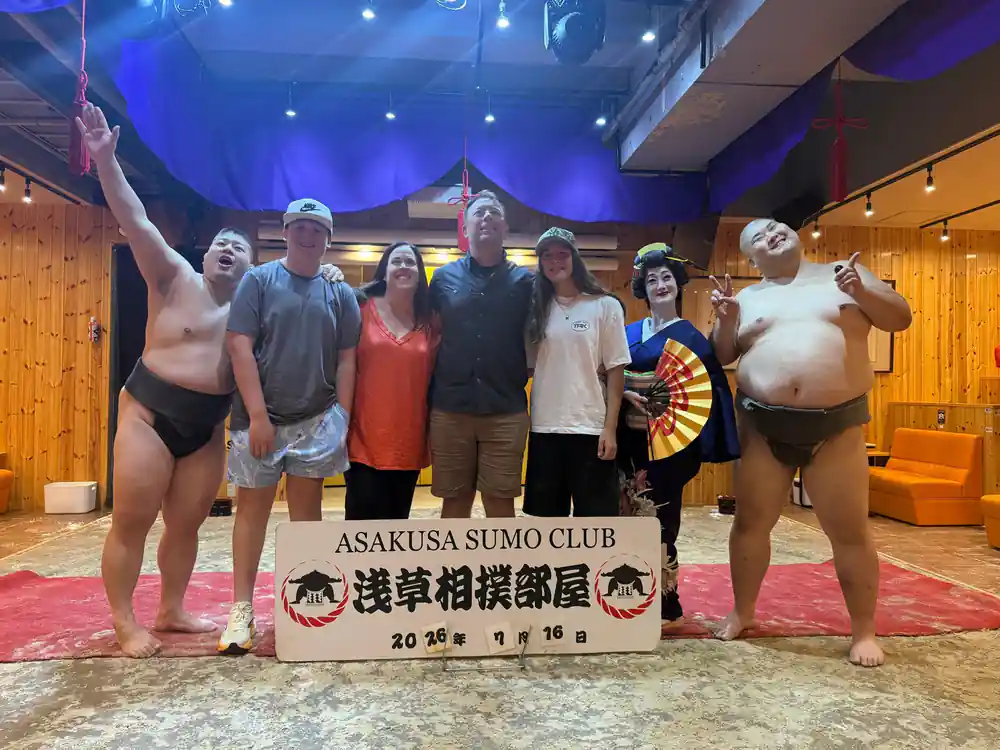
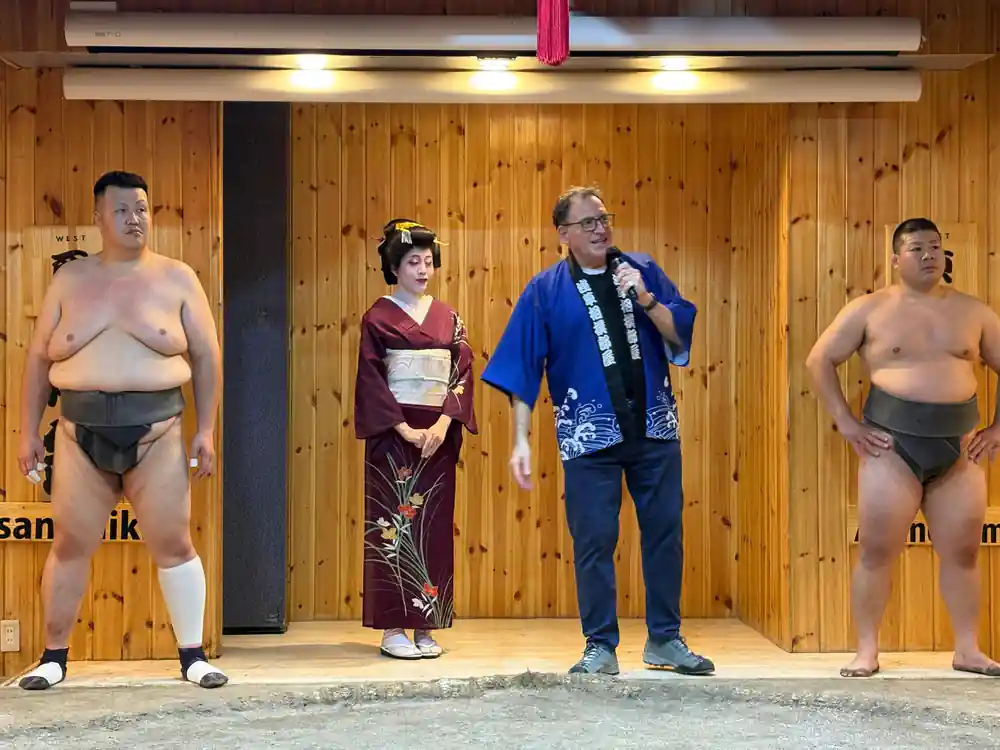
You do not have to be inside a stable to watch the results of that work. Morning practice viewings are sold as visitor tours, and so are staged shows with meals, ring-side seats and photo opportunities. The Tokyo: Sumo Entertainment Show with Chicken Hot Pot & Geisha runs 2 hours and is listed from US$102, with free cancellation up to 24 hours in advance for a full refund.[4] Pick a date, check the start time, and the ladder you have been reading about turns into a live performance.
How long a sumo show runs
Tour durations, from each GetYourGuide listing:[4][16][17][18].
Sumo listings, from-prices in US dollars
US dollar from-prices, each from its GetYourGuide listing:[4][16][17][18].
When to book your sumo night
Reading sumo before you go
Start with the divisions
Six divisions, ten ranks, and a top division split into five separate ranks: that is the shape of the sport.[1]
Follow the banzuke
The ranking sheet is rewritten around the six Grand Sumo Tournaments held each year, the January one first.[2]
Watch the ritual
Chiri-chozu, then the salt throw: two small acts that come before a bout begins.[3]
Notice the outfit
Mawashi, chonmage topknot and the referee's long robe. Spotting each one makes a show easier to follow.
Pick your date
The Tokyo: Sumo Entertainment Show with Chicken Hot Pot & Geisha runs 2 hours and is listed from US$102.[4]
See a sumo show on your next Tokyo trip
from US$102Reserve now & pay later